

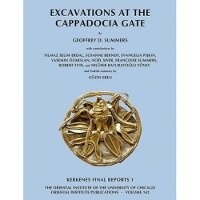
Excavations at the Cappadocia Gate
Published on 31. May 2021
Book
Hardback
175 pages
978-1-61491-033-6 (ISBN)
Description
The city on the Kerkenes Dag in the high plateau of central Turkey was a new Iron Age capital, very probably Pteria. Founded in the later seventh century BC, the city was put to the torch in the mid sixth century and then abandoned. Between 1999 and 2011 what we have called the Cappadocia Gate, one of the seven city gates that pierce the 7 km of strong stone defenses, was excavated in its entirety. This volume documents as fully as possible the results of those excavations.
The location of the gate and its architecture are discussed and illustrated, with a chapter devoted to its partial restoration. Cultic installations within the gate structure include a built stepped monument with semi-iconic idol, an aniconic stela, and graffiti representing similar stones. Sculpture set up at the back of the gate comprised many fragments of a life-sized statue supported by a plinth bearing adorsed sphinxes carved in relief. The remains of two human victims of the destruction are examined, as are animal bones that perhaps provide evidence of meals consumed by builders of the gate. Pottery and other finds, including well-preserved iron door bands, are presented, as is an exceptional ornament of gold and electrum. A final chapter attempts to place these remarkable discoveries in a wider context. The gate plan and the cultic installations and sculpture set up inside the gate appear to be entirely Phrygian. Combined with evidence of Paleo-Phrygian inscription and graffiti already published (OIP 135), this volume sheds dramatic new and unexpected evidence for the power, wealth, and sophistication of an eastward expansion of Phrygia. The brief existence, hardly more than 100 years, together with the excellent stratigraphic context of the destruction level, provide an unparalleled window onto the first half of the sixth century BC on the Anatolian Plateau.
The location of the gate and its architecture are discussed and illustrated, with a chapter devoted to its partial restoration. Cultic installations within the gate structure include a built stepped monument with semi-iconic idol, an aniconic stela, and graffiti representing similar stones. Sculpture set up at the back of the gate comprised many fragments of a life-sized statue supported by a plinth bearing adorsed sphinxes carved in relief. The remains of two human victims of the destruction are examined, as are animal bones that perhaps provide evidence of meals consumed by builders of the gate. Pottery and other finds, including well-preserved iron door bands, are presented, as is an exceptional ornament of gold and electrum. A final chapter attempts to place these remarkable discoveries in a wider context. The gate plan and the cultic installations and sculpture set up inside the gate appear to be entirely Phrygian. Combined with evidence of Paleo-Phrygian inscription and graffiti already published (OIP 135), this volume sheds dramatic new and unexpected evidence for the power, wealth, and sophistication of an eastward expansion of Phrygia. The brief existence, hardly more than 100 years, together with the excellent stratigraphic context of the destruction level, provide an unparalleled window onto the first half of the sixth century BC on the Anatolian Plateau.
More details
Series
Language
English
Place of publication
United States
Publishing group
Institute for the Study of Ancient Cultures
Target group
College/higher education
Professional and scholarly
Dimensions
Height: 297 mm
Width: 229 mm
ISBN-13
978-1-61491-033-6 (9781614910336)
Copyright in bibliographic data and cover images is held by Nielsen Book Services Limited or by the publishers or by their respective licensors: all rights reserved.
Schweitzer Classification
Other editions
Additional editions
E-Book
04/2021
Oriental Institute of the University of Chicago
€123.99
Available for download