

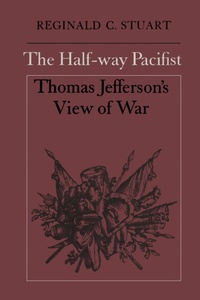
The Half-way Pacifist
Thomas Jefferson's View of War
Published on 15. December 1978
Book
Paperback/Softback
104 pages
978-1-4875-7341-6 (ISBN)
Description
By the middle of the eighteenth century war had come to be regarded as a limited instument of state policy and one that should be controlled in the interests of social justice and human progress. Thomas Jefferson's attitude towards war emerged from this Enlightenment tradition and evolved in response to the issues he faced during his career. Drawing on comments scattered through his letters and other writings and an interpretation of the policies he actually pursued, this book traces the development of Jefferson's view of war, from the time of his participation in the Continental Congress, through his years as negotiator and diplomat in Paris following the peace with Britain and independence, his terms as secretary of state, vice-president, and president during an era of European war and near war that threatened United States interests, and his years of retirement when the United States engaged in war and promulgated the Monroe Doctrine.
While Jefferson displayed an overwhelming desire to avoid war, he did not suppose that it could be eliminated. He considered it a part of nature, occasionally both just and necessary. He emphasized defence and deterrance, but he did not hesitate to use or threaten war to preserve national integrity and promote national interests during his presidency. Politically and philosophically, he was a pragmatist rather than a pacifist, ready to engage in limited war for limited objectives and as a last resort, but opposed to war as a crusade.
Throughout, Stuart's analysis of Jefferson's thinking on matters military shows a sensitive awareness of the tensions in western thought which arose in the transition from the ideas of the Enlightenment to those of the modern era.
While Jefferson displayed an overwhelming desire to avoid war, he did not suppose that it could be eliminated. He considered it a part of nature, occasionally both just and necessary. He emphasized defence and deterrance, but he did not hesitate to use or threaten war to preserve national integrity and promote national interests during his presidency. Politically and philosophically, he was a pragmatist rather than a pacifist, ready to engage in limited war for limited objectives and as a last resort, but opposed to war as a crusade.
Throughout, Stuart's analysis of Jefferson's thinking on matters military shows a sensitive awareness of the tensions in western thought which arose in the transition from the ideas of the Enlightenment to those of the modern era.
More details
Series
Language
English
Place of publication
Toronto
Canada
Target group
College/higher education
Professional and scholarly
Product notice
Paperback (trade)
Dimensions
Height: 234 mm
Width: 156 mm
Thickness: 6 mm
Weight
172 gr
ISBN-13
978-1-4875-7341-6 (9781487573416)
Copyright in bibliographic data and cover images is held by Nielsen Book Services Limited or by the publishers or by their respective licensors: all rights reserved.
Schweitzer Classification
Person
REGINALD C. STUART is a member of the Department of History at the University of Prince Edward Island.