

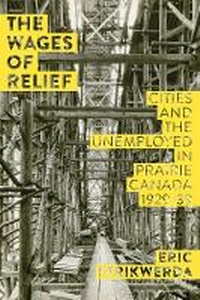
The Wages of Relief
Cities and the Unemployed in Prairie Canada, 1929-39
Will be published approx. on 15. May 2013
Book
Paperback/Softback
220 pages
978-1-927356-05-0 (ISBN)
Description
In the early part of the Dirty Thirties, the Canadian prairie citywas a relatively safe haven. Having faced recession before the GreatWar and then again in the early 1920s, municipalities already hadrelief apparatuses in place to deal with poverty and unemployment.Until 1933, responsibility for the care of the urban poor remained withlocal governments, but when the farms failed that year, and theDepression deepened, western Canadian cities suffered tremendously.Recognizing the severity of the crisis, the national governmentintervened. Evolving federal programs and policies took overresponsibility for the delivery of relief to the single unemployed,while the government simultaneously withdrew financing for all publicworks projects.
Setting municipal relief administrations of the 1930s within a widerliterature on welfare and urban poor relief, Strikwerda highlights thelegacy on which relief policymakers relied in determining policydirections, as well as the experiences of the individuals and familieswho depended on relief for their survival. Focusing on three prairiecities-Edmonton, Saskatoon, and Winnipeg-Strikwerda arguesthat municipal officials used their power to set policy to address whatthey perceived to be the most serious threats to the social orderstemming from the economic crisis. By analyzing the differing ways inwhich local relief programs treated married and single men, he alsoexplores important gendered dynamics at work in the response of cityadministrators to the social and economic upheaval of the Depression.Probing the mindset of local elites struggling in extraordinarycircumstances, The Wages of Relief describes the enduringimpact of the policy changes made in the 1930s in the direction of abroad, national approach to unemployment-an approach that usheredin Canada's modern welfare system.
Setting municipal relief administrations of the 1930s within a widerliterature on welfare and urban poor relief, Strikwerda highlights thelegacy on which relief policymakers relied in determining policydirections, as well as the experiences of the individuals and familieswho depended on relief for their survival. Focusing on three prairiecities-Edmonton, Saskatoon, and Winnipeg-Strikwerda arguesthat municipal officials used their power to set policy to address whatthey perceived to be the most serious threats to the social orderstemming from the economic crisis. By analyzing the differing ways inwhich local relief programs treated married and single men, he alsoexplores important gendered dynamics at work in the response of cityadministrators to the social and economic upheaval of the Depression.Probing the mindset of local elites struggling in extraordinarycircumstances, The Wages of Relief describes the enduringimpact of the policy changes made in the 1930s in the direction of abroad, national approach to unemployment-an approach that usheredin Canada's modern welfare system.
More details
Series
Language
English
Place of publication
EDMONTON
Canada
Product notice
Paperback (trade)
Dimensions
Height: 203 mm
Width: 152 mm
Weight
520 gr
ISBN-13
978-1-927356-05-0 (9781927356050)
Copyright in bibliographic data and cover images is held by Nielsen Book Services Limited or by the publishers or by their respective licensors: all rights reserved.
Schweitzer Classification
Other editions
Additional editions
E-Book
05/2013
AU Press and CCLH
€22.49
Available for download
Person
Eric Strikwerda teaches Canadian history at theUniversity of Alberta and labour studies/industrial relations atAthabasca University.
Content
List of Tables and Figures
Acknowledgements
Introduction
1. The Rise of the City ReliefMachines
2. The Anatomy of City Relief
3. Building Cities
4. Unemployed Men at Work
5. Local Responsibility in Decline
Conclusion
Notes
Bibliography
Index
Acknowledgements
Introduction
1. The Rise of the City ReliefMachines
2. The Anatomy of City Relief
3. Building Cities
4. Unemployed Men at Work
5. Local Responsibility in Decline
Conclusion
Notes
Bibliography
Index