

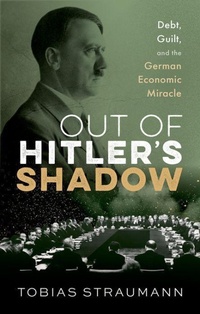
Out of Hitler's Shadow
Debt, Guilt, and the German Economic Miracle
Published on 9. October 2025
Book
Hardback
288 pages
978-0-19-284951-9 (ISBN)
Description
Why were the United States and its Western Allies so lenient after the most atrocious war of all times? Out of Hitler's Shadow answers this question, and considers why the Allies concluded that imposing unrealistic financial conditions on a defeated country would do more harm than good.
The destruction left by Nazi Germany was horrendous. The occupied countries had been ravaged and plundered, millions of people murdered, cities laid in ashes. There was every reason to make the defeated Germans pay for 'Hitler's debt' as The New York Times called the gigantic damage inflicted. But whereas the Soviet Union punished East Germany, the Western Allies, at the London Debt Conference (1952) decided to forgo all war-related debts. The Federal Republic of Germany - the Western successor state of Nazi Germany - had to settle no more than half of all outstanding debts stemming from pre-war obligations and post-war assistance. Only Israel and private Jewish organisations received reparations from the Federal Republic, but it was a modest amount.
Why were the United States and its Western Allies so lenient after the most atrocious war of all times? Out of Hitler's Shadow answers this question, and considers why the Allies concluded that imposing unrealistic financial conditions on a defeated country would do more harm than good.
These actions challenged widely held notions of justice. People who had suffered most from the atrocities committed by Nazi Germany were not compensated. The deal was unfair in many ways, but diplomats and politicians had to make hard choices. Five statesmen were particularly bold: U.S. Secretary of State Acheson, German Chancellor Adenauer, French Foreign Minister Schuman as well as Israeli Prime Minister Ben-Gurion and Foreign Minister Sharett. Tobias Straumann explains why the personalities involved deserve to be remembered for their strategic clarity in the face of enormous resistance.
The destruction left by Nazi Germany was horrendous. The occupied countries had been ravaged and plundered, millions of people murdered, cities laid in ashes. There was every reason to make the defeated Germans pay for 'Hitler's debt' as The New York Times called the gigantic damage inflicted. But whereas the Soviet Union punished East Germany, the Western Allies, at the London Debt Conference (1952) decided to forgo all war-related debts. The Federal Republic of Germany - the Western successor state of Nazi Germany - had to settle no more than half of all outstanding debts stemming from pre-war obligations and post-war assistance. Only Israel and private Jewish organisations received reparations from the Federal Republic, but it was a modest amount.
Why were the United States and its Western Allies so lenient after the most atrocious war of all times? Out of Hitler's Shadow answers this question, and considers why the Allies concluded that imposing unrealistic financial conditions on a defeated country would do more harm than good.
These actions challenged widely held notions of justice. People who had suffered most from the atrocities committed by Nazi Germany were not compensated. The deal was unfair in many ways, but diplomats and politicians had to make hard choices. Five statesmen were particularly bold: U.S. Secretary of State Acheson, German Chancellor Adenauer, French Foreign Minister Schuman as well as Israeli Prime Minister Ben-Gurion and Foreign Minister Sharett. Tobias Straumann explains why the personalities involved deserve to be remembered for their strategic clarity in the face of enormous resistance.
More details
Language
English
Place of publication
Oxford
United Kingdom
Target group
College/higher education
Dimensions
Height: 223 mm
Width: 145 mm
Thickness: 32 mm
Weight
423 gr
ISBN-13
978-0-19-284951-9 (9780192849519)
Copyright in bibliographic data and cover images is held by Nielsen Book Services Limited or by the publishers or by their respective licensors: all rights reserved.
Schweitzer Classification
Person
Tobias Straumann is a professor of modern and economic history at the University of Zurich. He studied in Berkeley, Bielefeld, Paris and Zurich and held visiting positions at the University of Lausanne, the Chinese University of Hong Kong, and the University of Oxford. He has published widely on the financial and monetary history of the twentieth century, including 1931: Debt, Crisis, and the Rise of Hitler(OUP, 2019).
Content
List of Figures
List of Illustrations
List of Tables
Introduction
PART I: THE PLAN
1: Hitler's Debt
2: A French Surprise
3: Breakthrough a the Waldorf
PART II: A DIFFICULT START
4: Stubborn Germans
5: Saving Germany from bankruptcy
PART III: COLLUSION
6: A Secret Meeting in Paris
7: Finding the Right Words
PART IV: COLLISION
8: The Soul of Israel
9: 'Adding insult to injury'
PART V: THE GRAND BARGAIN
10: 'What do we do now?'
11: German Reparations to Israel
12: The Settlement of Hitler's Debt
Conclusion
References
List of Illustrations
List of Tables
Introduction
PART I: THE PLAN
1: Hitler's Debt
2: A French Surprise
3: Breakthrough a the Waldorf
PART II: A DIFFICULT START
4: Stubborn Germans
5: Saving Germany from bankruptcy
PART III: COLLUSION
6: A Secret Meeting in Paris
7: Finding the Right Words
PART IV: COLLISION
8: The Soul of Israel
9: 'Adding insult to injury'
PART V: THE GRAND BARGAIN
10: 'What do we do now?'
11: German Reparations to Israel
12: The Settlement of Hitler's Debt
Conclusion
References