

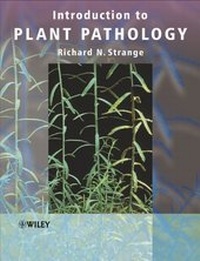
Introduction to Plant Pathology
Will be published approx. on 17. October 2003
Book
Paperback/Softback
480 pages
978-0-470-84973-6 (ISBN)
Description
This invaluable resource introduces the eleven types of organism that cause plant disease, ranging from higher plants to viroids and describes examples of cash and staple crop diseases that have caused human catastrophes. Early chapters cover serological and molecular techniques for the diagnosis of plant pathogens, epidemiology, methods for estimating disease severity and its effect on crop yields and techniques for limiting inoculum. Later chapters are concerned with colonisation of the plant and symptom development and the underlying biochemical and genetic factors that control these events. Finally, the control of plant disease using a variety of techniques including genetic modification is discussed.
* Modern diagnostic techniques
* Epidemiology and the measurement of disease severity
* The biochemistry and molecular biology of plant disease
* Control through cultural, biological, genetic and molecular techniques
* A wealth of examples and applications including full colour photographs
Reviews / Votes
"...is clearly written, comprehensive, and timely...a valuable addition to the literature on plant pathology..." (Israel Journal of Plant Sciences, vol. 51)More details
Other editions
Additional editions
Richard Strange
Introduction to Plant Pathology
Book
10/2003
Wiley
Unfortunately, price unknown
Article exhausted; check different version
Person
RICHARD STRANGE is Senior Lecturer in Plant Pathology at University College London and has a special interest in the plant disease problems of developing countries. He has written an earlier book Plant Disease Control: Towards Environmentally Acceptable Methods.
Content
Preface.
1. The Causal Agents of Plant Disease: Identity and Impact.
2. The Detection and Diagnosis of Plant Pathogens and the Diseases They Cause.
3. Epidemiology.
4. The Measurement of Inoculum and Disease Severity and Their Effect on Crop Yields.
5. Inoculum Control.
6. Locating, Penetrating and Colonising the Host.
7. Subverting the Metabolism of the Host.
8. Killing the Host--the Role of Toxins.
9. The Plant Fights Back--1. Constitutive Defence Mechanisms.
10. The Genetics of Compatibility and Incompatibility.
11. The Plant Fights Back--2. Active Defence Mechanisms.
12. Control of the Disease Process.
Epilogue.
Glossary.
References.
Index.