

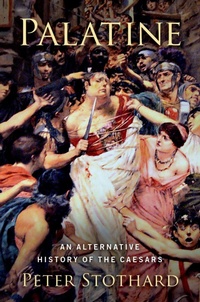
Palatine
An Alternative History of the Caesars
Will be published approx. on 6. August 2024
Book
Paperback/Softback
336 pages
978-0-19-778132-6 (ISBN)
Description
A unique and entertaining history of the Roman Empire's first dynasty
14 CE: The first Roman emperor is dead. A second is about to succeed. The Forum of Rome, once fought over so fiercely, has become hardly more than a museum. The house of all power is up above on the Palatine Hill, about to become the birthplace of Western bureaucracy, a warren of banqueting and bedrooms, a treacherous household where it takes special talents to survive.
This is a history of ancient Rome's first imperial dynasty -- the Julio-Claudians -- with a cast of new men and newly dominant women, those reviled too often in the past as flatterers and gluttons, audacious slaves and former slaves, lawyers-for-hire, chancer arrivistes, and unhinged party animals. Palatine uncovers the lives of the Vitellii, perhaps Rome's least admired imperial clan, of Publius, an old-fashioned soldier snared in the politics of the new age, of Lucius, an exceptionally skilled and sycophantic courtier, and of Aulus a genial sluggard whose prowess at the table carries him all the way to the throne before collapsing his family's reputation forever. Few now remember them. Yet in their creeping ascent to the very summit of the imperial hierarchy lie neglected truths about a lasting legacy of Rome.
14 CE: The first Roman emperor is dead. A second is about to succeed. The Forum of Rome, once fought over so fiercely, has become hardly more than a museum. The house of all power is up above on the Palatine Hill, about to become the birthplace of Western bureaucracy, a warren of banqueting and bedrooms, a treacherous household where it takes special talents to survive.
This is a history of ancient Rome's first imperial dynasty -- the Julio-Claudians -- with a cast of new men and newly dominant women, those reviled too often in the past as flatterers and gluttons, audacious slaves and former slaves, lawyers-for-hire, chancer arrivistes, and unhinged party animals. Palatine uncovers the lives of the Vitellii, perhaps Rome's least admired imperial clan, of Publius, an old-fashioned soldier snared in the politics of the new age, of Lucius, an exceptionally skilled and sycophantic courtier, and of Aulus a genial sluggard whose prowess at the table carries him all the way to the throne before collapsing his family's reputation forever. Few now remember them. Yet in their creeping ascent to the very summit of the imperial hierarchy lie neglected truths about a lasting legacy of Rome.
Reviews / Votes
This hugely readable novel-like account completes the picture, a Succession for the Julio-Claudian years. S. gets behind the Tacitean and Suetonian stereotypes and brings the Palace itself to life: a great read. * Classics for All * With vivid prose in short, dynamic chapters, Stothard also covers the reigns of Tiberius, Caligula, Claudius and Nero, Jewish unrest at the time of Christ and the invasion of Britain, but this extraordinarily well-researched, exciting book is more a tale of increasing wealth and prosperity rather than war, as well as corruption, greed, gluttony and desire.... Once again, Stothard has written a brilliant picture of the vibrant realities of life in the ancient world. * Daily Mail * This is a story you think you know, told through the eyes of people you don't ... Not so much an alternative history as an alternative epic, farce and satire rolled into one. Palatine is an absorbing saga of battles and banquets, as densely populated and richly depicted as Game of Thrones. * Rachel Cunliffe, The Times [London] * Let us see how power really worked, in public and private. We glimpse the emperors at work and at play, in the dining room and in the bedroom. And we see how even they, despite the sycophants, were often prisoners, not architects, of the system. One false step and it would all be over.... Stothard tells this story superbly. * Dominic Sandbrook, Sunday Times [London] * This is a literary work of cultural history * a wonderful example of profound scholarship written with the verve and expertise of an accomplished novelist.... Wonderful, evocative stuff!The Telegraph * Peter Stothard's Palatine gives us alternate Rome, the imperial palace seen from an oblique angle. It's the story of a prominent family that aimed high and fell far. Palatine is clever, learned, sophisticated, witty, and utterly readable. * Barry Strauss, author of The War That Made the Roman Empire: Anthony, Cleopatra, and Octavian at Actium * Not since Robert Graves' I Claudius has there been so exciting a book on the world of the early Caesars. Stothard shines a light on the palace insiders trying to get ahead, or just survive, one of whom, Aulus Vitellius, ended up becoming emperor himself. This is a history not only of high-level political intrigue, but flattery and food, with mouth-watering descriptions and sharp epigrams throughout. * Josiah Osgood, author of Uncommon Wrath: How Caesar and Cato's Deadly Rivalry Destroyed the Roman Republic * [Stothard] evokes brilliantly the rich strangeness of the world of the imperial court in the first century...Stothard's evocation of [Vitellius'] last hours, in hiding in a glorified dog kennel, his senses overwhelmed by the stench, is one I shan't readily forget. * Catharine Edwards, Times Literary Supplement * Stothard tells a refreshingly different story almost entirely: the biography of the loutish Vitellii clan... [A] smart, visionary book... No reader of Roman history should miss it, both for the sheer thrill of the reading experience and for the challenges such an approach consistently poses to the wary. * Steve Donoghue, Open Letters Review * This hugely readable novel-like account completes the picture, a Succession for the Julio-Claudian years. S. gets behind the Tacitean and Suetonian stereotypes and brings the Palace itself to life: a great read. * Classics for All * With vivid prose in short, dynamic chapters, Stothard also covers the reigns of Tiberius, Caligula, Claudius and Nero, Jewish unrest at the time of Christ and the invasion of Britain, but this extraordinarily well-researched, exciting book is more a tale of increasing wealth and prosperity rather than war, as well as corruption, greed, gluttony and desire.... Once again, Stothard has written a brilliant picture of the vibrant realities of life in the ancient world. * Daily Mail * This is a story you think you know, told through the eyes of people you don't ... Not so much an alternative history as an alternative epic, farce and satire rolled into one. Palatine is an absorbing saga of battles and banquets, as densely populated and richly depicted as Game of Thrones. * Rachel Cunliffe, The Times [London] * Let us see how power really worked, in public and private. We glimpse the emperors at work and at play, in the dining room and in the bedroom. And we see how even they, despite the sycophants, were often prisoners, not architects, of the system. One false step and it would all be over.... Stothard tells this story superbly. * Dominic Sandbrook, Sunday Times [London] * This is a literary work of cultural history * a wonderful example of profound scholarship written with the verve and expertise of an accomplished novelist.... Wonderful, evocative stuff!The Telegraph * Peter Stothard's Palatine gives us alternate Rome, the imperial palace seen from an oblique angle. It's the story of a prominent family that aimed high and fell far. Palatine is clever, learned, sophisticated, witty, and utterly readable. * Barry Strauss, author of The War That Made the Roman Empire: Anthony, Cleopatra, and Octavian at Actium * Not since Robert Graves' I Claudius has there been so exciting a book on the world of the early Caesars. Stothard shines a light on the palace insiders trying to get ahead, or just survive, one of whom, Aulus Vitellius, ended up becoming emperor himself. This is a history not only of high-level political intrigue, but flattery and food, with mouth-watering descriptions and sharp epigrams throughout. * Josiah Osgood, author of Uncommon Wrath: How Caesar and Cato's Deadly Rivalry Destroyed the Roman Republic * [Stothard] evokes brilliantly the rich strangeness of the world of the imperial court in the first century...Stothard's evocation of [Vitellius'] last hours, in hiding in a glorified dog kennel, his senses overwhelmed by the stench, is one I shan't readily forget. * Catharine Edwards, Times Literary Supplement * Stothard tells a refreshingly different story almost entirely: the biography of the loutish Vitellii clan... [A] smart, visionary book... No reader of Roman history should miss it, both for the sheer thrill of the reading experience and for the challenges such an approach consistently poses to the wary. * Steve Donoghue, Open Letters Review * This hugely readable novel-like account completes the picture, a Succession for the Julio-Claudian years. S. gets behind the Tacitean and Suetonian stereotypes and brings the Palace itself to life: a great read. * Classics for All * With vivid prose in short, dynamic chapters, Stothard also covers the reigns of Tiberius, Caligula, Claudius and Nero, Jewish unrest at the time of Christ and the invasion of Britain, but this extraordinarily well-researched, exciting book is more a tale of increasing wealth and prosperity rather than war, as well as corruption, greed, gluttony and desire.... Once again, Stothard has written a brilliant picture of the vibrant realities of life in the ancient world. * Daily Mail * This is a story you think you know, told through the eyes of people you don't ... Not so much an alternative history as an alternative epic, farce and satire rolled into one. Palatine is an absorbing saga of battles and banquets, as densely populated and richly depicted as Game of Thrones. * Rachel Cunliffe, The Times [London] * Let us see how power really worked, in public and private. We glimpse the emperors at work and at play, in the dining room and in the bedroom. And we see how even they, despite the sycophants, were often prisoners, not architects, of the system. One false step and it would all be over.... Stothard tells this story superbly. * Dominic Sandbrook, Sunday Times [London] * This is a literary work of cultural history * a wonderful example of profound scholarship written with the verve and expertise of an accomplished novelist.... Wonderful, evocative stuff!The Telegraph * Peter Stothard's Palatine gives us alternate Rome, the imperial palace seen from an oblique angle. It's the story of a prominent family that aimed high and fell far. Palatine is clever, learned, sophisticated, witty, and utterly readable. * Barry Strauss, author of The War That Made the Roman Empire: Anthony, Cleopatra, and Octavian at Actium * Not since Robert Graves' I Claudius has there been so exciting a book on the world of the early Caesars. Stothard shines a light on the palace insiders trying to get ahead, or just survive, one of whom, Aulus Vitellius, ended up becoming emperor himself. This is a history not only of high-level political intrigue, but flattery and food, with mouth-watering descriptions and sharp epigrams throughout. * Josiah Osgood, author of Uncommon Wrath: How Caesar and Cato's Deadly Rivalry Destroyed the Roman Republic * [Stothard] evokes brilliantly the rich strangeness of the world of the imperial court in the first century...Stothard's evocation of [Vitellius'] last hours, in hiding in a glorified dog kennel, his senses overwhelmed by the stench, is one I shan't readily forget. * Catharine Edwards, Times Literary Supplement * Stothard tells a refreshingly different story almost entirely: the biography of the loutish Vitellii clan... [A] smart, visionary book... No reader of Roman history should miss it, both for the sheer thrill of the reading experience and for the challenges such an approach consistently poses to the wary. * Steve Donoghue, Open Letters Review * This hugely readable novel-like account completes the picture, a Succession for the Julio-Claudian years. S. gets behind the Tacitean and Suetonian stereotypes and brings the Palace itself to life: a great read. * Classics for All * With vivid prose in short, dynamic chapters, Stothard also covers the reigns of Tiberius, Caligula, Claudius and Nero, Jewish unrest at the time of Christ and the invasion of Britain, but this extraordinarily well-researched, exciting book is more a tale of increasing wealth and prosperity rather than war, as well as corruption, greed, gluttony and desire.... Once again, Stothard has written a brilliant picture of the vibrant realities of life in the ancient world. * Daily Mail * This is a story you think you know, told through the eyes of people you don't ... Not so much an alternative history as an alternative epic, farce and satire rolled into one. Palatine is an absorbing saga of battles and banquets, as densely populated and richly depicted as Game of Thrones. * Rachel Cunliffe, The Times [London] * Let us see how power really worked, in public and private. We glimpse the emperors at work and at play, in the dining room and in the bedroom. And we see how even they, despite the sycophants, were often prisoners, not architects, of the system. One false step and it would all be over.... Stothard tells this story superbly. * Dominic Sandbrook, Sunday Times [London] * This is a literary work of cultural history * a wonderful example of profound scholarship written with the verve and expertise of an accomplished novelist.... Wonderful, evocative stuff!The Telegraph * Peter Stothard's Palatine gives us alternate Rome, the imperial palace seen from an oblique angle. It's the story of a prominent family that aimed high and fell far. Palatine is clever, learned, sophisticated, witty, and utterly readable. * Barry Strauss, author of The War That Made the Roman Empire: Anthony, Cleopatra, and Octavian at Actium * Not since Robert Graves' I Claudius has there been so exciting a book on the world of the early Caesars. Stothard shines a light on the palace insiders trying to get ahead, or just survive, one of whom, Aulus Vitellius, ended up becoming emperor himself. This is a history not only of high-level political intrigue, but flattery and food, with mouth-watering descriptions and sharp epigrams throughout. * Josiah Osgood, author of Uncommon Wrath: How Caesar and Cato's Deadly Rivalry Destroyed the Roman Republic * [Stothard] evokes brilliantly the rich strangeness of the world of the imperial court in the first century...Stothard's evocation of [Vitellius'] last hours, in hiding in a glorified dog kennel, his senses overwhelmed by the stench, is one I shan't readily forget. * Catharine Edwards, Times Literary Supplement * Stothard tells a refreshingly different story almost entirely: the biography of the loutish Vitellii clan... [A] smart, visionary book... No reader of Roman history should miss it, both for the sheer thrill of the reading experience and for the challenges such an approach consistently poses to the wary. * Steve Donoghue, Open Letters Review *More details
Language
English
Place of publication
New York
United States
Product notice
Paperback (trade)
Unsewn / adhesive bound
Dimensions
Height: 226 mm
Width: 151 mm
Thickness: 19 mm
Weight
481 gr
ISBN-13
978-0-19-778132-6 (9780197781326)
Copyright in bibliographic data and cover images is held by Nielsen Book Services Limited or by the publishers or by their respective licensors: all rights reserved.
Schweitzer Classification
Person
Peter Stothard is an author, journalist, and critic. He is a former editor of The Times [of London] and of The Times Literary Supplement. His previous books include The Last Assassin: The Hunt for the Killers of Julius Caesar, Alexandria: The Last Nights of Cleopatra, and On the Spartacus Road: A Spectacular Journey through Ancient Italy.
Content
- Introduction
- Characters
- PART ONE
- 1: In the palace dog-house
- 2: Mr Glutton and Mr Fool
- 3: Succession
- 4: Care for what we eat
- 5: A wolf by its ears
- 6: Publius among the fishes
- 7: Between the Emperor and his heir
- 8: Flattery and fear
- 9: Words for a palace
- PART TWO
- 10: The fox and the crow
- 11: Who killed the prince?
- 12: The only verdict that mattered
- 13: Tiberius, Tiber and Tibur
- 14: Hercules the herdsman
- 15: Care for cucumbers
- 16: Vitellia's night out
- 17: Pen and knives
- 18: The way of the guard captain
- 19: Water on dust
- 20: Profits from propinquity
- 21: Death of the damned
- 22: Lucius Vitellius and the son of God
- 23: Goat worship
- 24: Ill will for the twin
- 25: Man talks to a Moon
- 26: Good water, golden meat
- 27: Torture of an actress
- 28: Garden ornaments
- 29: Lucius rules the world
- 30: Ashes of a swallow
- 31: Flattery's textbook
- 32: A bedroom slipper
- 33: Of unshakable loyalty to his emperor
- 34: God-given mushrooms
- 35: Aulus the educator
- 36: Oedipus and actors
- 37: Dish of Minerva
- 38: Blackened tables
- 39: Food and fire
- 40: New lamps for old
- PART THREE
- 41: Mr Stingy
- 42: A good job for a glutton
- 43: Fill me up!
- 44: A hard man to flatter
- 45: Brother behind the lines
- 46: Wine for the battlefield
- 47: Shield of Minerva
- 48: Emperor Vitellius
- 49: No time for a party
- 50: A drink to defeat
- 51: In Augustus's temple
- 52: Out of the dog house
- 53: New clothes for old
- Notes
- Bibliography
- Acknowledgements