

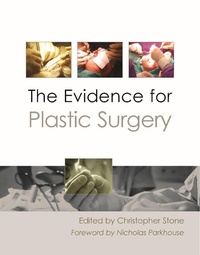
The Evidence for Plastic Surgery
Published on 1. January 2008
Book
Hardback
370 pages
978-1-903378-50-2 (ISBN)
Description
Evidence-based medicine is now firmly established in the lexicon of modern health care. In "The Evidence for Plastic Surgery" the diverse spectrum of plastic surgical practice is called to account by a cross-examination of the available evidence in support of many of the common treatment protocols and surgical procedures in everyday use. The result is a text that makes an important contribution to some of the contentious debates within the speciality and details the critical appraisal of new or developing techniques. This is a unique and invaluable reference source for senior doctors and for those in training, not only in plastic surgery but also in a variety of other closely aligned specialities including general and orthopaedic surgery.
More details
Edition
New edition
Language
English
Place of publication
Harley
United Kingdom
Target group
Professional and scholarly
Edition type
New edition
Product notice
sewn/stitched
Cloth over boards
Illustrations
Illustrations
Dimensions
Height: 272 mm
Width: 216 mm
Thickness: 30 mm
Weight
1588 gr
ISBN-13
978-1-903378-50-2 (9781903378502)
Copyright in bibliographic data and cover images is held by Nielsen Book Services Limited or by the publishers or by their respective licensors: all rights reserved.
Schweitzer Classification
Other editions
Additional editions
Christopher Stone
Evidence for Plastic Surgery
E-Book
04/2008
1st Edition
tfm Publishing Ltd
€111.99
Available for download
Christopher Stone
Evidence for Plastic Surgery
E-Book
04/2008
1st Edition
tfm Publishing Ltd
€111.99
Available for download
Person
Content
Introduction: Applying evidence-based medicine to plastic surgery; Timing and method of soft tissue reconstruction in patients with lllb tibial fractures; Vacuum-assisted closure: basic science and clinical practice; The management of necrotising fasciitis; The relationship between increasing body mass index and complications in plastic surgery; Prophylaxis to prevent venous thrombo-embolic disease in plastic surgery patients; Physiological responses to burn injury and resuscitation protocols for adult major burns; Improving outcome in paediatric burns; Biological skin substitutes; Sentinel lymph node biopsy in melanoma; Management of inguinal and pelvic nodes in patients with stage III malignant melanoma; Prognostic indicators in adult soft tissue sarcoma; Evidence-based imaging of soft tissue sarcomas; Hypospadias correction: one or two stages?; Cleft palate closure: the timing and options for surgical repair; Post-traumatic wrist instability; Wrist arthroscopy: its role in diagnosis and treatment; The role of small joint arthroplasty in osteoarthritis of the hand; Monitoring of microvascular free tissue transfers; Use of the anterolateral thigh flap for intra-oral reconstruction; A comparison of TRAM and DIEP flaps for breast reconstruction; Immediate versus delayed breast reconstruction; Strategies for minimising palpable implant rippling in the augmented breast; Gynaecomastia: an algorithmic approach to surgical management (with special emphasis on liposuction); Trends in aesthetic facial surgery: the role of endoscopic brow and minimal access facial lifts; Surgical rejuvenation of the ageing neck; Trends in aesthetic facial surgery: the Hamra lower lid blepharoplasty; Fibrin sealant in plastic surgery; Ablative and non-ablative techniques for rejuvenation of photo-aged skin; Hand and facial composite tissue allotransplantation; Hyperbaric oxygen therapy in plastic surgery.