

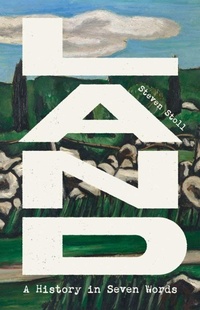
Land
A History in Seven Words
Will be published approx. on 12. January 2027
Book
Hardback
312 pages
978-0-300-26758-7 (ISBN)
Description
A sweeping meditation on the historical relationship between humans and land that challenges us to rethink common beliefs
Land is the natural environment that humans have defined, shaped, and endlessly reinvented. In this lyrical narrative, Steven Stoll explores ways of thinking about land through social, cultural, political, economic, and ecological lenses.
Stoll tells the stories of the first Sumerian farmers, the medieval commons, the origins of private property in seventeenth-century England, the politics of colonization in what became Pennsylvania, strip mining in West Virginia, and the relationship between race and land reform in the twentieth century, as well as of a map drawn at the end of the Ice Age. Moving deftly from anthropology to biblical analysis, from the Doctrine of Discovery to the American civil rights movement, he reveals the philosophical underpinnings of our relationship to land, upending many of our assumptions.
In situating contemporary views of land within the longer arc of human history, Stoll argues that many of the virtues found in older forms of land have been lost in the turn away from territoriality and commons, and toward commodification and private property. Rethinking the past, Stoll maintains, can open the future to the old and new and to the possibility of reform.
Land is the natural environment that humans have defined, shaped, and endlessly reinvented. In this lyrical narrative, Steven Stoll explores ways of thinking about land through social, cultural, political, economic, and ecological lenses.
Stoll tells the stories of the first Sumerian farmers, the medieval commons, the origins of private property in seventeenth-century England, the politics of colonization in what became Pennsylvania, strip mining in West Virginia, and the relationship between race and land reform in the twentieth century, as well as of a map drawn at the end of the Ice Age. Moving deftly from anthropology to biblical analysis, from the Doctrine of Discovery to the American civil rights movement, he reveals the philosophical underpinnings of our relationship to land, upending many of our assumptions.
In situating contemporary views of land within the longer arc of human history, Stoll argues that many of the virtues found in older forms of land have been lost in the turn away from territoriality and commons, and toward commodification and private property. Rethinking the past, Stoll maintains, can open the future to the old and new and to the possibility of reform.
More details
Series
Language
English
Place of publication
United States
Product notice
Cloth over boards
Illustrations
24 b-w illus.
Dimensions
Height: 216 mm
Width: 140 mm
ISBN-13
978-0-300-26758-7 (9780300267587)
Copyright in bibliographic data and cover images is held by Nielsen Book Services Limited or by the publishers or by their respective licensors: all rights reserved.
Schweitzer Classification
Person
Steven Stoll is a professor of history at Fordham University and the author of Ramp Hollow: The Ordeal of Appalachia. He lives in Guilford, CT.