

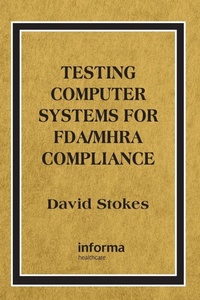
Testing Computers Systems for FDA/MHRA Compliance
1st Edition
Published on 25. November 2003
Book
Hardback
136 pages
978-0-8493-2163-4 (ISBN)
Description
There is no substitute for extensive testing when it comes to IT systems. Recognition that problems are easier and cheaper to fix before the system is in use (rather than after), has turned testing into a cost-effective tool. However, when developing computer systems for pharmaceuticals manufacturing, testing to meet regulatory requirements adds an additional layer of complexity. Testing Computers Systems for FDA/MHRA Compliance focuses on software module, software integration, hardware, and system acceptance testing. Reflecting the renewed emphasis of the FDA and other global regulatory agencies towards systematic inspections and risk-based validation with an underlying scientific rationale, this guide focuses on current best practices in computer systems testing in the regulatory environment.
David Stokes demonstrates how the principles detailed in the GAMP 4 Guide can be used to define a pragmatic approach to testing. He includes techniques for testing large Internet-based systems for compliance with the stringent requirements of regulations such as 21CFR Part 11, and clarifies the relationship and responsibilities of the system "user" and "supplier". The author also delineates where testing starts in the project lifecycle, who performs what testing, where the lines of responsibility start and end, and the differences in the terminology used in the healthcare and general IT sectors. A checklist of questions to be used when developing System Test Specification(s), and templates for documenting typical system test results, round out the features that make this book a practical guide for all those involved in the development and implementation of IT systems for the pharmaceutical and related healthcare manufacturing industries. Senior managers, team project leaders, project team members, and industry trainees, will all benefit from this clear and practical guide.
David Stokes demonstrates how the principles detailed in the GAMP 4 Guide can be used to define a pragmatic approach to testing. He includes techniques for testing large Internet-based systems for compliance with the stringent requirements of regulations such as 21CFR Part 11, and clarifies the relationship and responsibilities of the system "user" and "supplier". The author also delineates where testing starts in the project lifecycle, who performs what testing, where the lines of responsibility start and end, and the differences in the terminology used in the healthcare and general IT sectors. A checklist of questions to be used when developing System Test Specification(s), and templates for documenting typical system test results, round out the features that make this book a practical guide for all those involved in the development and implementation of IT systems for the pharmaceutical and related healthcare manufacturing industries. Senior managers, team project leaders, project team members, and industry trainees, will all benefit from this clear and practical guide.
More details
Language
English
Place of publication
Bosa Roca
United States
Publishing group
Taylor & Francis Inc
Target group
Professional and scholarly
Professional
Illustrations
7 s/w Abbildungen, 11 s/w Tabellen
11 Tables, black and white; 7 Illustrations, black and white
Dimensions
Height: 260 mm
Width: 183 mm
Thickness: 12 mm
Weight
465 gr
ISBN-13
978-0-8493-2163-4 (9780849321634)
Copyright in bibliographic data and cover images is held by Nielsen Book Services Limited or by the publishers or by their respective licensors: all rights reserved.
Schweitzer Classification
Other editions
Additional editions
David Stokes
Testing Computers Systems for FDA/MHRA Compliance
E-Book
11/2003
CRC Press
€225.99
Available for download
David Stokes
Testing Computers Systems for FDA/MHRA Compliance
E-Book
11/2003
1st Edition
CRC Press
€225.99
Available for download
Person
David Stokes
Content
Purpose. Scope. Why Do We Test? What to Test. The Test Strategy. The Development Lifecycle of a Test Specification. Recommended Content for System Test Specification(s). Good Testing Practices. Supplier System Test Reports/Qualification. The Use of Electronic Test Management and Automated Test Tools. Appendices.