

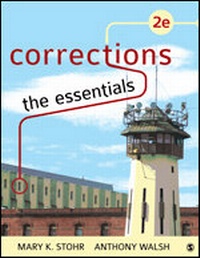
Corrections: The Essentials
2nd Edition
Published on 19. February 2015
Book
Paperback/Softback
384 pages
978-1-4833-7224-2 (ISBN)
Description
This book includes the usual topics typically found in corrections textbooks, from the history and development of correctional institutions, to the future of corrections. The book's brevity makes it an excellent core textbook that can easily be supplemented with additional reading materials.
New to this Edition:
Two new chapters on Ethics and the Death Penalty
Topic coverage added are: restorative justice, the elderly, mental illness, transgendered inmates, Native Americans, and correctional programming.
Perspective from a Practitioner essay feature added to each chapter. Guests would be experts on particular topics, such as practitioners, ex-offenders, inmates, and professors.
Added Ethical Issues boxes that present a scenario and ask the student "What Would You Do?"
New to this Edition:
Two new chapters on Ethics and the Death Penalty
Topic coverage added are: restorative justice, the elderly, mental illness, transgendered inmates, Native Americans, and correctional programming.
Perspective from a Practitioner essay feature added to each chapter. Guests would be experts on particular topics, such as practitioners, ex-offenders, inmates, and professors.
Added Ethical Issues boxes that present a scenario and ask the student "What Would You Do?"
Reviews / Votes
"This is an outstanding primer that students of criminal justice, psychology, sociology, criminology, and social work, working in corrections, cannot be without. A must read that is concise and understandable by all regardless of background!" -- Joel L. Carr, Ph.D., LCSW, LPC "The material is presented in a very clear and concise manner. The book is written in a manner that is highly organized." -- Lisa M. Carter "I like this book, it offers a good introduction to new students and informs the reader of current, and recent, developments in correctional services." -- Dr. Andy Bain "It covers the material with great insight and allows my students to purchase a text at a reasonable cost with all of the resources and tools available." -- Joe Marinello, MA, CCFC, QMHP "Low cost, well organized, thorough yet concise." -- Caryn E. SaxonMore details
Edition
2nd Revised edition
Language
English
Place of publication
Thousand Oaks
United States
Target group
College/higher education
Edition type
Revised edition
Dimensions
Height: 279 mm
Width: 216 mm
Weight
888 gr
ISBN-13
978-1-4833-7224-2 (9781483372242)
Copyright in bibliographic data and cover images is held by Nielsen Book Services Limited or by the publishers or by their respective licensors: all rights reserved.
Schweitzer Classification
Other editions
New editions
Book
04/2018
3rd Edition
SAGE Publications Inc
€100.47
Article is exhausted; no reprint
Persons
Mary K. Stohr is a professor in the Department of Criminal Justice at Washington State University. She earned her PhD in political science, with specializations in criminal justice and public administration, from Washington State University. Previously she worked at Missouri State, Boise State, and New Mexico State Universities for a total of 23 years. Before entering academe Stohr, worked in an adult male prison in Washington state as a correctional officer (for less than a year) and as a correctional counselor (for about two years). Stohr has published seven books and a total of over 150 other academic works of one sort or another in the areas of correctional organizations and operation, correctional personnel, client needs and assessment, program evaluation, drug policy and victimization. She is both a Founders and Fellows Award winner from the Academy of Criminal Justice Sciences.
Anthony Walsh, is a professor of criminology at Boise State University. He received his PhD from Bowling Green State University at the ripe old age of 43. He has field experience in law enforcement and corrections and is the author of more than 150 journal articles and book chapters and 41 books, including Biology and Criminology; Feminist Criminology Through a Biosocial Lens; Law, Justice, and Society (with Hemmens); Correctional Assessment, Casework, and Counseling (with Stohr); The Neurobiology of Criminal Behavior: Gene-Brain-Culture Interaction (with Bolen, Ashgate); Corrections: The Essentials (with Stohr); The Science Wars: The Politics of Gender and Race; Criminological Theory: Assessing Philosophical Assumptions; Biosociology: Bridging the Biology-Sociology Divide; Criminology: The Essentials (with Jorgensen); and Answering Atheists: How Science Points to God and the Benefits of Christianity. His interests include biosocial criminology, statistics, and criminal justice assessment and counseling.
Anthony Walsh, is a professor of criminology at Boise State University. He received his PhD from Bowling Green State University at the ripe old age of 43. He has field experience in law enforcement and corrections and is the author of more than 150 journal articles and book chapters and 41 books, including Biology and Criminology; Feminist Criminology Through a Biosocial Lens; Law, Justice, and Society (with Hemmens); Correctional Assessment, Casework, and Counseling (with Stohr); The Neurobiology of Criminal Behavior: Gene-Brain-Culture Interaction (with Bolen, Ashgate); Corrections: The Essentials (with Stohr); The Science Wars: The Politics of Gender and Race; Criminological Theory: Assessing Philosophical Assumptions; Biosociology: Bridging the Biology-Sociology Divide; Criminology: The Essentials (with Jorgensen); and Answering Atheists: How Science Points to God and the Benefits of Christianity. His interests include biosocial criminology, statistics, and criminal justice assessment and counseling.
Content
Chapter 1: The Philosophical and Ideological Underpinnings of Corrections
Introduction: What Is Corrections?
From Arrest to Punishment
The Theoretical Underpinnings of Corrections
Short History of Correctional Punishment
The Emergence of Positivism: Should Punishment Fit the Offender or the Offense?
The Function of Punishment
The Philosophical Assumptions behind Justifications for Punishment
The Major Punishment Justifications
Retribution
Deterrence
Incapacitation
Selective Incapacitation
Rehabilitation
Reintegration
The Four Legal Traditions and Why They are Useful to Know
The Due Process and Crime Control Models and Cultural Comparisons
The Crime Control Model
The Due Process Model
Is the United States Hard or Soft on Crime?
Chapter 2: Correctional History: Ancient Times-Colonial Jails
Introduction: The Evolving Practice of Corrections
Themes: Truths That Underlie Correctional Practice
Early Punishments in Westernized Countries
Enlightenment - Paradigm Shift
Colonial Jails and Prisons
Chapter 3: Correctional History: The 17th-20th Century
Introduction: The Grand Reforms
Early Modern Prisons and the Pennsylvania and New York Models
Early Prisons and Jails Not Reformed
The Renewed Promise of Reform
Southern and Northern Prisons and the Contract and Lease Systems, and Industrial Prisons
Correctional Institutions or Warehouse Prisons?
Themes That Prevail in Correctional History
Chapter 4: Ethics and Corrections
Introduction: To Do the Right Thing!
Defining Ethics: What is Right (and Wrong)?
Ethical Foundation For Professional Practice
Why People Behave Unethically
How to Prevent Unethical Behavior and to Promote Ethical Work Practices
War on Drugs = Attack on Ethics?
Chapter 5: Sentencing: The Application of Punishment
What is Sentencing?
Types of Sentences: Indeterminate, Determinate, and Mandatory
Habitual Offender Statutes
Other Types of Sentences: Shock, Split, and Non-Custodial Sentences
Victim Impact Statements
Sentencing by Civil Commitment for Sex Offenders
Problem-Solving Courts
Drug Courts
Sentencing Disparity, Legitimate and Illegitimate
Structuring Sentencing: The Presentence Investigation Report
Structuring Sentencing: The Presentence Investigation Report
Structured Sentencing: Sentencing Guidelines
The Future of Sentencing Guidelines
The American Correctional Association's Statement on Sentencing
Chapter 6: Jails
Introduction: The Community Institution
Jail Types
Jail Inmates and Their Processing
Overcrowding
Gender, Juveniles, Race, and Ethnicity
The Poor and the Mentally Ill
Medical Problems
Substance Abuse and Jails
Suicides, Gangs and Sexual Violence in Jails
Innovations in Jails: New Generation/Podular Direct Supervision Jails, Community Jails,
Chapter 7: Community Corrections: Probation and Intermediary Sanctions
The Origins of Probation
Number and Demographic Characteristics of Offenders on Probation
Why do we Need Community Corrections?
The Probation Officer Role
Models of Probation Supervision
Probation Violations and Graduated Sanctions
Probation Officer Stress
Community Supervision and Recidivism
Engaging the Community to Prevent Recidivism
Intermediate Sanctions
Work Release
Intensive Supervision Probation
Shock Probation/Parole and Boot Camps
Victim-Offender Reconciliation Programs (VORPs)
Chapter 8: Prisons
Introduction: The State of Prisons
Prison Organizations
Prison Value?
Attributes of the Prison That Shape the Experience
The Prison Subculture
Gangs and the Prison Subculture
Violence
Solutions: Strategies to Reduce Violence, Mature Coping and Social Support
Special Populations
Chapter 9: The Corrections Experience for Staff
Introduction
The State of the Work in Correctional Institutions and Programs
Why the Need to Require More Education and Training Exists
Stanford Prison Experiment
Organizational-Level Factors That Affect the Correctional Workplace
Individual-Level Factors That Affect the Correctional Workplace
Correctional Roles
The Subculture and Socialization
Staff Interactions With Inmates
Other Issues for Staff: Stress, Burnout, Turnover
Ethics
Perceived Benefits of Correctional Work
Chapter 10: Community Corrections: Parole and Prisoner Reentry
What is Parole?
Parole Boards
What Goes in Must Come Out: Prisoner Reentry into the Community
The Impact of Imprisonment and Reentry on Communities
What Makes for a Successful Reentry?
Determining Parole "Success"
Parole Violations and Graduated Sanctions
Halfway Houses
House Arrest, Electronic Monitoring, and Global Positioning Systems
Concluding Remarks on Reenty and Recidivism
Chapter 11: Women and Corrections
Introduction
History and Growth
Current Figures on the Number of Women and Girls in Corrections
Females in Corrections: Needs, Programming, Abuse, and Adjustment
Female Correctional Officers
Chapter 12: Minorities and Corrections
Introduction
Defining Race, Ethnicity, Disparity, and Discrimination
A Legacy of Racism: African Americans, American Indians, Hispanics, Asian Americans
The Connection Between Class and Race/Ethnicity
Minorities: Policies and Practices That Have Resulted in Increased Incarceration
Minorities: Adjustment to Incarceration
Minorities Working in Corrections
Chapter 13: Juveniles and Corrections
Introduction: Delinquency and Status Offending
The Extent of Delinquency
The Juvenile Brain and Juvenile Behavior
History and Philosophy of Juvenile Justice
Childhood in the United States
The Beginning of the Juvenile Courts
Processing Juvenile Offenders
Juveniles Waived to Criminal Court
Extending Due Process to Juveniles
Juveniles and the Death Penalty
Juvenile Community Corrections
Intensive Probation
Residential and Institutional Juvenile Corrections
Chapter 14: Legal Issues in Corrections
Introduction
The Rule of Law
The Hands-Off Period: 1866-1963
The Prisoners' Rights Period: 1964-1978
First Amendment
Fourth Amendment
Eighth Amendment
Fourteenth Amendment
The Civil Commitment of Sex Offenders
Prisoners' Rights in Comparison Countries
Curtailing Prisoner Petitions
Legal Issues in Probation and Parole
Chapter 15: Correctional Programming and Treatment
The Rise and Fall (and Rise Again) of Rehabilitation
The Shift from "Nothing Works" to "What Works?"
Evidence-Based Practices
Cognitive-Behavioral Therapy
Substance Abuse Programming
Drug Treatment with Swift Consequences for Failure: Hawaii's HOPE Program
Therapeutic Communities
Pharmacological Treatment
Anger Management
Sex Offenders and Their Treatment
Mentally Ill Offenders
Chapter 16: The Death Penalty
The Death Penalty and Public Opinion
Methods of Execution used in the United States
Legal Challenges to the Death Penalty
Does the Death Penalty Deter?
Financial Costs and the Death Penalty
Racial Disparity in Death Sentences
The Issue of Victim's Race
Women and the Death Penalty
The Chivalry Hypotheses
The Evil Women Hypotheses
The Death Penalty and Mental Disability
The Death Penalty and Mental Illness
The Innocence Revolution
Some Concerns with DNA Technology
Some Concerns with Neuroimaging Technology
Chapter 17: Corrections in the 21st Century
Introduction: Learning From the Past So That We Have Hope for the Future
Punitive Policies Yield Overuse of Corrections
Decarceration
Professionalization
Corrections Is a Relationship Business
Privatization
Concluding Thoughts
Introduction: What Is Corrections?
From Arrest to Punishment
The Theoretical Underpinnings of Corrections
Short History of Correctional Punishment
The Emergence of Positivism: Should Punishment Fit the Offender or the Offense?
The Function of Punishment
The Philosophical Assumptions behind Justifications for Punishment
The Major Punishment Justifications
Retribution
Deterrence
Incapacitation
Selective Incapacitation
Rehabilitation
Reintegration
The Four Legal Traditions and Why They are Useful to Know
The Due Process and Crime Control Models and Cultural Comparisons
The Crime Control Model
The Due Process Model
Is the United States Hard or Soft on Crime?
Chapter 2: Correctional History: Ancient Times-Colonial Jails
Introduction: The Evolving Practice of Corrections
Themes: Truths That Underlie Correctional Practice
Early Punishments in Westernized Countries
Enlightenment - Paradigm Shift
Colonial Jails and Prisons
Chapter 3: Correctional History: The 17th-20th Century
Introduction: The Grand Reforms
Early Modern Prisons and the Pennsylvania and New York Models
Early Prisons and Jails Not Reformed
The Renewed Promise of Reform
Southern and Northern Prisons and the Contract and Lease Systems, and Industrial Prisons
Correctional Institutions or Warehouse Prisons?
Themes That Prevail in Correctional History
Chapter 4: Ethics and Corrections
Introduction: To Do the Right Thing!
Defining Ethics: What is Right (and Wrong)?
Ethical Foundation For Professional Practice
Why People Behave Unethically
How to Prevent Unethical Behavior and to Promote Ethical Work Practices
War on Drugs = Attack on Ethics?
Chapter 5: Sentencing: The Application of Punishment
What is Sentencing?
Types of Sentences: Indeterminate, Determinate, and Mandatory
Habitual Offender Statutes
Other Types of Sentences: Shock, Split, and Non-Custodial Sentences
Victim Impact Statements
Sentencing by Civil Commitment for Sex Offenders
Problem-Solving Courts
Drug Courts
Sentencing Disparity, Legitimate and Illegitimate
Structuring Sentencing: The Presentence Investigation Report
Structuring Sentencing: The Presentence Investigation Report
Structured Sentencing: Sentencing Guidelines
The Future of Sentencing Guidelines
The American Correctional Association's Statement on Sentencing
Chapter 6: Jails
Introduction: The Community Institution
Jail Types
Jail Inmates and Their Processing
Overcrowding
Gender, Juveniles, Race, and Ethnicity
The Poor and the Mentally Ill
Medical Problems
Substance Abuse and Jails
Suicides, Gangs and Sexual Violence in Jails
Innovations in Jails: New Generation/Podular Direct Supervision Jails, Community Jails,
Chapter 7: Community Corrections: Probation and Intermediary Sanctions
The Origins of Probation
Number and Demographic Characteristics of Offenders on Probation
Why do we Need Community Corrections?
The Probation Officer Role
Models of Probation Supervision
Probation Violations and Graduated Sanctions
Probation Officer Stress
Community Supervision and Recidivism
Engaging the Community to Prevent Recidivism
Intermediate Sanctions
Work Release
Intensive Supervision Probation
Shock Probation/Parole and Boot Camps
Victim-Offender Reconciliation Programs (VORPs)
Chapter 8: Prisons
Introduction: The State of Prisons
Prison Organizations
Prison Value?
Attributes of the Prison That Shape the Experience
The Prison Subculture
Gangs and the Prison Subculture
Violence
Solutions: Strategies to Reduce Violence, Mature Coping and Social Support
Special Populations
Chapter 9: The Corrections Experience for Staff
Introduction
The State of the Work in Correctional Institutions and Programs
Why the Need to Require More Education and Training Exists
Stanford Prison Experiment
Organizational-Level Factors That Affect the Correctional Workplace
Individual-Level Factors That Affect the Correctional Workplace
Correctional Roles
The Subculture and Socialization
Staff Interactions With Inmates
Other Issues for Staff: Stress, Burnout, Turnover
Ethics
Perceived Benefits of Correctional Work
Chapter 10: Community Corrections: Parole and Prisoner Reentry
What is Parole?
Parole Boards
What Goes in Must Come Out: Prisoner Reentry into the Community
The Impact of Imprisonment and Reentry on Communities
What Makes for a Successful Reentry?
Determining Parole "Success"
Parole Violations and Graduated Sanctions
Halfway Houses
House Arrest, Electronic Monitoring, and Global Positioning Systems
Concluding Remarks on Reenty and Recidivism
Chapter 11: Women and Corrections
Introduction
History and Growth
Current Figures on the Number of Women and Girls in Corrections
Females in Corrections: Needs, Programming, Abuse, and Adjustment
Female Correctional Officers
Chapter 12: Minorities and Corrections
Introduction
Defining Race, Ethnicity, Disparity, and Discrimination
A Legacy of Racism: African Americans, American Indians, Hispanics, Asian Americans
The Connection Between Class and Race/Ethnicity
Minorities: Policies and Practices That Have Resulted in Increased Incarceration
Minorities: Adjustment to Incarceration
Minorities Working in Corrections
Chapter 13: Juveniles and Corrections
Introduction: Delinquency and Status Offending
The Extent of Delinquency
The Juvenile Brain and Juvenile Behavior
History and Philosophy of Juvenile Justice
Childhood in the United States
The Beginning of the Juvenile Courts
Processing Juvenile Offenders
Juveniles Waived to Criminal Court
Extending Due Process to Juveniles
Juveniles and the Death Penalty
Juvenile Community Corrections
Intensive Probation
Residential and Institutional Juvenile Corrections
Chapter 14: Legal Issues in Corrections
Introduction
The Rule of Law
The Hands-Off Period: 1866-1963
The Prisoners' Rights Period: 1964-1978
First Amendment
Fourth Amendment
Eighth Amendment
Fourteenth Amendment
The Civil Commitment of Sex Offenders
Prisoners' Rights in Comparison Countries
Curtailing Prisoner Petitions
Legal Issues in Probation and Parole
Chapter 15: Correctional Programming and Treatment
The Rise and Fall (and Rise Again) of Rehabilitation
The Shift from "Nothing Works" to "What Works?"
Evidence-Based Practices
Cognitive-Behavioral Therapy
Substance Abuse Programming
Drug Treatment with Swift Consequences for Failure: Hawaii's HOPE Program
Therapeutic Communities
Pharmacological Treatment
Anger Management
Sex Offenders and Their Treatment
Mentally Ill Offenders
Chapter 16: The Death Penalty
The Death Penalty and Public Opinion
Methods of Execution used in the United States
Legal Challenges to the Death Penalty
Does the Death Penalty Deter?
Financial Costs and the Death Penalty
Racial Disparity in Death Sentences
The Issue of Victim's Race
Women and the Death Penalty
The Chivalry Hypotheses
The Evil Women Hypotheses
The Death Penalty and Mental Disability
The Death Penalty and Mental Illness
The Innocence Revolution
Some Concerns with DNA Technology
Some Concerns with Neuroimaging Technology
Chapter 17: Corrections in the 21st Century
Introduction: Learning From the Past So That We Have Hope for the Future
Punitive Policies Yield Overuse of Corrections
Decarceration
Professionalization
Corrections Is a Relationship Business
Privatization
Concluding Thoughts