


An Introduction to Queer Literary Studies
Reading Queerly
1st Edition
Published on 1. November 2022
Book
Hardback
224 pages
978-0-367-67810-4 (ISBN)
Description
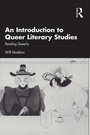
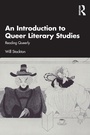
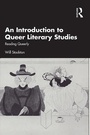
An Introduction to Queer Literary Studies: Reading Queerly is the first introduction to queer theory written especially for students of literature. Tracking the emergence of queer theory out of gay and lesbian studies, this book pays unique attention to how queer scholars have read some of the most well-known works in the English language.
Organized thematically, this book explores queer theoretical treatments of sexual identity, gender and sexual norms and normativity, negativity and utopianism, economics and neoliberalism, and AIDS activism and disability. Each chapter expounds upon foundational works in queer theory by scholars including Michel Foucault, Eve Kosofsky Sedgwick, and Lee Edelman. Each chapter also offers readings of primary texts -ranging from the highly canonical, like John Milton's Paradise Lost, to more contemporary works of popular fiction, like Stephen King's 'Salem's Lot. Along the way, An Introduction to Queer Literary Studies: Reading Queerly demonstrates how queer reading methods work alongside other methods like feminism, historicism, deconstruction, and psychoanalysis.
By modelling queer readings, this book invites literature students to develop queer readings of their own. It also suggests that reading queerly is not simply a matter of reading work written by queer people. Queer reading attunes us to the queerness of even the most straightforward text.
Organized thematically, this book explores queer theoretical treatments of sexual identity, gender and sexual norms and normativity, negativity and utopianism, economics and neoliberalism, and AIDS activism and disability. Each chapter expounds upon foundational works in queer theory by scholars including Michel Foucault, Eve Kosofsky Sedgwick, and Lee Edelman. Each chapter also offers readings of primary texts -ranging from the highly canonical, like John Milton's Paradise Lost, to more contemporary works of popular fiction, like Stephen King's 'Salem's Lot. Along the way, An Introduction to Queer Literary Studies: Reading Queerly demonstrates how queer reading methods work alongside other methods like feminism, historicism, deconstruction, and psychoanalysis.
By modelling queer readings, this book invites literature students to develop queer readings of their own. It also suggests that reading queerly is not simply a matter of reading work written by queer people. Queer reading attunes us to the queerness of even the most straightforward text.
More details
Language
English
Place of publication
London
United Kingdom
Publishing group
Taylor & Francis Ltd
Target group
College/higher education
Postgraduate, Undergraduate Advanced, and Undergraduate Core
Illustrations
7 s/w Photographien bzw. Rasterbilder, 7 s/w Abbildungen
7 Halftones, black and white; 7 Illustrations, black and white
Dimensions
Height: 235 mm
Width: 157 mm
Thickness: 16 mm
Weight
471 gr
ISBN-13
978-0-367-67810-4 (9780367678104)
Copyright in bibliographic data and cover images is held by Nielsen Book Services Limited or by the publishers or by their respective licensors: all rights reserved.
Schweitzer Classification
Other editions
Additional editions
E-Book
11/2022
1st Edition
Routledge
€49.99
Available for download
Book
11/2022
1st Edition
Routledge
€57.00
Shipment within 15-20 days
E-Book
11/2022
1st Edition
Routledge
€49.99
Available for download
Person
Will Stockton is Professor of English at Clemson University. His previous books include Members of His Body: Shakespeare, Paul, and a Theology of Nonmonogamy (Fordham University Press, 2017) and Playing Dirty: Sexuality and Waste in Early Modern Comedy (University of Minnesota Press, 2011).
Content
Preface
Introduction
Chapter 1: Identity
Chapter 2: Normativity
Chapter 3: Negativity
Chapter 4: Economy
Chapter 5: Disability
Epilogue
Index
Introduction
Chapter 1: Identity
Chapter 2: Normativity
Chapter 3: Negativity
Chapter 4: Economy
Chapter 5: Disability
Epilogue
Index