

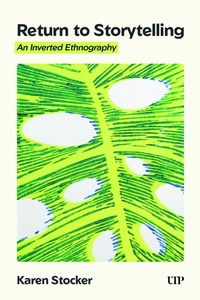
Return to Storytelling
An Inverted Ethnography
Will be published approx. on 15. September 2026
Book
Paperback/Softback
264 pages
978-1-0498-0791-1 (ISBN)
Description
Return to Storytelling is a lyrical ethnographic work that presents stories from healers, community members, storytellers, witches, sceptics, and tricksters in an intentionally unnamed Central American Indigenous community.
Anthropologist Karen Stocker investigates how stories of all kinds - written historical accounts, stories told within the community, and stories familiar to readers from North American backgrounds - shape people's frameworks for interpreting both the everyday and the extraordinary. Stocker interrogates history as portrayed in sixteenth-century chronicles and upends scholarly writing styles in favour of the verbal artistry characteristic of the community as well as the Latin American magical realist genre. Thus, Return to Storytelling constitutes an inverted ethnography that prioritizes community collective memory over colonizers' accounts, and privileges critical insight conveyed in accessible language over jargon-laden writing. At the same time, it remains grounded in sound, long-term ethnographic research and ultimately urges readers to question how they know what they know.
By refusing clear distinctions between scholarly voice and storytelling, past and present, or belief and scepticism, this book invites readers to sit with ambiguity as a productive space of knowledge. It offers not only a rethinking of ethnographic practice but also a broader meditation on storytelling as a political, ethical, and imaginative force that continues to shape lives long after colonial encounters.
Anthropologist Karen Stocker investigates how stories of all kinds - written historical accounts, stories told within the community, and stories familiar to readers from North American backgrounds - shape people's frameworks for interpreting both the everyday and the extraordinary. Stocker interrogates history as portrayed in sixteenth-century chronicles and upends scholarly writing styles in favour of the verbal artistry characteristic of the community as well as the Latin American magical realist genre. Thus, Return to Storytelling constitutes an inverted ethnography that prioritizes community collective memory over colonizers' accounts, and privileges critical insight conveyed in accessible language over jargon-laden writing. At the same time, it remains grounded in sound, long-term ethnographic research and ultimately urges readers to question how they know what they know.
By refusing clear distinctions between scholarly voice and storytelling, past and present, or belief and scepticism, this book invites readers to sit with ambiguity as a productive space of knowledge. It offers not only a rethinking of ethnographic practice but also a broader meditation on storytelling as a political, ethical, and imaginative force that continues to shape lives long after colonial encounters.
More details
Series
Language
English
Place of publication
Toronto
Canada
Target group
College/higher education
Professional and scholarly
Product notice
Paperback (trade)
Dimensions
Height: 229 mm
Width: 152 mm
Thickness: 25 mm
Weight
376 gr
ISBN-13
978-1-0498-0791-1 (9781049807911)
Copyright in bibliographic data and cover images is held by Nielsen Book Services Limited or by the publishers or by their respective licensors: all rights reserved.
Schweitzer Classification
Person
Karen Stocker is a professor in the Department of Anthropology at California State University, Fullerton.
Content
Part I: A Book of Spells: How People Talk about Witchcraft
Part II: Cultural Crossroads: Fictions and Fieldwork
Part III: Homecoming: Entrances, Exits, and Transitions
Appendix: Who Tells Whose Stories: Considerations of Cultural Appropriation
Questions for Individual Reflection, Discussion, and Classroom Exercises
References
Part II: Cultural Crossroads: Fictions and Fieldwork
Part III: Homecoming: Entrances, Exits, and Transitions
Appendix: Who Tells Whose Stories: Considerations of Cultural Appropriation
Questions for Individual Reflection, Discussion, and Classroom Exercises
References