

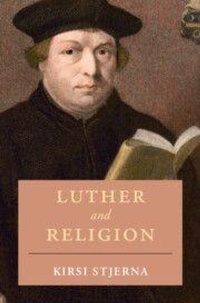
Luther and Religion
Will be published approx. on 31. October 2026
Book
Paperback/Softback
200 pages
978-1-108-74599-4 (ISBN)
Description
A disillusioned Martin Luther was losing his faith until he experienced freedom of conscience with the gospel of grace that he found from his un-authorized re-reading of the Scriptures. This experience stimulated Luther's desire to free the Christian religion from teachings that could burden the human soul. In doing so, he offered a grammar for a Christian theology that is both mystical and liberating. Kirsi Stjerna here offers a contemporary reading of Luther's vision of a religion that is guided by concerns for freedom. Her study first considers Luther's understanding of the profound tension in human experience as simultaneously broken and holy; and second, how he aimed to orient Christians to live with freedom from despair via the security found in being grounded in God. Offering a critical reading of Luther's central insights and teachings, Stjerna invites readers to engage with Luther's story and contemplate the relevance of his theology in contemporary discourse on religion.
More details
Series
Language
English
Place of publication
Cambridge
United Kingdom
Product notice
Paperback (trade)
Illustrations
Worked examples or Exercises
ISBN-13
978-1-108-74599-4 (9781108745994)
Copyright in bibliographic data and cover images is held by Nielsen Book Services Limited or by the publishers or by their respective licensors: all rights reserved.
Schweitzer Classification
Other editions
Additional editions
Kirsi Stjerna
Luther and Religion
Book
approx. 10/2026
Cambridge University Press
€106.74
Not yet published
Person
Kirsi Stjerna is the First Lutheran, Los Angeles/Southwest California Synod Professor of Lutheran History and Theology at the Pacific Lutheran Theological Seminary. She is the author of Lutheran Theology: A Grammar of Faith (2020) and editor of Women Reformers of Early Modern Europe: Profiles, Texts, and Contexts (2023).
Content
Introduction: 1. Freedom questions, religion, and Luther; 2. Luther's journey with religion; 3. Authority and sources; 4. The way of the cross; Part II: 5. God of absolute goodness; 6. The human condition; 7. Justification - Union with Christ; Part III: 8. Religion reformed - Luther's testament in the Smalcald; 9. Conclusion; 10. Bibliography.