

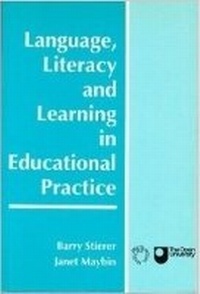
Language, Literacy and Learning in Educational Practice
Published on 22. November 1993
Book
Hardback
336 pages
978-1-85359-218-8 (ISBN)
Description
Language and literacy are highly contested areas of the curriculum. In recent years there has been a rapid development of new conceptual frameworks for understanding language, literacy and learning, from such diverse fields as anthropology, cultural studies, social psychology, and critical linguistics. The papers in this collection have been chosen because they will help readers to consider ways in which these new developments in theory and research may be applied to everyday practice.
More details
Series
Language
English
Place of publication
Bristol
United Kingdom
Publishing group
Channel View Publications Ltd
Target group
College/higher education
Professional and scholarly
Dimensions
Height: 234 mm
Width: 156 mm
Thickness: 23 mm
Weight
633 gr
ISBN-13
978-1-85359-218-8 (9781853592188)
Copyright in bibliographic data and cover images is held by Nielsen Book Services Limited or by the publishers or by their respective licensors: all rights reserved.
Schweitzer Classification
Other editions
Additional editions
Barry Stierer | Janet Maybin
Language, Literacy and Learning in Educational Practice
Book
11/1993
Multilingual Matters
€47.18
Article exhausted; check different version
Content
Preface
Sources
Introduction
PART 1: CONCEPTUALISING CHANGING PERSPECTIVES
1. John Willinsky: Introducing the New Literacy
2. Nigel Hall: The Emergence of Literacy
3. David Buckingham: Media Education: The Limits of a Discourse
PART 2: LANGUAGE AND LEARNING IN CULTURE AND PRACTICE
4. L.S. Vygotsky: Extracts from Thought and Language and Mind in Society
5. Jerome Bruner: From Communicating to Talking
6. Barbara M. Mayor: What Does It Mean to Be Bilingual?
7. Neil Mercer: Neo-Vygotskian Theory and Classroom Education
PART 3: THE DISCOURSE OF READING PEDAGOGY
8. Martin Turner: Sponsored Reading Failure
9. Barry Stierer: 'Simply Doing their Job?' The Politics of Reading Standards and 'Real Books'
PART 4: THE PRACTICE OF TALK IN CLASSROOMS
10. Maggie MacLure: Talking in Class: Four Rationales for the Rise of Oracy in the UK
11. Eunice Fisher: Distinctive Features of Pupil-Pupil Classroom Talk and Their Relationship to Learning: How Discursive Exploration Might be Encouraged
12. Joan Swann: What Do We Do About Gender?
13. Derek Edwards and Neil Mercer: Communication and Control
14. Anne Haas Dyson: The Value of 'Time Off Task': Young Children's Spontaneous Talk and Deliberate Text
15. Harry Torrance: Talk and Assessment
PART 5: THE PRACTICE OF WRITING IN CLASSROOMS
16. J.R. Martin, Frances Christie and Joan Rothery: Social Processes in Education: A Reply to Sawyer and Watson (and others)
17. Myra Barrs: Genre Theory: What's It All About?
18. Pam Gilbert: Authorizing Disadvantage: Authorship and Creativity in the Language Classroom
19. John Richmond: What Do We Mean by Knowledge About Language?
20. Marlene Scardamalia and Carl Bereiter: Development of Dialectical Processes in Composition
Sources
Introduction
PART 1: CONCEPTUALISING CHANGING PERSPECTIVES
1. John Willinsky: Introducing the New Literacy
2. Nigel Hall: The Emergence of Literacy
3. David Buckingham: Media Education: The Limits of a Discourse
PART 2: LANGUAGE AND LEARNING IN CULTURE AND PRACTICE
4. L.S. Vygotsky: Extracts from Thought and Language and Mind in Society
5. Jerome Bruner: From Communicating to Talking
6. Barbara M. Mayor: What Does It Mean to Be Bilingual?
7. Neil Mercer: Neo-Vygotskian Theory and Classroom Education
PART 3: THE DISCOURSE OF READING PEDAGOGY
8. Martin Turner: Sponsored Reading Failure
9. Barry Stierer: 'Simply Doing their Job?' The Politics of Reading Standards and 'Real Books'
PART 4: THE PRACTICE OF TALK IN CLASSROOMS
10. Maggie MacLure: Talking in Class: Four Rationales for the Rise of Oracy in the UK
11. Eunice Fisher: Distinctive Features of Pupil-Pupil Classroom Talk and Their Relationship to Learning: How Discursive Exploration Might be Encouraged
12. Joan Swann: What Do We Do About Gender?
13. Derek Edwards and Neil Mercer: Communication and Control
14. Anne Haas Dyson: The Value of 'Time Off Task': Young Children's Spontaneous Talk and Deliberate Text
15. Harry Torrance: Talk and Assessment
PART 5: THE PRACTICE OF WRITING IN CLASSROOMS
16. J.R. Martin, Frances Christie and Joan Rothery: Social Processes in Education: A Reply to Sawyer and Watson (and others)
17. Myra Barrs: Genre Theory: What's It All About?
18. Pam Gilbert: Authorizing Disadvantage: Authorship and Creativity in the Language Classroom
19. John Richmond: What Do We Mean by Knowledge About Language?
20. Marlene Scardamalia and Carl Bereiter: Development of Dialectical Processes in Composition