

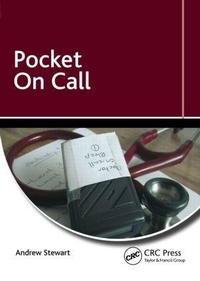
Pocket On Call
1st Edition
Published on 20. January 2015
Book
Paperback/Softback
151 pages
978-1-4441-8503-4 (ISBN)
Description
This genuinely pocket-sized guide to being on call is ideal for medical students and newly qualified junior doctors seeking a convenient and concise handbook to refer to in busy clinical settings. Clear, concise and systematic, Pocket on Call contains exactly what you need to make rapid and appropriate decisions without overwhelming or extraneous information.With this book in your pocket, you'll be equipped to tackle being on call appropriately and with confidence. Answering the questions that are not always addressed in the lecture theatre, with this book as an indispensable companion the inexperienced doctor will be equipped to tackle being on call appropriately and with confidence.
More details
Series
Language
English
Place of publication
London
United Kingdom
Publishing group
Taylor & Francis Ltd
Target group
Professional and scholarly
Professional Practice & Development
Product notice
Paperback (trade)
Unsewn / adhesive bound
Illustrations
4 Illustrations, black and white
Dimensions
Height: 142 mm
Width: 130 mm
Thickness: 6 mm
Weight
109 gr
ISBN-13
978-1-4441-8503-4 (9781444185034)
Copyright in bibliographic data and cover images is held by Nielsen Book Services Limited or by the publishers or by their respective licensors: all rights reserved.
Schweitzer Classification
Other editions
Additional editions
Person
Andrew Stewart, Specialist Registrar in Anaesthetics and Intensive Care Medicine, Sheffield, UK
Content
'Getting set'. General introduction. Introduction to on call. Preparing for on-call work. Acutely unwell patients. Being alerted to unwell patients. Remembering the alphabet... the 'A, B, C, D, E' assessment. The patient with chest pain. The patient with shortness of breath. The patient with an upper GI bleed. The acutely collapsed patient. The fitting patient. The patient with acute abdominal pain. The patient with sepsis. The patient in cardiac arrest. The fallen patient. The patient with a transfusion reaction. The patient with hyperkalaemia. The patient with an acute stroke. The patient with low urine output. Situations and communication. Talking to micro .... Presenting to seniors. Ordering portable plain chest radiographs (CXRs). Certifying the deceased patient. The post-take ward round. Blood bank, blood products, and massive haemorrhage protocols. Needlestick injury. Prescribing. Safe prescribing. Analgesia. Anti-emetics. Fluid prescribing. Bibliography. Index.