

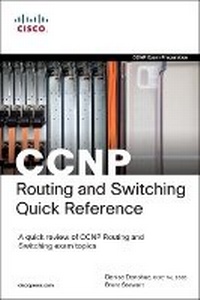
CCNP Routing and Switching Quick Reference (642-902, 642-813, 642-832)
Description
More details
Other editions
New editions

Previous edition
Persons
the data consulting arm of SBC/AT&T. She has co-authored several Cisco Press books in the areas of route/switch and voice. Denise has worked as a Cisco instructor and course director for Global Knowledge and was a network consultant for many years. Her areas of specialization include route/switch, voice, and data center.
Brent Stewart, CCNP (R), CCDP (R), CCSI, MCSE, is the manager of Connectivity Services at CommScope. He is responsible for designing and managing a largescale worldwide voice, video, and data network. Previously he was a course director for Global Knowledge and participated in the development of BSCI with Cisco and has written and taught extensively on CCNA (R) and CCNP. Brent lives in Hickory, NC, with his beautiful wife, Karen, and their mischievous children Benjamin, Kaitlyn, Madelyn, and William.
Content
ROUTE
Chapter 1 Planning for Complex Networks 1
Network Design Models 1
</b>Hierarchical Design Model 1
Enterprise Composite Model 2
Cisco Enterprise Architecture 7
<b>SONA and IIN 7
Understanding Routing Protocols 9
</b>Administrative Distance 9
Routing Protocol Characteristics 10
<b>Building the Routing Table 11
Choosing a Route 11
Planning a Routing Implementation 12
</b>Creating an Implementation Plan 12
Creating Implementation Documentation 13
<b>Chapter 2 EIGRP 14
EIGRP Overview 14
EIGRP Messages 15
</b>Packet Types 15
Neighbor Discovery and Route Exchange 15
<b>EIGRP Route Selection 16
</b>EIGRP Metric 16
Diffusing Update Algorithm (DUAL) 17
Route Selection Example 18
<b>Planning an EIGRP Implementation 19
Basic EIGRP Configuration 20
Creating an EIGRP Default Route 20
Verify and Troubleshoot EIGRP 21
EIGRP Across a WAN 21
</b>EIGRP over EoMPLS 21
EIGRP over MPLS 22
EIGRP over Frame Relay 23
WAN Bandwidth 24
<b>Customizing the EIGRP Configuration 25
</b>Passive Interface 25
Unicast Neighbors 25
Summarization 26
<b>Load Balancing 26
EIGRP Authentication 27
EIGRP Scalability 29
</b>EIGRP Stub 29
Active Process Enhancement 30
Graceful Shutdown 30
<b>Chapter 3 OSPF 31
OSPF Overview 31
</b>OSPF Network Structure 31
OSPF Metric 33
<b>Link State Advertisements (LSA) 34
</b>LSA Operation 34
LSDB Overload Protection 34
<b>LSA Types 35
OSPF Operation 35
</b>OSPF Packets 36
OSPF Neighbor Relationships 36
Establishing Neighbors and Exchanging Routes 37
<b>Planning for OSPF 37
Basic OSPF Configuration 38
Router ID 39
Verify and Troubleshoot OSPF 39
OSPF Network Types 40
</b>Designated Routers 41
Nonbroadcast Multiaccess (NBMA) Networks 42
OSPF over Layer 2 and Layer 3 MPLS 42
<b>Advanced OSPF Configuration 42
</b>OSPF Summarization 43
Passive Interface 43
OSPF Default Routes 44
Stub and Not-So-Stubby Areas 44
Virtual Links 45
OSPF Authentication 46
<b>Chapter 4 Optimizing Routing 48
Controlling Routing Updates 48
</b>Route Maps 48
Prefix Lists 52
Distribute Lists 54
Passive Interfaces 54
<b>Using Multiple Routing Protocols 54
</b>Configuring Route Redistribution 55
<b>Seed Metric 55
Administrative Distance 56
</b>Planning Route Redistribution 58
Redistribution Techniques 59
Redistribution Notes 59
<b>Chapter 5 Path Control 61
</b>Using Offset-lists 61
Using IOS IP SLA 62
Policy-Based Routing 64
OER and VRF 66
<b>Chapter 6 BGP and Internet Connectivity 67
Planning an Internet Connection 67
</b>To Route or Not to Route? 67
BGP Route Options 68
Types of ISP Connections 68
<b>BGP Overview 69
</b>BGP Databases 70
BGP Message Types 71
Internal and External BGP 71
BGP Next-Hop Selection 72
BGP Next Hop on a Multiaccess Network 73
BGP Synchronization Rule 73
<b>Configuring BGP 74
</b>BGP Network Command 74
BGP Peering 75
BGP Peering States 75
<b>BGP Path Selection 76
</b>BGP Attributes 76
BGP Path Selection Criteria 77
Influencing BGP Path Selection 78
<b>Filtering BGP Routes 78
BGP Authentication 79
Verifying BGP 80
Chapter 7 Branch Office Connectivity 83
Branch Office Design Considerations 83
</b>Small Branch Office Design 83
Medium Branch Office Design 84
Large Branch Office Design 84
<b>Implementing Branch Offices 84
</b>Verifying Existing Services 85
Configuring a Backup DSL Connection 85
Configuring an IPsec VPN 89
Configuring a Floating Static Route 90
Configuring Dynamic Routing over a GRE Tunnel 90
Load Sharing with EIGRP 92
<b>Chapter 8 Mobile Worker Connectivity 93
</b>Components of a Mobile Worker Solution 94
Implementing a Mobile Worker Solution 95
<b>Chapter 9 IPv6 Introduction 99
IPv6 Addressing 99
</b>Simplifying an IPv6 Address 100
Special Addresses 101
IPv6 Host Addressing 101
<b>IPv6 Routing 104
</b>Static Routing 105
RIPng for IPv6 105
EIGRP for IPv6 106
OSPFv3 107
MP-BGP for IPv6 109
RIPng Redistribution 109
<b>Integrating IPv4 and IPv6 110
</b>Tunneling IPv6 over IPv4 111
Using Address Translation 113
Static NAT-PT 113
Dynamic NAT-PT 113
<b>IPv6 Link Types 114
</b>Point-to-Point Links 114
Point-to-Multipoint Links 115
Multiaccess Links 115
<b>Appendix A Understanding IPsec 117
IPsec Headers 117
</b>Authentication Header 117
Encapsulating Security Payload 118
<b>IPsec Modes 118
Authentication Methods 119
Encryption Methods 119
</b>Symmetric Key Algorithms 119
Asymmetric Key Algorithm 120
Diffie-Hellman Key Exchange 120
<b>Key Management 120
Establishing an IPsec VPN 121
Configuring a Site-to-Site VPN Using IOS 121
</b>Configuring an ISAKMP Policy 122
Configuring an IPsec Transform Set 123
Configuring a Crypto ACL 123
Configuring a Crypto Map 124
Applying the Crypto Map to an Interface 124
Configuring an Optional Interface Access List 124
<b>Monitoring and Troubleshooting IPsec VPNs 125
Using GRE with IPsec 125
Configuring a GRE Tunnel Using IOS 126
Appendix B IPv6 Header Format 127
SWITCH
Chapter 1 Campus Network Design 129
The Hierarchical Design Model 129
Core Layer 130
</b>Small Campus Design 131
Medium Campus Design 131
Data Center Design 131
Network Traffic Flow 133
<b>Service-Oriented Network Architecture 134
Planning a Network Implementation 135
Chapter 2 VLAN Implementation 137
VLAN Overview 137
</b>VLAN Planning 139
Creating a VLAN and Assigning Ports 139
Verifying VLAN Configuration 139
<b>VLAN Trunking 141
</b>Configuring a Trunk Link 142
VLANs Allowed on the Trunk 143
Best Practices for Trunking 143
<b>VLAN Trunking Protocol 143
</b>VTP Switch Roles 144
Configuring VTP 145
Verifying and Monitoring VTP 145
Adding a New Switch to a VTP Domain 146
<b>EtherChannels 146
</b>Configuring an EtherChannel 147
<b>Verifying an EtherChannel 148
Troubleshooting VLAN Issues 148
</b>Troubleshooting User Connectivity 148
Troubleshooting Trunking 149
Troubleshooting VTP 149
<b>Chapter 3 Spanning Tree 150
Understanding the Spanning Tree Protocol 150
</b>Spanning Tree Election Criteria 151
STP Election 152
Bridge Protocol Data Units 154
Spanning Tree Port States 155
Per-VLAN Spanning-Tree 155
Configuring Spanning Tree 156
Portfast 156
<b>Rapid Spanning Tree 157
</b>RSTP Port Roles 157
BPDU Differences in RSTP 157
RSTP Fast Convergence 158
<b>Multiple Spanning Tree 159
Spanning Tree Stability Mechanisms 159
</b>UplinkFast 159
BackboneFast 160
BPDU Guard 160
BPDU Filtering 161
Root Guard 161
Unidirectional Link Detection 161
Loop Guard 162
<b>Troubleshooting STP 163
Identifying a Bridging Loop 163
Spanning-Tree Best Practices 164
Chapter 4 InterVLAN Routing 166
InterVLAN Routing Using an External Router 166
InterVLAN Routing Using Multilayer Switches 167
</b>The Layer 2 and Layer 3 Forwarding Process 167
Understanding the Switching Table 168
MLS Interfaces 168
Understanding Switch Forwarding Architectures 170
CEF Switching 170
Configuring and Troubleshooting CEF 171
<b>Chapter 5 Implementing High Availability 173
Components of High Availability 173
</b>Redundancy 173
Technology 173
People 174
Processes 175
Tools 175
<b>Resiliency and High Availability 176
</b>Network Level Resiliency 176
Fast Failover 176
<b>Optimizing Redundancy 177
</b>NSF with SSO 177
Designing for Redundancy 178
Layer 2 Versus Layer 3 Access Design 178
Using Nonchassis Based Access Switches 181
<b>Network Management for High Availability 181
</b>Syslog 182
SNMP 182
IP SLA 183
<b>Chapter 6 First Hop Redundancy 185
Hot Standby Router Protocol 185
</b>HSRP States 186
Configuring HSRP 186
<b>Virtual Router Redundancy Protocol 188
GLBP 189
</b>Planning Router Redundancy Implementation 190
<b>Chapter 7 Campus Network Security 191
MAC Address-Based Attacks 191
</b>MAC Address Flooding 192
Port Security 192
Port-Based Authentication 193
<b>VLAN-Based Attacks 194
</b>Switch Spoofing 194
802.1Q Double-Tagging 195
VACLs 195
Private VLANs 196
Protected Ports 197
<b>Spoof Attacks 197
</b>DHCP Spoofing 198
IP Source Guard 198
ARP Spoofing 198
<b>Securing Your Switch 199
Chapter 8 Voice and Video in a Campus Network 200
</b>VoIP in a Campus Network 201
Preparing the Network for VoIP 202
Voice VLANs 203
QoS for VoIP 204
Configuring VoIP Support on a Switch 206
<b>Video over IP 208
</b>QoS Requirements for Video 208
<b>Chapter 9 Wireless LANs in a Campus Network 210
Cisco Unified Wireless Network 210
Characteristics of Wireless LANs 211
</b>Service Set Identifiers (SSID) 211
WLAN Topologies 211
Client Connectivity 212
<b>Cisco Wireless Network Components 213
</b>Autonomous (Stand-alone) APs 213
Lightweight Access Points 214
Wireless LAN Controllers 215
Hybrid Remote Edge Access Point (H-REAP) 216
<b>Integrating Wireless into the LAN 216
</b>Switch Configuration 217
Planning for a Wireless Implementation 217
<b>TSHOOT
Chapter 1 Maintenance 219
Methodology 219
Common Tasks 220
Tools 223
</b>Configurations 223
Other Tools 228
<b><P style="MARGIN: 0px" align=left text-align="left">Chapter 2 Troubleshooting Methodology 230<P style="MARGIN: 0px" align=left text-align="left">Principles 230<P style="MARGIN: 0px" align=left text-align="left">Structured Troubleshooting 231<P style="MARGIN: 0px" align=left text-align="left">The Troubleshooting Method 232<P style="MARGIN: 0px" align=left text-align="left">Integrating Troubleshooting into Maintenance 233<P style="MARGIN: 0px" align=left text-align="left">Chapter 3 Troubleshooting Tools 235<P style="MARGIN: 0px" align=left text-align="left">IOS Filtering Tools 235<P style="MARGIN: 0px" align=left text-align="left">Output Redirection 242<P style="MARGIN: 0px" align=left text-align="left">IOS Troubleshooting Tools 242<P style="MARGIN: 0px" align=left text-align="left">Hardware Diagnostics 246</b><P style="MARGIN: 0px" align=left text-align="left"><b><P style="MARGIN: 0px" align=left text-align="left">Working with External Tools 249</b><P style="MARGIN: 0px" align=left text-align="left">Packet Sniffing 249<P style="MARGIN: 0px" align=left text-align="left">Netflow 250<P style="MARGIN: 0px" align=left text-align="left">SNMP and EEM 250<b><P style="MARGIN: 0px" align=left text-align="left">Chapter 4 Troubleshooting Switches 252<P style="MARGIN: 0px" align=left text-align="left">Spanning Tree 254<P style="MARGIN: 0px" align=left text-align="left">VLANs 257<P style="MARGIN: 0px" align=left text-align="left">Switched Virtual Interfaces and InterVLAN routing 258<P style="MARGIN: 0px" align=left text-align="left">First-Hop Redundancy 258<P style="MARGIN: 0px" align=left text-align="left">Chapter 5 Troubleshooting Routing 261<P style="MARGIN: 0px" align=left text-align="left">Network Layer Connectivity 261<P style="MARGIN: 0px" align=left text-align="left">Routing Protocols 261<P style="MARGIN: 0px" align=left text-align="left">EIGRP 262</b><P style="MARGIN: 0px" align=left text-align="left">Is the Correct Route Advertised? 262<P style="MARGIN: 0px" align=left text-align="left">Is the Correct Route Communicated? 263<P style="MARGIN: 0px" align=left text-align="left">Is There a More Desirable Path? 264<b><P style="MARGIN: 0px" align=left text-align="left">OSPF 264</b><P style="MARGIN: 0px" align=left text-align="left">Is the Correct Route Advertised? 264<P style="MARGIN: 0px" align=left text-align="left">Is the Correct Route Communicated? 264<P style="MARGIN: 0px" align=left text-align="left">Is There a More Desirable Path? 265<b><P style="MARGIN: 0px" align=left text-align="left">BGP 265</b><P style="MARGIN: 0px" align=left text-align="left">Is the Correct Route Advertised? 265<P style="MARGIN: 0px" align=left text-align="left">Is the Correct Route Communicated? 266<P style="MARGIN: 0px" align=left text-align="left">Is There a More Desirable Path? 266<P style="MARGIN: 0px" align=left text-align="left">Route Redistribution 267<b><P style="MARGIN: 0px" align=left text-align="left">Router Performance 268<P style="MARGIN: 0px" align=left text-align="left">Chapter 6 Troubleshooting Security Features 270<P style="MARGIN: 0px" align=left text-align="left">Troubleshooting Security Features 271<P style="MARGIN: 0px">Index 273</b>