

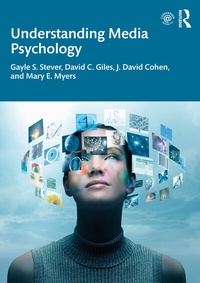
Understanding Media Psychology
1st Edition
Published on 29. September 2021
Book
Paperback/Softback
326 pages
978-0-367-51897-4 (ISBN)
Description
Understanding Media Psychology is the perfect introductory textbook to the growing field of media psychology and its importance in society, summarizing key concepts and theories to provide an overview of topics in the field.
Media is present in almost every area of life today, and is an area of study that will only increase in importance as the world becomes ever more interconnected. Written by a team of expert authors, this book will help readers to understand the structures, influences, and theories around media psychology. Covering core areas such as positive media psychology, the effects of gaming, violence, advertising, and pornography, the authors critically engage with contemporary discussions around propaganda, fake news, deepfakes, and the ways media have informed the COVID-19 pandemic. Particular care is also given to addressing the interaction between issues of social justice and the media, as well as the effects media has on both the members of marginalized groups and the way those groups are perceived. A final chapter addresses the nature of the field moving forward, and how it will continue to interact with closely related areas of study.
Containing a range of pedagogical features throughout to aid teaching and student learning, including vocabulary and key terms, discussion questions, and boxed examples, this is an essential resource for media psychology courses at the undergraduate and introductory master's level globally.
Media is present in almost every area of life today, and is an area of study that will only increase in importance as the world becomes ever more interconnected. Written by a team of expert authors, this book will help readers to understand the structures, influences, and theories around media psychology. Covering core areas such as positive media psychology, the effects of gaming, violence, advertising, and pornography, the authors critically engage with contemporary discussions around propaganda, fake news, deepfakes, and the ways media have informed the COVID-19 pandemic. Particular care is also given to addressing the interaction between issues of social justice and the media, as well as the effects media has on both the members of marginalized groups and the way those groups are perceived. A final chapter addresses the nature of the field moving forward, and how it will continue to interact with closely related areas of study.
Containing a range of pedagogical features throughout to aid teaching and student learning, including vocabulary and key terms, discussion questions, and boxed examples, this is an essential resource for media psychology courses at the undergraduate and introductory master's level globally.
Reviews / Votes
"Understanding Media Psychology is a long needed, approachable text that introduces students to the growing field of media psychology. Laced with examples ranging from classics to contemporary, it offers an engaging and clear overview of key theories, concepts, and issues in this area of research from an interdisciplinary perspective."Rebecca (Riva) Tukachinsky Forster, Chapman University, USA
"This is the book that I have been doing without for years and wanting desperately. Media Psychology has needed a text like this that explains and contextualizes the field, and that does so in a way that works for a variety of audiences. Like an Olympic gymnast who makes her moves look easy, the authors' clear and engaging style deftly delivers a tour-de-force in scholarship."
Karen Dill-Shackleford, Fielding Graduate University, USA
"This book is an all-inclusive scholarly bible of Media Psychology. The chapters, written by prominent celebrity scholar, Gayle Stever, and her talented team of media psychology authors, include the history of media psychology, research methods, positive psychology, social justice issues, advertising, media literacy, the audience, dark media, gaming, social media, Covid-19, and the future of media. This is all explained with familiar and practical pop culture examples that readers will certainly appreciate. Each chapter concludes with comprehensive questions that invite readers to evaluate the content and make it personally meaningful by connecting it to their attitudes, behaviors, and previous knowledge base. Consider this book as a staple in the library of everyone who needs a smart read on media psychology."
Joanne Broder, Media Psychologist and Former President, Society for Media Psychology and Technology "Understanding Media Psychology is a long needed, approachable text that introduces students to the growing field of media psychology. Laced with examples ranging from classics to contemporary, it offers an engaging and clear overview of key theories, concepts, and issues in this area of research from an interdisciplinary perspective."
Rebecca (Riva) Tukachinsky Forster, Chapman University, USA
"This is the book that I have been doing without for years and wanting desperately. Media Psychology has needed a text like this that explains and contextualizes the field, and that does so in a way that works for a variety of audiences. Like an Olympic gymnast who makes her moves look easy, the authors' clear and engaging style deftly delivers a tour-de-force in scholarship."
Karen Dill-Shackleford, Fielding Graduate University, USA
"This book is an all-inclusive scholarly bible of Media Psychology. The chapters, written by prominent celebrity scholar, Gayle Stever, and her talented team of media psychology authors, include the history of media psychology, research methods, positive psychology, social justice issues, advertising, media literacy, the audience, dark media, gaming, social media, Covid-19, and the future of media. This is all explained with familiar and practical pop culture examples that readers will certainly appreciate. Each chapter concludes with comprehensive questions that invite readers to evaluate the content and make it personally meaningful by connecting it to their attitudes, behaviors, and previous knowledge base. Consider this book as a staple in the library of everyone who needs a smart read on media psychology."
Joanne Broder, Media Psychologist and Former President, Society for Media Psychology and Technology
More details
Language
English
Place of publication
London
United Kingdom
Publishing group
Taylor & Francis Ltd
Target group
College/higher education
Illustrations
107 farbige Abbildungen, 10 farbige Zeichnungen, 97 Farbfotos bzw. farbige Rasterbilder, 5 farbige Tabellen
5 Tables, color; 10 Line drawings, color; 97 Halftones, color; 107 Illustrations, color
Dimensions
Height: 246 mm
Width: 174 mm
Weight
720 gr
ISBN-13
978-0-367-51897-4 (9780367518974)
Copyright in bibliographic data and cover images is held by Nielsen Book Services Limited or by the publishers or by their respective licensors: all rights reserved.
Schweitzer Classification
Other editions
New editions
Gayle S. Stever | David C. Giles | J. David Cohen
Understanding Media Psychology
Book
07/2025
2nd Edition
Routledge
€66.00
Shipment within 10-20 days
Additional editions
Gayle S. Stever | David C. Giles | J. David Cohen
Understanding Media Psychology
Book
09/2021
1st Edition
Routledge
€179.81
Article exhausted; check for reprint
Persons
Gayle S. Stever is Professor of Psychology for Empire State College of the State University of New York, USA. She works in the areas of developmental psychology, media psychology, and fan studies. Her writing has centered around celebrity-audience relationships, the nature of attachment both within and outside of a media context, evolutionary psychology as it relates to media, and mixed-methods research.
David C. Giles is Senior Lecturer in Psychology at the University of Winchester, UK. He explores the impact of media on human behavior with a particular interest in celebrity-audience relationships, the dynamics of online interaction, qualitative research methods, and psychological issues around artistic and cultural activities.
J. David Cohen is a Visitng Instructor in Psychology for Empire State College of the State University of New York, USA. He passionately pursues how media, technology, celebrity, and storytelling impact humans. Specific areas of interest include entertainment media, marketing and persuasion, video games, and mediated violence.
Mary E. Myers is program coordinator for the Doctor of Strategic Communications program at Regent University, Virginia, USA. She has developed and teaches in a unique applied strategic communication doctoral program. Her research work primarily centers on the discovery of an early educational radio broadcaster; she also explores parental attachment, social media, and crisis communication.
David C. Giles is Senior Lecturer in Psychology at the University of Winchester, UK. He explores the impact of media on human behavior with a particular interest in celebrity-audience relationships, the dynamics of online interaction, qualitative research methods, and psychological issues around artistic and cultural activities.
J. David Cohen is a Visitng Instructor in Psychology for Empire State College of the State University of New York, USA. He passionately pursues how media, technology, celebrity, and storytelling impact humans. Specific areas of interest include entertainment media, marketing and persuasion, video games, and mediated violence.
Mary E. Myers is program coordinator for the Doctor of Strategic Communications program at Regent University, Virginia, USA. She has developed and teaches in a unique applied strategic communication doctoral program. Her research work primarily centers on the discovery of an early educational radio broadcaster; she also explores parental attachment, social media, and crisis communication.
Content
Preface
Acknowledgments
Media and Media Psychology
Gayle S. Stever
Key Theories and Concepts from Media Psychology
Gayle S. Stever
Research Methods
Gayle S. Stever
Positive Psychology, Moral Reasoning, and Prosocial Behavior
Gayle S. Stever
Social Justice and the Media: Gender, Class, and Disability
Gayle S. Stever
Social Justice and the Media: Race, Ethnicity, and Religion
Gayle S. Stever
Aliens Eating Reese's: Media Influence and Advertising
J. David Cohen
Propaganda, Fake News, and Deepfaking
Mary E. Myers
Processes of Audience Involvement
Gayle S. Stever
Dark Media: Violence, Pornography, and Addiction
J. David Cohen
Join the Adventure: The Psychology of Gaming
J. David Cohen
The Social Nature of Media
Gayle S. Stever
The Turbulent 20s: Covid-19 and the Media
Gayle S. Stever & J. David Cohen
The Future of Media
David C. Giles
Index
Acknowledgments
Media and Media Psychology
Gayle S. Stever
Key Theories and Concepts from Media Psychology
Gayle S. Stever
Research Methods
Gayle S. Stever
Positive Psychology, Moral Reasoning, and Prosocial Behavior
Gayle S. Stever
Social Justice and the Media: Gender, Class, and Disability
Gayle S. Stever
Social Justice and the Media: Race, Ethnicity, and Religion
Gayle S. Stever
Aliens Eating Reese's: Media Influence and Advertising
J. David Cohen
Propaganda, Fake News, and Deepfaking
Mary E. Myers
Processes of Audience Involvement
Gayle S. Stever
Dark Media: Violence, Pornography, and Addiction
J. David Cohen
Join the Adventure: The Psychology of Gaming
J. David Cohen
The Social Nature of Media
Gayle S. Stever
The Turbulent 20s: Covid-19 and the Media
Gayle S. Stever & J. David Cohen
The Future of Media
David C. Giles
Index