

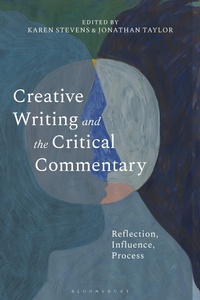
Creative Writing and the Critical Commentary
Reflection, Influence, Process
Will be published approx. on 25. June 2026
Book
Hardback
224 pages
978-1-350-43988-7 (ISBN)
Description
In this unique collection of essays, published writers offer an intimate view of how their work has been informed, shaped and transformed by their literary, political, philosophical or personal influences. Providing models of the critical commentaries that all students of creative writing must write, each essay from contemporary authors of fiction, creative non-fiction, poetry, scripts and digital writing demonstrates how what writers write is determined by what they have read, and what they read is then determined by what they are writing. As writers reflect on their process of moving from sources of inspiration to a finished and original piece of writing, they reveal their anxieties, passions, discoveries and motivations, offering fascinating insights into the imagination's journey. With opening chapters exploring the importance and wider contexts of why writers reflect on their own work, the book also offers theoretical frameworks for understanding influence and inspiration.
As illuminating for aspiring writers as it is for students reflecting on their research and process as part of writing courses, Creative Writing and the Critical Commentary will change the way writers talk about and engage with other texts.
As illuminating for aspiring writers as it is for students reflecting on their research and process as part of writing courses, Creative Writing and the Critical Commentary will change the way writers talk about and engage with other texts.
More details
Language
English
Place of publication
London
United Kingdom
Publishing group
Bloomsbury Publishing PLC
Target group
College/higher education
Dimensions
Height: 234 mm
Width: 156 mm
Thickness: 25 mm
Weight
454 gr
ISBN-13
978-1-350-43988-7 (9781350439887)
Copyright in bibliographic data and cover images is held by Nielsen Book Services Limited or by the publishers or by their respective licensors: all rights reserved.
Schweitzer Classification
Persons
Jonathan Taylor is Associate Professor of Creative Writing at Leicester University, UK. An author, editor, lecturer and critic, his books include the novels Melissa (Salt, 2015) and Entertaining Strangers (Salt, 2012), the memoir Take Me Home (Granta, 2007), as well as three academic monographs - most recently, Laughter, Literature, Violence, 1840-1930 (2018). He has taught Creative Writing and English in universities for over twenty years. He runs the popular blogs Everybody's Reviewing (www.everybodysreviewing.blogspot.co.uk) and Creative Writing at Leicester (www.creativewritingatleicester.blogspot.co.uk), and is on Twitter @crystalclearjt. His website is www.jonathanptaylor.co.uk.
Karen Stevens is Senior Lecturer in Creative Writing at the University of Chichester, UK where she specializes in teaching fiction. Her short stories have appeared in many small press publications, and she has edited critical and creative anthologies Writing a First Novel (Bloomsbury, 2014) and High Spirits (2018). She is on Twitter @KarenStevens01.
Karen Stevens is Senior Lecturer in Creative Writing at the University of Chichester, UK where she specializes in teaching fiction. Her short stories have appeared in many small press publications, and she has edited critical and creative anthologies Writing a First Novel (Bloomsbury, 2014) and High Spirits (2018). She is on Twitter @KarenStevens01.
Content
Part One: Introductory
1. Preface
2. On Reflection in Creative Writing
3. On Influence in Creative Writing
Part Two: Sample Critical Commentaries
4. The Personal Is Always Political, by Karen Stevens, University of Chichester, UK
5. The Art of Persuasion, by Jo Nadin, University of Bristol, UK
6. On the Genealogy of Memoirs, by Jonathan Taylor, University of Leicester, UK
7. 'The Community of Sorrow,' by David Swann, Royal Literary Fund Fellow at the University of Cumbria, UK
8. The End is Never Where You Think, by Dan Powell, Independent Scholar
9. The Age of Influence in the Age of Authenticity, by Jemma Kennedy, Independent Scholar
10. Go Outside, by Shaindel Beers, Blue Mountain Community College, Oregon, US
11. Jesus, Fairy Tales and Flash Fiction, by Kit de Waal, Jean Humphreys Writer in Residence, Leicester University, UK
12. Alternate Truths and Fake News, by Anietie Isong, Independent Scholar
13. Memoir and Main Character Syndrome, by Jenn Ashworth, Lancaster University, UK
14. Experimental Poetic Autography, by Lila Matsumoto, University of Nottingham, UK
15. Digital Narratives, Technology and the Domestic Gothic, by Kate Pullinger, Bath Spa University, UK
Part Three: Postscripts
16. Further Reading: Selected Bibliography
17. About the Contributors
Bibliography
Index
1. Preface
2. On Reflection in Creative Writing
3. On Influence in Creative Writing
Part Two: Sample Critical Commentaries
4. The Personal Is Always Political, by Karen Stevens, University of Chichester, UK
5. The Art of Persuasion, by Jo Nadin, University of Bristol, UK
6. On the Genealogy of Memoirs, by Jonathan Taylor, University of Leicester, UK
7. 'The Community of Sorrow,' by David Swann, Royal Literary Fund Fellow at the University of Cumbria, UK
8. The End is Never Where You Think, by Dan Powell, Independent Scholar
9. The Age of Influence in the Age of Authenticity, by Jemma Kennedy, Independent Scholar
10. Go Outside, by Shaindel Beers, Blue Mountain Community College, Oregon, US
11. Jesus, Fairy Tales and Flash Fiction, by Kit de Waal, Jean Humphreys Writer in Residence, Leicester University, UK
12. Alternate Truths and Fake News, by Anietie Isong, Independent Scholar
13. Memoir and Main Character Syndrome, by Jenn Ashworth, Lancaster University, UK
14. Experimental Poetic Autography, by Lila Matsumoto, University of Nottingham, UK
15. Digital Narratives, Technology and the Domestic Gothic, by Kate Pullinger, Bath Spa University, UK
Part Three: Postscripts
16. Further Reading: Selected Bibliography
17. About the Contributors
Bibliography
Index