

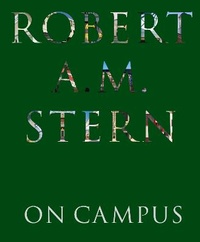
Robert A. M. Stern
On Campus
Published on 21. December 2010
Book
Hardback
576 pages
978-1-58093-283-7 (ISBN)
Description
At its best, the college campus is the representation of beliefs, of the specific character of a place, of a community, of an institution. It is the setting for the continually evolving interaction of people and ideas over time. - Robert A. M. Stern
Architect, educator, and architectural historian, Robert A. M. Stern brings special knowledge and expertise to issues of campus master planning and the design of academic buildings. This unique volume collects more than fifty projects by the firm for the most prestigious institutions in America - Harvard, Yale, Dartmouth, Georgetown, Stanford, University of Virginia - and focuses on the importance of the historic character of the place in charting the future.
In surveying the American campus, Stern begins with Thomas Jefferson's Academical Village at the University of Virginia and then considers its many heirs. He organizes campuses into three principal paradigms: the Embedded Campus, those closely connected with the fabric of the cities and towns in which they sit; the Citadel Campus, those perched above and removed from the surroundings; and the Garden Campus, those whose buildings sit in a more casual configuration in the landscape.
Each campus is described in detail, with historic photographs and campus plans illustrating its development. Projects by Robert A. M. Stern Architects are placed in their context, providing a complete view of these distinguished places of learning.
Architect, educator, and architectural historian, Robert A. M. Stern brings special knowledge and expertise to issues of campus master planning and the design of academic buildings. This unique volume collects more than fifty projects by the firm for the most prestigious institutions in America - Harvard, Yale, Dartmouth, Georgetown, Stanford, University of Virginia - and focuses on the importance of the historic character of the place in charting the future.
In surveying the American campus, Stern begins with Thomas Jefferson's Academical Village at the University of Virginia and then considers its many heirs. He organizes campuses into three principal paradigms: the Embedded Campus, those closely connected with the fabric of the cities and towns in which they sit; the Citadel Campus, those perched above and removed from the surroundings; and the Garden Campus, those whose buildings sit in a more casual configuration in the landscape.
Each campus is described in detail, with historic photographs and campus plans illustrating its development. Projects by Robert A. M. Stern Architects are placed in their context, providing a complete view of these distinguished places of learning.
Reviews / Votes
"Stern ably tells his stories, as do the spectacular photographs and drawings in this weighty tome. Unlike many neo-conservatives who genuflect at a monolithic altar of the past, Stern has a playfully pluralistic relationship to architectural history and contemporary design. And unlike the hippest of the hip, he has no need to dadaistically defy or defame the architectural canon . . . For that and more, this book warrants our appreciative attention." - Norman Weinstein, ArchNewsNowMore details
Language
English
Place of publication
New York
United States
Illustrations
600 Illustrations
Dimensions
Height: 312 mm
Width: 295 mm
Thickness: 23 mm
Weight
3810 gr
ISBN-13
978-1-58093-283-7 (9781580932837)
Copyright in bibliographic data and cover images is held by Nielsen Book Services Limited or by the publishers or by their respective licensors: all rights reserved.
Schweitzer Classification
Person
Robert A. M. Stern is the founding partner of Robert A. M. Stern Architects and dean of the Yale School of Architecture. He is the author of the monumental five-volume history of New York's architecture and urban development, culminating with New York 2000. Major current architectural projects include the new residential colleges at Yale University and the George W. Bush Presidential Center in Dallas.