

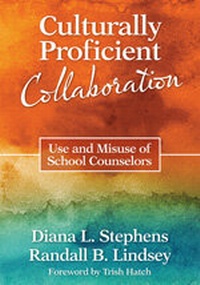
Culturally Proficient Collaboration
Use and Misuse of School Counselors
1st Edition
Published on 2. August 2011
Book
Paperback/Softback
200 pages
978-1-4129-8698-4 (ISBN)
Description
Optimize school counselors and raise your school's cultural competence
The authors make a compelling case for recognizing professional school counselors as leaders of 21st-century change rather than "gatekeepers" of the status quo. Today's school leaders need to acknowledge counselors' value in the necessary work of providing equitable resources and opportunities for children in today's multicultural environment. Aligned with the American School Counseling Association National Model for school counseling programs, Culturally Proficient Collaboration provides a conceptual framework and practical protocols for utilizing school counselors as:
Change agents for school improvement
Creators of results-based programs
Advocates for equity among demographic groups
Included are case stories and reflective activities for building educators' skills in serving as leaders, advocates, collaborators, and systemic-change agents. Readers will find a clearly outlined path for empowering counselors to transform your leadership team and your school for the benefit of all students.
The authors make a compelling case for recognizing professional school counselors as leaders of 21st-century change rather than "gatekeepers" of the status quo. Today's school leaders need to acknowledge counselors' value in the necessary work of providing equitable resources and opportunities for children in today's multicultural environment. Aligned with the American School Counseling Association National Model for school counseling programs, Culturally Proficient Collaboration provides a conceptual framework and practical protocols for utilizing school counselors as:
Change agents for school improvement
Creators of results-based programs
Advocates for equity among demographic groups
Included are case stories and reflective activities for building educators' skills in serving as leaders, advocates, collaborators, and systemic-change agents. Readers will find a clearly outlined path for empowering counselors to transform your leadership team and your school for the benefit of all students.
Reviews / Votes
"Culturally Proficient Collaboration is a much-needed contribution to the discussion of our past, current, and future practices in school counseling. This is more than a portrait of the culturally proficient educator, it's a book about change. A must read for anyone in education." -- Matthew Meyers, Counselor "At a time when many schools do not seem to know what to do with the growing diversity in their populations, this book offers tools for transforming schools into collaborative cultures of care. Stephens and Lindsey are grounded in current best practices promoted by the American School Counselor Association (ASCA) and the Transforming School Counseling Initiative (TSCI), and they recognize the need for school counselors to understand and use data to promote greater equity, genuine cultural appreciation, and vibrant opportunities for all students." -- Rolla E. Lewis, Associate Professor "With this book, the authors have bestowed a significant gift. Counselors, school leaders, and teachers now have a clear map to guide our journeys toward equitable service. And all of us receive leadership with this clear application of cultural proficiency, as we work to apply this conceptual model to our specific areas of service." -- John Krownapple, Coordinator for Cultural Proficiency "This is a book that every school counselor, social worker, administrator, and teacher should read and keep on their bookshelves. The authors challenge readers to look within themselves and reflect upon ways they perpetuate and support current counseling practices. The authors leave the reader with a heightened sense of awareness related to Cultural Proficiency Counseling practices and a desire to move beyond traditional methods." -- Kimberly Johnson-Burkhalter, Equity and Diversity Educational Consultant "Culturally Proficient Collaboration provides a framework for serious reflection for successful implementation of a comprehensive guidance program." -- Bob Tyra, Project Director "This timely book from Diana Stephens provides the perfect tool set for teachers, counselors and school leaders. It provides practical strategies for delivering necessary counseling services to the marginalized students who need them the most. An indispensable resource for educators who want to make a difference." -- Kyunghae Schwartz, Director of Administrative Support Services "A number of factors contribute to our children feeling disconnected within their families, schools and communities. This disconnect in our culture can sometimes end in acts of violence by word or deed. Culturally Proficient Collaboration will help administrators, teachers and counselors maximize their talents and professional training." -- Marie Alviz, CounselorMore details
Language
English
Place of publication
Thousand Oaks
United States
Publishing group
SAGE Publications Inc
Target group
Professional and scholarly
Dimensions
Height: 254 mm
Width: 178 mm
Weight
425 gr
ISBN-13
978-1-4129-8698-4 (9781412986984)
Copyright in bibliographic data and cover images is held by Nielsen Book Services Limited or by the publishers or by their respective licensors: all rights reserved.
Schweitzer Classification
Persons
Diana L. Stephens, Ph.D. is an Associate Professor and the Coordinator of the School Counseling PPS Credential Program in the Graduate School of Education at California Lutheran University. She serves on the President's Diversity Council and is a member of the Faculty Inclusivity Task-Group. She is a certified Family Life Educator and a Resiliency Trainer. Her collaborative work in K-12 schools and as a counselor-educator in higher education is preceded by her experience in clinical counseling, administration, and consultation in the non-profit sector. Throughout her career, she has been involved in issues of diversity, cultural inclusion, and social justice. She serves as a consultant in educational and organizational communities, conducts professional development workshops, and facilitates collaborative partnerships in co-co-creating culturally inclusive environments. She is guided by the belief that understanding diverse perspectives and honoring the cultural heritage of all humankind is essential in achieving personal and organizational success.
Randall B. Lindsey is Emeritus Professor at California State University, Los Angeles. He has served as a teacher, an administrator, executive director of a non-profit corporation, as Interim Dean at California Lutheran University, as Distinguished Educator in Residence at Pepperdine University, and as Chair of the Education Department at the University of Redlands. All of Randy's experiences have been in working with diverse populations and his area of study is the behavior of white people in multicultural settings. His Ph.D. is in Educational Leadership from Georgia State University, his Master of Arts in Teaching is in History Education from the University of Illinois, and his B.S. in Social Science Education is from Western Illinois University. He has served as a junior high school and high school teacher and as an administrator in charge of school desegregation efforts. At Cal State, L.A. he served as Chair of the Division of Administration and Counseling and as Director of the Regional Assistance Centers for Educational Equity, a regional race desegregation assistance center. With co-authors he has written several books and articles on applying the Cultural Proficiency Framework in various contexts.
Email - randallblindsey@gmail.com
Website - CCPEP.org
Twitter - @RBLindsey41
Randall B. Lindsey is Emeritus Professor at California State University, Los Angeles. He has served as a teacher, an administrator, executive director of a non-profit corporation, as Interim Dean at California Lutheran University, as Distinguished Educator in Residence at Pepperdine University, and as Chair of the Education Department at the University of Redlands. All of Randy's experiences have been in working with diverse populations and his area of study is the behavior of white people in multicultural settings. His Ph.D. is in Educational Leadership from Georgia State University, his Master of Arts in Teaching is in History Education from the University of Illinois, and his B.S. in Social Science Education is from Western Illinois University. He has served as a junior high school and high school teacher and as an administrator in charge of school desegregation efforts. At Cal State, L.A. he served as Chair of the Division of Administration and Counseling and as Director of the Regional Assistance Centers for Educational Equity, a regional race desegregation assistance center. With co-authors he has written several books and articles on applying the Cultural Proficiency Framework in various contexts.
Email - randallblindsey@gmail.com
Website - CCPEP.org
Twitter - @RBLindsey41
Content
Foreword by Trish Hatch
Acknowledgements
About the Authors
Introduction
Part 1. The Changing Role of School Counselor- Schoolwide Leadership
1. A Historical and Contemporary Perspective on School Counseling
Getting Centered
The Intent of This Chapter
Why on Earth do I Need to Know the History of School Counseling?
The Role of Counselor Began in Vocational Guidance
Who Defines the Role of School Counselor?
Counselor as Mental Health Provider
Paradigm Shift: From Reactive Services to Comprehensive Programs
NCLB and Standards-Based School Counseling
Going Deeper
2. 21st Century Counselors Focus on Student Achievement
Getting Centered
The Intent of This Chapter
Times are Changing: The New Role of School Counselor
Counselors Using Data as Catalyst for Transformational Change
Reframing Our Thinking About Data
An Illustration of the Benefits of Counselors Collecting and Analyzing Data
School Counselors as Powerful Leadership Agents of Change
From Gatekeeper to Transformer
Cultural Proficiency Provides a Context
Going Deeper
3. The Tools of Cultural Proficiency Provides a Framework for Collaboration
Getting Centered
Suggested Guidelines as You Consider Cultural Proficiency
Concept of Intentionality
Cultural Proficiency?s Inside-Out Process
Cultural Proficiency: A Paradigm Shift
Cultural Proficiency as a Lens
The Cultural Proficiency Tools
Cultural Proficiency and Counselors
Going Deeper
Part II. Maple View - Sitting in the Fire: A Context for Culturally Proficient Counseling
4. Counselor Collaboration Rubric
Getting Centered
Unpacking the Rubric
Going Deeper
5. Assessing Cultural Knowledge Through Leadership
Getting Centered
Assessing Cultural Knowledge Through Leadership
Using the Rubric: Assessing & Developing Cultural Knowledge through Leadership
Safe School Climate at Maple View Elementary School
Going Deeper
6. Valuing Diversity Through Advocacy
Getting Centered
Valuing Diversity Through Advocacy
Using the Rubric: Valuing Diversity Through Advocacy
Tragedy at Pine View Middle School
Going Deeper
7. Managing the Dynamics of Difference Through Teaming and Collaboration
Getting Centered
Managing the Dynamics of Difference through Teaming and Collaboration
Using the Rubric: Managing the Dynamics of Difference through Teaming and Collaboration
Access Issues at Pine Hills High School
Going Deeper
8. Adapting to Diversity Through Counseling and Coordination
Getting Centered
Adapting to Diversity through Counseling and Coordination
Using the Rubric: Adapting to Diversity through Counseling and Coordination
Pregnancy as an Access Issue at Pine Hills High School
Going Deeper
9. Institutionalizing Cultural Knowledge through Assessment and Use of Data
Getting Centered
Institutionalizing Cultural Knowledge through Assessment and Use of Data
Using the Rubric: Institutionalizing Cultural Knowledge Through Assessment and Use of Data
Pine View Middle School on Faith and Heterosexism
Part III. Next Steps
10. Sustaining Culturally Proficient Counseling: Developing a Personal Action Plan
Sense of Urgency
The 'Inside-Out' Process is for - You, Your School and Your Community
Seven Steps for Providing Equity
Resource A. Maple View School District Vignette Story Board
Resource B. Pine View Middle School Schoolwide Needs Assessment (Teacher Version)
Resource C. Matrix: How to Use Cultural Proficiency Books
Resource D. Online Resources for Educator Use
References
Acknowledgements
About the Authors
Introduction
Part 1. The Changing Role of School Counselor- Schoolwide Leadership
1. A Historical and Contemporary Perspective on School Counseling
Getting Centered
The Intent of This Chapter
Why on Earth do I Need to Know the History of School Counseling?
The Role of Counselor Began in Vocational Guidance
Who Defines the Role of School Counselor?
Counselor as Mental Health Provider
Paradigm Shift: From Reactive Services to Comprehensive Programs
NCLB and Standards-Based School Counseling
Going Deeper
2. 21st Century Counselors Focus on Student Achievement
Getting Centered
The Intent of This Chapter
Times are Changing: The New Role of School Counselor
Counselors Using Data as Catalyst for Transformational Change
Reframing Our Thinking About Data
An Illustration of the Benefits of Counselors Collecting and Analyzing Data
School Counselors as Powerful Leadership Agents of Change
From Gatekeeper to Transformer
Cultural Proficiency Provides a Context
Going Deeper
3. The Tools of Cultural Proficiency Provides a Framework for Collaboration
Getting Centered
Suggested Guidelines as You Consider Cultural Proficiency
Concept of Intentionality
Cultural Proficiency?s Inside-Out Process
Cultural Proficiency: A Paradigm Shift
Cultural Proficiency as a Lens
The Cultural Proficiency Tools
Cultural Proficiency and Counselors
Going Deeper
Part II. Maple View - Sitting in the Fire: A Context for Culturally Proficient Counseling
4. Counselor Collaboration Rubric
Getting Centered
Unpacking the Rubric
Going Deeper
5. Assessing Cultural Knowledge Through Leadership
Getting Centered
Assessing Cultural Knowledge Through Leadership
Using the Rubric: Assessing & Developing Cultural Knowledge through Leadership
Safe School Climate at Maple View Elementary School
Going Deeper
6. Valuing Diversity Through Advocacy
Getting Centered
Valuing Diversity Through Advocacy
Using the Rubric: Valuing Diversity Through Advocacy
Tragedy at Pine View Middle School
Going Deeper
7. Managing the Dynamics of Difference Through Teaming and Collaboration
Getting Centered
Managing the Dynamics of Difference through Teaming and Collaboration
Using the Rubric: Managing the Dynamics of Difference through Teaming and Collaboration
Access Issues at Pine Hills High School
Going Deeper
8. Adapting to Diversity Through Counseling and Coordination
Getting Centered
Adapting to Diversity through Counseling and Coordination
Using the Rubric: Adapting to Diversity through Counseling and Coordination
Pregnancy as an Access Issue at Pine Hills High School
Going Deeper
9. Institutionalizing Cultural Knowledge through Assessment and Use of Data
Getting Centered
Institutionalizing Cultural Knowledge through Assessment and Use of Data
Using the Rubric: Institutionalizing Cultural Knowledge Through Assessment and Use of Data
Pine View Middle School on Faith and Heterosexism
Part III. Next Steps
10. Sustaining Culturally Proficient Counseling: Developing a Personal Action Plan
Sense of Urgency
The 'Inside-Out' Process is for - You, Your School and Your Community
Seven Steps for Providing Equity
Resource A. Maple View School District Vignette Story Board
Resource B. Pine View Middle School Schoolwide Needs Assessment (Teacher Version)
Resource C. Matrix: How to Use Cultural Proficiency Books
Resource D. Online Resources for Educator Use
References