

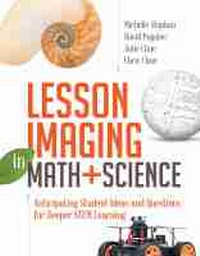
Lesson Imaging in Math and Science
Anticipating Student Ideas and Questions for Deeper STEM Learning
Published on 26. October 2016
Book
Paperback/Softback
185 pages
978-1-4166-2278-9 (ISBN)
Description
From respected voices in STEM education comes an innovative lesson planning approach to help turn students into problem solvers: lesson imaging. In this approach, teachers anticipate how chosen activities will unfold in real time-what solutions, questions, and misconceptions students might have and how teachers can promote deeper reasoning. When lesson imaging occurs before instruction, students achieve lesson objectives more naturally and powerfully.
A successful STEM unit attends to activities, questions, technology, and passions. It also entails a careful detailed image of how each activity will play out in the classroom. Lesson Imaging in Math and Science presents teachers with: - A process of thinking through the structure and implementation of a lesson.
- A pathway to discovering ways to elicit student thinking and foster collaboration.
- An opportunity to become adept at techniques to avoid shutting down the discussion-either by prematurely giving or acknowledging the "right" answer or by casting aside a "wrong" answer.
Packed with classroom examples, lesson imaging templates, and tips on how to start the process, this book is sure to help teachers anticipate students' ideas and questions and stimulate deeper learning in science, math, engineering, and technology.
A successful STEM unit attends to activities, questions, technology, and passions. It also entails a careful detailed image of how each activity will play out in the classroom. Lesson Imaging in Math and Science presents teachers with: - A process of thinking through the structure and implementation of a lesson.
- A pathway to discovering ways to elicit student thinking and foster collaboration.
- An opportunity to become adept at techniques to avoid shutting down the discussion-either by prematurely giving or acknowledging the "right" answer or by casting aside a "wrong" answer.
Packed with classroom examples, lesson imaging templates, and tips on how to start the process, this book is sure to help teachers anticipate students' ideas and questions and stimulate deeper learning in science, math, engineering, and technology.
More details
Language
English
Place of publication
Alexandria
United States
Target group
Professional and scholarly
Dimensions
Height: 229 mm
Width: 178 mm
ISBN-13
978-1-4166-2278-9 (9781416622789)
Copyright in bibliographic data and cover images is held by Nielsen Book Services Limited or by the publishers or by their respective licensors: all rights reserved.
Schweitzer Classification