

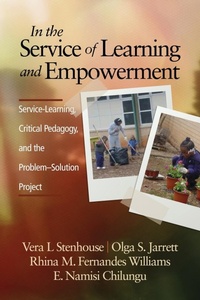
In the Service of Learning and Empowerment
Service-Learning, Critical Pedagogy, and the Problem-Solution Project
Published on 10. March 2014
Book
Paperback/Softback
306 pages
978-1-62396-544-0 (ISBN)
Description
Too often teachers and students doubt their own abilities to forge collective work and dynamic critical learning in the midst of education reform practices that limit their opportunities to do so. This doubt can be heightened for elementary school teachers or even their students who are led to believe that they are not capable of engaging critically with their education and their world. The Problem-Solution Project erases this doubt through merging service-learning, critical pedagogy, and constructivism. This approach to teaching and learning is designed to empower teachers and students while they meet curriculum standards and actively contribute to the transformation of their world.
Unique to this collection are the reported experiences of teacher educators who implement Problem-Solution Projects in their courses; preservice teachers' reflections on cohort-driven Problem-Solution Projects; and first-year and veteran teachers stories featuring Problem-Solution Projects initiated by their PK-5 students.
Features include:
* Describes how Problem-Solution Projects advance service-learning and critical pedagogy.
* Discussion of how Problem-Solution Projects build on curriculum standards but resists standardization of implementation and repressive education reforms.
* First-hand accounts of teachers implementing Problem-Solution Projects.
* Detailed description of the steps and outcomes of doing Problem-Solution Projects with preservice teachers, inservice teachers, and elementary students.
* Examples of Problem-Solution Projects across courses, subjects, disciplines, and contexts.
Readers will find worthwhile the theoretical connections and the practical applications. Service-learning, urban education, multicultural education and teacher education, teacher preparation practitioners will find this text beneficial. The main audience: teacher educators across disciplines, pre- and in-service teachers working in elementary (PK-5) settings.
Unique to this collection are the reported experiences of teacher educators who implement Problem-Solution Projects in their courses; preservice teachers' reflections on cohort-driven Problem-Solution Projects; and first-year and veteran teachers stories featuring Problem-Solution Projects initiated by their PK-5 students.
Features include:
* Describes how Problem-Solution Projects advance service-learning and critical pedagogy.
* Discussion of how Problem-Solution Projects build on curriculum standards but resists standardization of implementation and repressive education reforms.
* First-hand accounts of teachers implementing Problem-Solution Projects.
* Detailed description of the steps and outcomes of doing Problem-Solution Projects with preservice teachers, inservice teachers, and elementary students.
* Examples of Problem-Solution Projects across courses, subjects, disciplines, and contexts.
Readers will find worthwhile the theoretical connections and the practical applications. Service-learning, urban education, multicultural education and teacher education, teacher preparation practitioners will find this text beneficial. The main audience: teacher educators across disciplines, pre- and in-service teachers working in elementary (PK-5) settings.
More details
Language
English
Place of publication
Charlotte
United States
Publishing group
Emerald Publishing Inc
Target group
Professional and scholarly
Dimensions
Height: 234 mm
Width: 156 mm
Thickness: 17 mm
Weight
468 gr
ISBN-13
978-1-62396-544-0 (9781623965440)
Copyright in bibliographic data and cover images is held by Nielsen Book Services Limited or by the publishers or by their respective licensors: all rights reserved.
Schweitzer Classification
Other editions
Additional editions
Vera L. Stenhouse | Olga S. Jarrett
In the Service of Learning and Empowerment
Service-Learning, Critical Pedagogy, and the Problem-Solution Project
E-Book
03/2014
1st Edition
Information Age Publishing
from
€62.33
Available for download
Persons
Vera L Stenhouse, Georgia State University, USA
Olga S. Jarrett, Georgia State University, USA
Rhina M. Fernandes Williams, Georgia State University, USA
E. Namisi Chilungu, Georgia State University, USA
Olga S. Jarrett, Georgia State University, USA
Rhina M. Fernandes Williams, Georgia State University, USA
E. Namisi Chilungu, Georgia State University, USA
Content
Acknowledgements.
Foreword.
Introduction.
Part I. Fostering Empowerment Through Service-Learning, Critical Pedagogy, Constructivism and the Problem-Solution Project.
Chapter 1. The Problem-Solution Project: Philosophical Roots and Influences.
Part II. The Problem-Solution Project Assignment with Inservice Teachers and Their Pre-K to 5th Grade Students.
Chapter 2. The Problem-Solution Assignment with Newly Certified Teachers.
Chapter 3. When I First Began to Teach It: Reflection on Inheriting the
Chapter 4. Problem-Solution Project Assignment, Namisi's Story.
Chapter 5. The Problem-Solution Project Assignment with Veteran Teachers, Rhina's Story.
Part III. Voices of Inservice Teachers Engaged in Problem-Solution Projects with Pre-K-5th Grade Students.
Chapter 6. Aren't They Too Young to Do a Problem-Solution Project?: Underestimating the Ability of Young Children to Solve Problems.
Chapter 7. What Are We Going to Do About It?: Fostering Agency Through Language.
Chapter 8. They Came to School Early to Work on the Project: School as a Place to Be, Education as Worthwhile.
Chapter 9. It's OK to Help Oneself: Self-Help, Self-Empowerment.
Chapter 10. They See a Lot of What Is Wrong: Direct Community Connections.
Chapter 11. I Let the Students Take Control: Student-Centered, Student-Driven, Enhanced Learning.
Chapter 12. I Could Not Ignore Their Desire to Solve a Challenge: Teachers as Central to the Solution.
Chapter 13. I Met So Many of the Required Standards: Engaged Learning as Meeting Standards Not Standardizing Instruction.
Chapter 14. Students Made the Mess and Should Have to Live with the Consequences: Encountering Resistance, Countering with Persistence.
Chapter 15. Doing the Problem-Solution Project Has Greatly Influenced the Way I Teach: Beyond the Requirement of Doing the Problem-Solution Project.
Chapter 16. Advice, Guidance, and Insights: Inservice Teachers' Insights on Implementing the Problem-Solution Project.
Part IV. The Preservice Teacher Cohort Experience.
Chapter 17. The Problem-Solution Project Assignment with Preservice Teachers.
Chapter 18. Cultivating an Empowering Education and the Salience of Power: Challenges, Tensions and Lessons Learned.
Chapter 19. Instructors' Perspectives on Implementing Problem-Solution Projects with Preservice Teachers: A Dialogue.
Part V. The Problem-Solution Project and an Empowering Education: Implications.
Chapter 20. An Empowering Education and the Problem-Solution Project.
Chapter 21. Considerations for Practice, Policy, Teacher Education, and Teacher Preparation.
References.
Foreword.
Introduction.
Part I. Fostering Empowerment Through Service-Learning, Critical Pedagogy, Constructivism and the Problem-Solution Project.
Chapter 1. The Problem-Solution Project: Philosophical Roots and Influences.
Part II. The Problem-Solution Project Assignment with Inservice Teachers and Their Pre-K to 5th Grade Students.
Chapter 2. The Problem-Solution Assignment with Newly Certified Teachers.
Chapter 3. When I First Began to Teach It: Reflection on Inheriting the
Chapter 4. Problem-Solution Project Assignment, Namisi's Story.
Chapter 5. The Problem-Solution Project Assignment with Veteran Teachers, Rhina's Story.
Part III. Voices of Inservice Teachers Engaged in Problem-Solution Projects with Pre-K-5th Grade Students.
Chapter 6. Aren't They Too Young to Do a Problem-Solution Project?: Underestimating the Ability of Young Children to Solve Problems.
Chapter 7. What Are We Going to Do About It?: Fostering Agency Through Language.
Chapter 8. They Came to School Early to Work on the Project: School as a Place to Be, Education as Worthwhile.
Chapter 9. It's OK to Help Oneself: Self-Help, Self-Empowerment.
Chapter 10. They See a Lot of What Is Wrong: Direct Community Connections.
Chapter 11. I Let the Students Take Control: Student-Centered, Student-Driven, Enhanced Learning.
Chapter 12. I Could Not Ignore Their Desire to Solve a Challenge: Teachers as Central to the Solution.
Chapter 13. I Met So Many of the Required Standards: Engaged Learning as Meeting Standards Not Standardizing Instruction.
Chapter 14. Students Made the Mess and Should Have to Live with the Consequences: Encountering Resistance, Countering with Persistence.
Chapter 15. Doing the Problem-Solution Project Has Greatly Influenced the Way I Teach: Beyond the Requirement of Doing the Problem-Solution Project.
Chapter 16. Advice, Guidance, and Insights: Inservice Teachers' Insights on Implementing the Problem-Solution Project.
Part IV. The Preservice Teacher Cohort Experience.
Chapter 17. The Problem-Solution Project Assignment with Preservice Teachers.
Chapter 18. Cultivating an Empowering Education and the Salience of Power: Challenges, Tensions and Lessons Learned.
Chapter 19. Instructors' Perspectives on Implementing Problem-Solution Projects with Preservice Teachers: A Dialogue.
Part V. The Problem-Solution Project and an Empowering Education: Implications.
Chapter 20. An Empowering Education and the Problem-Solution Project.
Chapter 21. Considerations for Practice, Policy, Teacher Education, and Teacher Preparation.
References.