

A Framework for Geodesign
Changing Geography by Design
Published on 16. August 2012
Book
Paperback/Softback
224 pages
978-1-58948-333-0 (ISBN)
Description
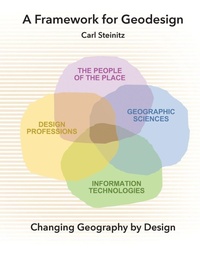
A Framework for Geodesign: Changing Geography by Design presents the key concepts, history, and methodology of geodesign. As an idea, geodesign has the potential to enable more effective and symbiotic collaboration among the several design professions, geographically-oriented sciences, information technologists, and people impacted by change ("the people of the place") when all of these groups aim to influence major environmental and social change for the better. According to author Carl Steinitz, this collaboration is essential.
Steinitz's framework, described here in detail, can contribute to that goal. It is clear that for serious societal and environmental issues, designing for change cannot be a solitary activity. It inevitably is a team endeavor with many participants from the design professions and geographic sciences, linked by technology from several locations for rapid communication and feedback, and reliant on transparent communication with the people affected by change. These demands create opportunities for geodesign and the need for organizing that collaboration.
Part I of the book is about the necessary but sometimes difficult collaboration between designers and scientists, and also focuses on key aspects of study areas, scale, and size which influence how geodesign is organized and carried out. Part II presents Steinitz's framework and addresses six key questions, and their related types of models, which must be integrated in geodesign. Part III features nine case studies that illustrate different ways of designing for change, while Part IV explores the future of geodesign in research, education, and practice.
A Framework for Geodesign ooks mostly to the future, with a primary intention of helping the collaborating participants to achieve, in the words of the author, "practical benefits from geodesign."
Steinitz's framework, described here in detail, can contribute to that goal. It is clear that for serious societal and environmental issues, designing for change cannot be a solitary activity. It inevitably is a team endeavor with many participants from the design professions and geographic sciences, linked by technology from several locations for rapid communication and feedback, and reliant on transparent communication with the people affected by change. These demands create opportunities for geodesign and the need for organizing that collaboration.
Part I of the book is about the necessary but sometimes difficult collaboration between designers and scientists, and also focuses on key aspects of study areas, scale, and size which influence how geodesign is organized and carried out. Part II presents Steinitz's framework and addresses six key questions, and their related types of models, which must be integrated in geodesign. Part III features nine case studies that illustrate different ways of designing for change, while Part IV explores the future of geodesign in research, education, and practice.
A Framework for Geodesign ooks mostly to the future, with a primary intention of helping the collaborating participants to achieve, in the words of the author, "practical benefits from geodesign."
More details
Language
English
Place of publication
Redlands
United States
Publishing group
ESRI Press
Target group
Professional and scholarly
Product notice
Paperback (trade)
Illustrations
Illustrations
Dimensions
Height: 280 mm
Width: 216 mm
Thickness: 14 mm
Weight
840 gr
ISBN-13
978-1-58948-333-0 (9781589483330)
Copyright in bibliographic data and cover images is held by Nielsen Book Services Limited or by the publishers or by their respective licensors: all rights reserved.
Schweitzer Classification
Person
Carl Steinitz is the Alexander and Victoria Wiley Professor of Landscape Architecture and Planning, Emeritus, at Harvard University Graduate School of Design. He has devoted much of his academic and professional career to improving methods to analyze large land areas and make design decisions about conservation and development. His applied research and teaching focus on highly valued landscapes that are undergoing substantial pressures for change.