

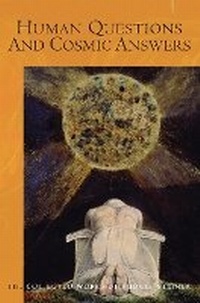
Human Questions And Cosmic Answers
Published on 18. November 2024
Book
Paperback/Softback
248 pages
978-1-85584-668-5 (ISBN)
Description
'In the case of a solar eclipse, the evil that has spread over the earth can be carried out into the cosmos to wreak more havoc there, whereas in the case of a lunar eclipse, people who absolutely want to be possessed by evil thoughts can receive them from the cosmos.'
In the first full translation of this lecture course, Rudolf Steiner implores his audience to recognize the connections between the material and spiritual worlds. Eclipses of the sun and moon, for example, are 'forces at work in the universe, just like those we study today in the clinic or in the chemistry or physics laboratory'. Even everyday thinking can have a strong impact on the outer world. Materialistic thought, he says, can quite literally atomize our surroundings: 'if all human beings start to think that everything has to be explained in terms of atoms... then the earth will actually turn into atoms... these false ideas create false realities...'
Steiner speaks of the 'world of will' as being three-dimensional, the 'world of feeling' as two-dimensional, and the 'world of thinking' as one-dimensional. The ego itself is dimensionless, and only inner, living thinking can grasp the spiritual-mental. He discusses key cultural figures such as Friedrich Nietzsche, Herman Grimm and Julian the Apostate, and introduces multiple additional topics, including the effect of planetary forces on humans; the healing impacts of metals and other substances; the revitalization of thinking through meditation and concentration; the effects of the separation of science, art and religion; and the necessary transition from philosophy to anthroposophy.
In the first full translation of this lecture course, Rudolf Steiner implores his audience to recognize the connections between the material and spiritual worlds. Eclipses of the sun and moon, for example, are 'forces at work in the universe, just like those we study today in the clinic or in the chemistry or physics laboratory'. Even everyday thinking can have a strong impact on the outer world. Materialistic thought, he says, can quite literally atomize our surroundings: 'if all human beings start to think that everything has to be explained in terms of atoms... then the earth will actually turn into atoms... these false ideas create false realities...'
Steiner speaks of the 'world of will' as being three-dimensional, the 'world of feeling' as two-dimensional, and the 'world of thinking' as one-dimensional. The ego itself is dimensionless, and only inner, living thinking can grasp the spiritual-mental. He discusses key cultural figures such as Friedrich Nietzsche, Herman Grimm and Julian the Apostate, and introduces multiple additional topics, including the effect of planetary forces on humans; the healing impacts of metals and other substances; the revitalization of thinking through meditation and concentration; the effects of the separation of science, art and religion; and the necessary transition from philosophy to anthroposophy.
More details
Series
Language
English
Place of publication
East Sussex
United Kingdom
Dimensions
Height: 233 mm
Width: 156 mm
Thickness: 21 mm
Weight
404 gr
ISBN-13
978-1-85584-668-5 (9781855846685)
Copyright in bibliographic data and cover images is held by Nielsen Book Services Limited or by the publishers or by their respective licensors: all rights reserved.
Schweitzer Classification
Other editions
Additional editions
Rudolf Steiner
Human Questions And Cosmic Answers
E-Book
11/2024
Rudolf Steiner Press
€15.59
Available for download
Persons
Rudolf Steiner (1861-1925) called his spiritual philosophy "anthroposophy", meaning "wisdom of the human being". As a highly developed seer, he based his work on direct knowledge and perception of spiritual dimensions. He initiated a modern and universal "science of spirit", accessible to anyone willing to exercise clear and unprejudiced thinking.
From his spiritual investigations Steiner provided suggestions for the renewal of many activities, including education (both general and special), agriculture, medicine, economics, architecture, science, philosophy, religion and the arts. Today there are thousands of schools, clinics, farms and other organizations involved in practical work based on his principles. His many published works feature his research into the spiritual nature of the human being, the evolution of the world and humanity, and methods of personal development. Steiner wrote some 30 books and delivered over 6000 lectures across Europe. In 1924 he founded the General Anthroposophical Society, which today has branches throughout the world.
From his spiritual investigations Steiner provided suggestions for the renewal of many activities, including education (both general and special), agriculture, medicine, economics, architecture, science, philosophy, religion and the arts. Today there are thousands of schools, clinics, farms and other organizations involved in practical work based on his principles. His many published works feature his research into the spiritual nature of the human being, the evolution of the world and humanity, and methods of personal development. Steiner wrote some 30 books and delivered over 6000 lectures across Europe. In 1924 he founded the General Anthroposophical Society, which today has branches throughout the world.