


Founding a Science of the Spirit
Published on 9. June 2025
Book
Paperback/Softback
200 pages
978-1-85584-675-3 (ISBN)
Description
'Everyone can derive joy and hope from the communications of another, for what we are told about the higher worlds is not mere theory, unrelated to life. As its fruits, it brings us two things we must have if we are to lay hold of life in the right way - strength and security - and both are given in the highest measure.' - Rudolf Steiner
Rudolf Steiner speaks with great clarity and precision on the fundamental nature of the human being in relation to the cosmos, the evolution of the Earth, the journey of the soul after death, reincarnation and karma, good and evil, and the modern path of meditative training. Throughout, his emphasis is on a scientific exposition of spiritual phenomena. As he says in the final lecture: 'the highest knowledge of mundane things is thoroughly compatible with the highest knowledge of spiritual truths'.
This popular course of lectures offers a fine introduction to the whole of Steiner's teaching, and is an excellent complement to his fundamental texts. At the same time, it features valuable material that cannot be found elsewhere, such as two rare question-and-answer sessions, where the lecturer offers immediate and often surprising responses to audience members' queries.
This new edition features an introduction by Brien Masters, notes and an index.
Fourteen lectures, Stuttgart; Aug.-Sept. 1906, GA 95
Rudolf Steiner speaks with great clarity and precision on the fundamental nature of the human being in relation to the cosmos, the evolution of the Earth, the journey of the soul after death, reincarnation and karma, good and evil, and the modern path of meditative training. Throughout, his emphasis is on a scientific exposition of spiritual phenomena. As he says in the final lecture: 'the highest knowledge of mundane things is thoroughly compatible with the highest knowledge of spiritual truths'.
This popular course of lectures offers a fine introduction to the whole of Steiner's teaching, and is an excellent complement to his fundamental texts. At the same time, it features valuable material that cannot be found elsewhere, such as two rare question-and-answer sessions, where the lecturer offers immediate and often surprising responses to audience members' queries.
This new edition features an introduction by Brien Masters, notes and an index.
Fourteen lectures, Stuttgart; Aug.-Sept. 1906, GA 95
More details
Series
Language
English
Place of publication
East Sussex
United Kingdom
Dimensions
Height: 156 mm
Width: 234 mm
Thickness: 17 mm
Weight
318 gr
ISBN-13
978-1-85584-675-3 (9781855846753)
Copyright in bibliographic data and cover images is held by Nielsen Book Services Limited or by the publishers or by their respective licensors: all rights reserved.
Schweitzer Classification
Other editions
Additional editions
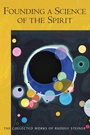
Rudolf Steiner
Founding a Science of the Spirit
E-Book
06/2025
Rudolf Steiner Press
€14.39
Available for download
Persons
Rudolf Steiner (1861-1925) called his spiritual philosophy "anthroposophy", meaning "wisdom of the human being". As a highly developed seer, he based his work on direct knowledge and perception of spiritual dimensions. He initiated a modern and universal "science of spirit", accessible to anyone willing to exercise clear and unprejudiced thinking.
From his spiritual investigations Steiner provided suggestions for the renewal of many activities, including education (both general and special), agriculture, medicine, economics, architecture, science, philosophy, religion and the arts. Today there are thousands of schools, clinics, farms and other organizations involved in practical work based on his principles. His many published works feature his research into the spiritual nature of the human being, the evolution of the world and humanity, and methods of personal development. Steiner wrote some 30 books and delivered over 6000 lectures across Europe. In 1924 he founded the General Anthroposophical Society, which today has branches throughout the world.
From his spiritual investigations Steiner provided suggestions for the renewal of many activities, including education (both general and special), agriculture, medicine, economics, architecture, science, philosophy, religion and the arts. Today there are thousands of schools, clinics, farms and other organizations involved in practical work based on his principles. His many published works feature his research into the spiritual nature of the human being, the evolution of the world and humanity, and methods of personal development. Steiner wrote some 30 books and delivered over 6000 lectures across Europe. In 1924 he founded the General Anthroposophical Society, which today has branches throughout the world.