

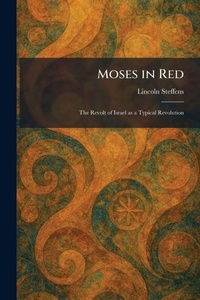
Moses in Red
Description
"Moses in Red; The Revolt of Israel as a Typical Revolution" is a provocative examination of the biblical Exodus through the lens of political science and social upheaval. Written by the renowned investigative journalist Lincoln Steffens, this work interprets the story of Moses not merely as a religious narrative, but as a blueprint for the universal mechanics of revolution. Steffens analyzes the flight of the Israelites from Egypt as a classic case study in mass psychology, leadership, and the inevitable cycles of social change.
The author draws parallels between the challenges faced by Moses and the dynamics of modern revolutionary movements, exploring themes of resistance, law-giving, and the struggle for collective identity. By treating the Old Testament account as a historical and political document, Steffens offers a unique perspective on the nature of power and the evolution of society. This book serves as a fascinating bridge between ancient scripture and early 20th-century political thought, making it a significant contribution to both biblical criticism and political literature. It remains an insightful read for those interested in the sociological underpinnings of one of history's most influential stories.
This work has been selected by scholars as being culturally important, and is part of the knowledge base of civilization as we know it. This work was reproduced from the original artifact, and remains as true to the original work as possible. Therefore, you may see the original copyright references, library stamps (as most of these works have been housed in our most important libraries around the world), and other notations in the work.
This work is in the public domain in the United States of America, and possibly other nations. Within the United States, you may freely copy and distribute this work, as no entity (individual or corporate) has a copyright on the body of the work.
As a reproduction of a historical artifact, this work may contain missing or blurred pages, poor pictures, errant marks, etc. Scholars believe, and we concur, that this work is important enough to be preserved, reproduced, and made generally available to the public. We appreciate your support of the preservation process, and thank you for being an important part of keeping this knowledge alive and relevant.