

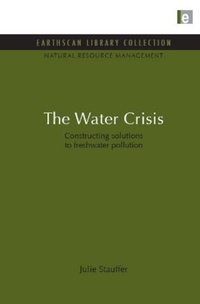
The Water Crisis
Constructing solutions to freshwater pollution
1st Edition
Published on 1. March 1997
Book
Hardback
180 pages
978-1-84971-018-3 (ISBN)
Description
Modern society too often views water as a convenient vehicle for disposing of waste ? and the results are becoming increasingly apparent. Analysis of freshwater supplies frequently reveals disturbing levels of pollution, including human waste, heavy metals and synthetic chemicals, to the detriment of our health, and the health of entire ecosystems.
The Water Crisis examines the roots of freshwater pollution ? urbanization, industrialization and intensive farming ? supported by case studies from the Rhine and the Great Lakes. It explores the impact of major pollutants and discusses methods of prevention. The final section provides a detailed overview of possible solutions, including soil-based treatment systems and constructed wetlands. A separate chapter is devoted to the important issue of groundwater pollution.
Practical concise and accessible, this is ideal for students in environmental studies and environmental science, biology and geography, and general readers.
Originally published in 1998
The Water Crisis examines the roots of freshwater pollution ? urbanization, industrialization and intensive farming ? supported by case studies from the Rhine and the Great Lakes. It explores the impact of major pollutants and discusses methods of prevention. The final section provides a detailed overview of possible solutions, including soil-based treatment systems and constructed wetlands. A separate chapter is devoted to the important issue of groundwater pollution.
Practical concise and accessible, this is ideal for students in environmental studies and environmental science, biology and geography, and general readers.
Originally published in 1998
More details
Language
English
Place of publication
London
United Kingdom
Publishing group
Taylor & Francis Ltd
Target group
College/higher education
Dimensions
Height: 234 mm
Width: 156 mm
Weight
490 gr
ISBN-13
978-1-84971-018-3 (9781849710183)
Copyright in bibliographic data and cover images is held by Nielsen Book Services Limited or by the publishers or by their respective licensors: all rights reserved.
Schweitzer Classification
Other editions
Additional editions
E-Book
12/2013
1st Edition
Routledge
€51.49
Available for download
E-Book
12/2013
1st Edition
Routledge
€51.49
Available for download
Book
10/2009
1st Edition
Earthscan Ltd
€68.35
Article not available at the moment
Person
Julie Stauffer
Content
List of Tables
List of Boxes
List of Figures
Introduction
Chapter 1: Urbanization: Sewage and Storm-water
The Water Carriage Revolution
Urban Runoff
Chapter 2: Industrialization: Chemical Contaminants
Suspended Solids
Organic Material
Heavy Metals
Synthetic Chemicals
Acidic Wastes
Chapter 3: Intensive Farming: Fertilizers and Pesticides
History of Modern Farming
Nutrients
Pesticides
Animal Wastes
Soil Erosion
Chapter 4: Case-Studies: The Rhine and the Great Lakes
Introduction
History
Current Levels of Pollution
Legislation
The Future
Chapter 5: Prevention
Urbanization
Industrialization
Agriculture
Chapter 6: Legislation and Economic Policies
Legislation
Economic Approaches
Public Pressure
Watershed Management
Chapter 7: Introduction to Ecological Technologies
Characteristics of Natural Systems
Fundamental Mechanisms of Natural Systems
Chapter 8: Soil-based Systems
Rationale for Soil-based Treatment
Slow-rate Treatment
Rapid Infiltration Systems
Overland Flow Systems
Performance
Land Application of Sludge
Chapter 9: Aquatic Plant Treatment Systems
Constructed Wetlands
Waste Stabilization Ponds
Floating Aquatic Plant Systems
Combined Systems
Living Machines
Chapter 10: Coda: Rethinking Water Carriage
Grey-water Systems
Chapter 11: Ground-water: The Special Issues
Sources of Pollution
Ground-water Treatment
Chapter 12: Conclusions: Directions for the Future
List of Terms
Bibliography
Index
List of Boxes
List of Figures
Introduction
Chapter 1: Urbanization: Sewage and Storm-water
The Water Carriage Revolution
Urban Runoff
Chapter 2: Industrialization: Chemical Contaminants
Suspended Solids
Organic Material
Heavy Metals
Synthetic Chemicals
Acidic Wastes
Chapter 3: Intensive Farming: Fertilizers and Pesticides
History of Modern Farming
Nutrients
Pesticides
Animal Wastes
Soil Erosion
Chapter 4: Case-Studies: The Rhine and the Great Lakes
Introduction
History
Current Levels of Pollution
Legislation
The Future
Chapter 5: Prevention
Urbanization
Industrialization
Agriculture
Chapter 6: Legislation and Economic Policies
Legislation
Economic Approaches
Public Pressure
Watershed Management
Chapter 7: Introduction to Ecological Technologies
Characteristics of Natural Systems
Fundamental Mechanisms of Natural Systems
Chapter 8: Soil-based Systems
Rationale for Soil-based Treatment
Slow-rate Treatment
Rapid Infiltration Systems
Overland Flow Systems
Performance
Land Application of Sludge
Chapter 9: Aquatic Plant Treatment Systems
Constructed Wetlands
Waste Stabilization Ponds
Floating Aquatic Plant Systems
Combined Systems
Living Machines
Chapter 10: Coda: Rethinking Water Carriage
Grey-water Systems
Chapter 11: Ground-water: The Special Issues
Sources of Pollution
Ground-water Treatment
Chapter 12: Conclusions: Directions for the Future
List of Terms
Bibliography
Index