

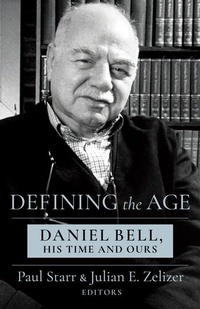
Defining the Age
Daniel Bell, His Time and Ours
Published on 1. February 2022
Book
Hardback
344 pages
978-0-231-20366-1 (ISBN)
Description
The sociologist Daniel Bell was an uncommonly acute observer of the structural forces transforming the United States and other advanced societies in the twentieth century. The titles of Bell's major books-The End of Ideology (1960), The Coming of Post-Industrial Society (1973), and The Cultural Contradictions of Capitalism (1976)-became hotly debated frameworks for understanding the era when they were published.
In Defining the Age, Paul Starr and Julian E. Zelizer bring together a group of distinguished contributors to consider how well Bell's ideas captured their historical moment and continue to provide profound insights into today's world. Wide-ranging essays demonstrate how Bell's writing has informed thinking about subjects such as the history of socialism, the roots of the radical right, the emerging postindustrial society, and the role of the university. The book also examines Bell's intellectual trajectory and distinctive political stance. Calling himself "a socialist in economics, a liberal in politics, and a conservative in culture," he resisted being pigeon-holed, especially as a neoconservative.
Defining the Age features essays from historians Jenny Andersson, David A. Bell, Michael Kazin, and Margaret O'Mara; sociologist Steven Brint; media scholar Fred Turner; and political theorists Jan-Werner Mueller and Stefan Eich. While differing in their judgments, they agree on one premise: Bell's ideas deserve the kind of nuanced and serious attention that they finally receive in this book.
In Defining the Age, Paul Starr and Julian E. Zelizer bring together a group of distinguished contributors to consider how well Bell's ideas captured their historical moment and continue to provide profound insights into today's world. Wide-ranging essays demonstrate how Bell's writing has informed thinking about subjects such as the history of socialism, the roots of the radical right, the emerging postindustrial society, and the role of the university. The book also examines Bell's intellectual trajectory and distinctive political stance. Calling himself "a socialist in economics, a liberal in politics, and a conservative in culture," he resisted being pigeon-holed, especially as a neoconservative.
Defining the Age features essays from historians Jenny Andersson, David A. Bell, Michael Kazin, and Margaret O'Mara; sociologist Steven Brint; media scholar Fred Turner; and political theorists Jan-Werner Mueller and Stefan Eich. While differing in their judgments, they agree on one premise: Bell's ideas deserve the kind of nuanced and serious attention that they finally receive in this book.
Reviews / Votes
Defining the Age captures like no other book on Daniel Bell the range of his interests, the reach of his learning, and the drama of the historical moment in which he lived. Anyone interested in Bell and modern social theory will have to read this book. -- Mark Lilla, author of <i>The Once and Future Liberal: After Identity Politics</i> There is much of value in the essays, whose subject richly deserves such close attention. * National Review * The contributions of the volume offer an enlightening exploration of [Bell's] ideas in their historical context and an original attempt to revisit his insights for our time. * S-USIH Blog * Excellent for graduate level courses on contemporary social theory....Highly recommended. * Choice * Does an excellent job of introducing new audiences to Bell's thinking and writing. * H-Socialisms *More details
Language
English
Place of publication
New York
United States
Target group
Professional and scholarly
Product notice
Trade binding
Dimensions
Height: 216 mm
Width: 140 mm
ISBN-13
978-0-231-20366-1 (9780231203661)
Copyright in bibliographic data and cover images is held by Nielsen Book Services Limited or by the publishers or by their respective licensors: all rights reserved.
Schweitzer Classification
Other editions
Additional editions
E-Book
03/2023
1st Edition
Columbia University Press
€33.99
Available for download
Persons
Paul Starr is professor of sociology and public affairs at Princeton University, founding coeditor of The American Prospect, and a winner of the Pulitzer Prize for nonfiction and the Bancroft Prize in American history. His most recent book is Entrenchment: Wealth, Power, and the Constitution of Democratic Societies (2019).
Julian E. Zelizer is the Malcolm Stevenson Forbes Class of 1941 Professor of History and Public Affairs at Princeton University. His most recent book is Abraham Joshua Heschel: A Life of Radical Amazement (2021), and he is a political analyst for CNN.com and a contributor to NPR.
Julian E. Zelizer is the Malcolm Stevenson Forbes Class of 1941 Professor of History and Public Affairs at Princeton University. His most recent book is Abraham Joshua Heschel: A Life of Radical Amazement (2021), and he is a political analyst for CNN.com and a contributor to NPR.
Content
Preface and Acknowledgments
Introduction, by Paul Starr and Julian E. Zelizer
Part I. Overview
1. Remembering Daniel Bell: Two Perspectives, by David A. Bell
2. Daniel Bell's Three-Dimensional Puzzle, by Paul Starr
Part II. Politics and Ideology
3. Of But Not in the Left: Daniel Bell on Radical Politics, by Michael Kazin
4. Daniel Bell and the Radical Right, by Julian E. Zelizer
5. The End of Ideology, the Long Nineties, and the History of the Present, by Jan-Werner Mueller
Part III. The Post-Industrial Transformation
6. "Post-Industrial" versus "Neoliberal": Rival Definitions of Our Age, by Paul Starr
7. Assessing Daniel Bell in the Age of Big Tech, by Margaret O'Mara
8. The Post-Industrial University as We Know It: Daniel Bell's Vision, Today's Realities, by Steven Brint
9. Daniel Bell, Social Forecaster, by Jenny Andersson
Part IV. Capitalism, Culture, and the Public Household
10. The Cultural Contradictions of Capitalism, Then and Now, by Fred Turner
11. The Double Bind: Daniel Bell, the Public Household, and Financialization, by Stefan Eich
List of Contributors
Index
Introduction, by Paul Starr and Julian E. Zelizer
Part I. Overview
1. Remembering Daniel Bell: Two Perspectives, by David A. Bell
2. Daniel Bell's Three-Dimensional Puzzle, by Paul Starr
Part II. Politics and Ideology
3. Of But Not in the Left: Daniel Bell on Radical Politics, by Michael Kazin
4. Daniel Bell and the Radical Right, by Julian E. Zelizer
5. The End of Ideology, the Long Nineties, and the History of the Present, by Jan-Werner Mueller
Part III. The Post-Industrial Transformation
6. "Post-Industrial" versus "Neoliberal": Rival Definitions of Our Age, by Paul Starr
7. Assessing Daniel Bell in the Age of Big Tech, by Margaret O'Mara
8. The Post-Industrial University as We Know It: Daniel Bell's Vision, Today's Realities, by Steven Brint
9. Daniel Bell, Social Forecaster, by Jenny Andersson
Part IV. Capitalism, Culture, and the Public Household
10. The Cultural Contradictions of Capitalism, Then and Now, by Fred Turner
11. The Double Bind: Daniel Bell, the Public Household, and Financialization, by Stefan Eich
List of Contributors
Index