


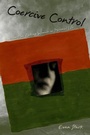
Coercive Control
How Men Entrap Women in Personal Life
Published on 16. April 2007
Book
Hardback
464 pages
978-0-19-515427-6 (ISBN)
Description
Despite its great achievements, the domestic violence revolution is stalled, Evan Stark argues, a provocative conclusion he documents by showing that interventions have failed to improve women's long-term safety in relationships or to hold perpetrators accountable. Stark traces this failure to a startling paradox, that the singular focus on violence against women masks an even more devastating reality. In millions of abusive relationships, men use a largely unidentified form of subjugation that more closely resembles kidnapping or indentured servitude than assault. He calls this pattern "coercive control". Drawing on sources that range from FBI statistics and film to dozens of actual cases from his thirty years of experience as an award-winning researcher, advocate, and forensic expert, Stark shows in terrifying detail how men can use coervice control to extend their dominance over time and through social space in ways that subvert women's autonomy, isolate them, and infiltrate the most intimate corners in their lives.
Against this backdrop, Stark analyses the cases of three women tried for crimes committed in the context of abuse, showing that their reactions are only intelligible when they are reframed as victims of coercive control rather than as "battered wives". The story of physical and sexual violence against women has been told often. But this is the first book to show that most abused women who seek help do so because their rights and liberties have been jeopardised, not because they have been injured. The coercive control model Stark develops resolves three of the most perplexing the legal system has failed to win them justice. Elevating coercive control from a second-class misdemeanor to a human rights violation, Stark explains why law, policy, and advocacy must shift its focus to emphasise how coercive control jeopardises women's freedom in everyday life. Fiercely argues and eminently readable, Stark's work is certain to breathe new life into the domestic violence revolution.
Against this backdrop, Stark analyses the cases of three women tried for crimes committed in the context of abuse, showing that their reactions are only intelligible when they are reframed as victims of coercive control rather than as "battered wives". The story of physical and sexual violence against women has been told often. But this is the first book to show that most abused women who seek help do so because their rights and liberties have been jeopardised, not because they have been injured. The coercive control model Stark develops resolves three of the most perplexing the legal system has failed to win them justice. Elevating coercive control from a second-class misdemeanor to a human rights violation, Stark explains why law, policy, and advocacy must shift its focus to emphasise how coercive control jeopardises women's freedom in everyday life. Fiercely argues and eminently readable, Stark's work is certain to breathe new life into the domestic violence revolution.
Reviews / Votes
This is a hopeful book...[it] is unique in the comprehensiveness of the critique, and in the depth and utility of [the author's] recommendations for a direction for the future...it is sure to have a major impact. Sex RolesMore details
Language
English
Place of publication
New York
United States
Target group
Professional and scholarly
Adult education
Illustrations
2 Abbildungen
2 line illustrations
Dimensions
Height: 235 mm
Width: 156 mm
ISBN-13
978-0-19-515427-6 (9780195154276)
Copyright in bibliographic data and cover images is held by Nielsen Book Services Limited or by the publishers or by their respective licensors: all rights reserved.
Schweitzer Classification
Other editions
Additional editions
E-Book
04/2007
1st Edition
OUP eBook
€16.99
Available for download
Content
I. THE DOMESTIC VIOLENCE REVOLUTION: PROMISE AND DISAPPOINTMENT; 1. The Revolution Unfolds; 2. The Revolution Stalled; II. ENIGMAS OF ABUSE; 3. The Proper Measure of Abuse; 4. The Entrapment Enigma; 5. Representing Battered Women; III. FROM DOMESTIC VIOLENCE TO COERCIVE CONTROL; 6. Up to Inequality; 7. The Theory of Coercive Control; 8. The Technology of Coercive Control; IV. LIVING WITH COERCIVE CONTROL; 9. When Battered Women Kill; 10. For Love or Money; 11. The Special Reasonableness of Battered Women; Conclusion: Freedom is Not Free