

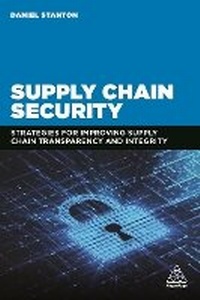
Supply Chain Security
Strategies for Improving Supply Chain Transparency and Integrity
Book
Paperback/Softback
320 pages
978-1-78966-663-2 (ISBN)
Description
As global manufacturing and distribution capabilities have blossomed, the trade in substandard products has exploded. This trend is being amplified by the success of online marketplaces which make it easy to sell counterfeit or stolen goods, expired products and more.
As a result, manufacturers, retailers, and end users are becoming frequent targets for product fraud. In the past, supply chain professionals focused primarily on price or brand when making purchasing decisions, but today they need to start considering product integrity. Supply Chain Security shows how to assess these threats and develop strategies to mitigate the risk, including the use of new technologies such as RFID and blockchain.
This practical guide explores the importance of understanding the provenance of your upstream supply chain, which is also key to addressing social issues such as slave labour, conflict minerals and environmental sustainability. Specifically, it focuses on the flow of physical materials and provides frameworks for assessing risk and developing effective countermeasures. It offers case studies from a variety of industries including aerospace, automotive, pharmaceuticals, cosmetics, electronics, industrial equipment and fashion brands. With Supply Chain Security, readers will be armed with the knowledge of where to look for threats and how to secure their own supply chains.
As a result, manufacturers, retailers, and end users are becoming frequent targets for product fraud. In the past, supply chain professionals focused primarily on price or brand when making purchasing decisions, but today they need to start considering product integrity. Supply Chain Security shows how to assess these threats and develop strategies to mitigate the risk, including the use of new technologies such as RFID and blockchain.
This practical guide explores the importance of understanding the provenance of your upstream supply chain, which is also key to addressing social issues such as slave labour, conflict minerals and environmental sustainability. Specifically, it focuses on the flow of physical materials and provides frameworks for assessing risk and developing effective countermeasures. It offers case studies from a variety of industries including aerospace, automotive, pharmaceuticals, cosmetics, electronics, industrial equipment and fashion brands. With Supply Chain Security, readers will be armed with the knowledge of where to look for threats and how to secure their own supply chains.
More details
Language
English
Place of publication
London
United Kingdom
Target group
College/higher education
Professional and scholarly
Product notice
Paperback (trade)
Dimensions
Height: 234 mm
Width: 156 mm
ISBN-13
978-1-78966-663-2 (9781789666632)
Copyright in bibliographic data and cover images is held by Nielsen Book Services Limited or by the publishers or by their respective licensors: all rights reserved.
Schweitzer Classification
Person
Daniel Stanton is co-founder and president of SecureMarking, based in Charlotte, North Carolina, which fights the spread of counterfeit products with innovative supply chain security tools including nanotechnology, IoT, and blockchain. He is a best-selling author, an online course instructor and Adjunct Professor of Supply Chain Management at Bradley University. He has been recognised by IBM Watson Supply Chain as a Supply Chain Futurist.
Content
Section - Section 1: What is supply chain security and integrity;
Chapter - 01: Product liability and pricing leverage;
Chapter - 02: Brand value;
Chapter - 03: Warranty costs, equipment damage and reliability;
Chapter - 04: Relationship to supply chain strategy and review of the literature;
Section - Section 2: Threats to supply chain integrity;
Chapter - 04: Forms of product fraud;
Chapter - 05: Drivers, motivations and Profit;
Chapter - 06: Organized criminal networks;
Chapter - 07: Foreign state actors, terrorist networks, mercenaries, lone wolves;
Section - Section 3: Process solutions;
Chapter - 08: Supplier audits;
Chapter - 09: Chain of custody records;
Chapter - 10: Voluntary reporting (GIDEP);
Chapter - 11: Legal remedies;
Section - Section 4: Technology solutions;
Chapter - 12: Blockchain and Databases;
Chapter - 13: RFID;
Chapter - 14: Labels, Inks, Marks, Taggants, and Dyes;
Chapter - 15: Environmental Sensors;
Chapter - 16: Tamper Resistance (coatings, films, labels);
Section - Section 5: Regulations
Chapter - 17: Embargoes and trade rules;
Chapter - 18: Dodd-Frank and conflict minerals;
Chapter - 19: Aviation hardware;
Chapter - 20: U.S. military hardware;
Chapter - 21: Pharmaceuticals;
Section - Section 5: Case Studies;
Chapter - 22: Aerospace (Honeywell GoDirect Trade Blockchain);
Chapter - 23: Defense (Electronic components with DNA);
Chapter - 24: Fashion (Fossil watches and iTRACE);
Chapter - 25: Retail (Amazon);
Chapter - 26: Automotive (Mercedes, Australian oil filters);
Chapter - 27: Industrial Equipment;
Chapter - 28: Alcohol (Chinese wines);
Chapter - 29: Pharmaceuticals;
Chapter - 30: Tobacco (Pakistan counterfeits);
Section - Part 6: Strategic Recommendations and Frameworks;
Chapter - 01: Product liability and pricing leverage;
Chapter - 02: Brand value;
Chapter - 03: Warranty costs, equipment damage and reliability;
Chapter - 04: Relationship to supply chain strategy and review of the literature;
Section - Section 2: Threats to supply chain integrity;
Chapter - 04: Forms of product fraud;
Chapter - 05: Drivers, motivations and Profit;
Chapter - 06: Organized criminal networks;
Chapter - 07: Foreign state actors, terrorist networks, mercenaries, lone wolves;
Section - Section 3: Process solutions;
Chapter - 08: Supplier audits;
Chapter - 09: Chain of custody records;
Chapter - 10: Voluntary reporting (GIDEP);
Chapter - 11: Legal remedies;
Section - Section 4: Technology solutions;
Chapter - 12: Blockchain and Databases;
Chapter - 13: RFID;
Chapter - 14: Labels, Inks, Marks, Taggants, and Dyes;
Chapter - 15: Environmental Sensors;
Chapter - 16: Tamper Resistance (coatings, films, labels);
Section - Section 5: Regulations
Chapter - 17: Embargoes and trade rules;
Chapter - 18: Dodd-Frank and conflict minerals;
Chapter - 19: Aviation hardware;
Chapter - 20: U.S. military hardware;
Chapter - 21: Pharmaceuticals;
Section - Section 5: Case Studies;
Chapter - 22: Aerospace (Honeywell GoDirect Trade Blockchain);
Chapter - 23: Defense (Electronic components with DNA);
Chapter - 24: Fashion (Fossil watches and iTRACE);
Chapter - 25: Retail (Amazon);
Chapter - 26: Automotive (Mercedes, Australian oil filters);
Chapter - 27: Industrial Equipment;
Chapter - 28: Alcohol (Chinese wines);
Chapter - 29: Pharmaceuticals;
Chapter - 30: Tobacco (Pakistan counterfeits);
Section - Part 6: Strategic Recommendations and Frameworks;