

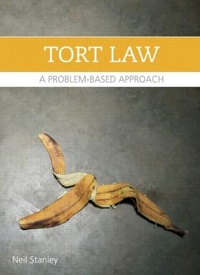
Torts: A Problem-Based Approach
1st Edition
Published on 1. January 2021
Book
Paperback/Softback
400 pages
978-1-4441-4544-1 (ISBN)
Description
Torts: A Problem-Based Approach introduces the subject of tort law to undergraduate and GDL/CPE conversion students undertaking compulsory modules in their first or second year of study in a practical and realistic manner, bringing this fluid and at times complex area of law to life.
All the key elements of study are included and dealt with in a logical sequence, closely following the typical arrangement of topics in an undergraduate module. Each chapter contains real-life scenarios and case studies which are interwoven throughout to illustrate clearly how the law can be applied and where the potential pitfalls and challenges may lie. In support of this the text is fresh and clear, presented in readily understandable sections and summarised regularly to ensure that the key points are at hand. To offer support in assessments there are sample essay and examination questions and opportunities to test your knowledge, with sample answers supplied online. Excellent as a companion throughout the course, this book comes into its own when preparing for seminars and studying in smaller groups when concepts can be discussed and considered in their practical context. Never sacrificing depth of analysis nor accessibility, Torts: A Problem-Based Approach provides the ideal guide to the law of tort.
A comprehensive selection of online materials includes MCQs, specimen answers to exam questions, additional reading/research references, mooting scenarios, self test questions, and a regularly updated case digest to enhance the interactive problem-based learning approach.
All the key elements of study are included and dealt with in a logical sequence, closely following the typical arrangement of topics in an undergraduate module. Each chapter contains real-life scenarios and case studies which are interwoven throughout to illustrate clearly how the law can be applied and where the potential pitfalls and challenges may lie. In support of this the text is fresh and clear, presented in readily understandable sections and summarised regularly to ensure that the key points are at hand. To offer support in assessments there are sample essay and examination questions and opportunities to test your knowledge, with sample answers supplied online. Excellent as a companion throughout the course, this book comes into its own when preparing for seminars and studying in smaller groups when concepts can be discussed and considered in their practical context. Never sacrificing depth of analysis nor accessibility, Torts: A Problem-Based Approach provides the ideal guide to the law of tort.
A comprehensive selection of online materials includes MCQs, specimen answers to exam questions, additional reading/research references, mooting scenarios, self test questions, and a regularly updated case digest to enhance the interactive problem-based learning approach.
More details
Series
Language
English
Place of publication
London
United Kingdom
Publishing group
Taylor & Francis Ltd
Target group
College/higher education
Illustrations
32
Dimensions
Height: 269 mm
Width: 202 mm
ISBN-13
978-1-4441-4544-1 (9781444145441)
Copyright in bibliographic data and cover images is held by Nielsen Book Services Limited or by the publishers or by their respective licensors: all rights reserved.
Schweitzer Classification
Person
Neil Stanley is Lecturer in law at Leeds University School of Law, having worked in higher education for over 16 years, with a special interest in developing student skills. He is a qualified solicitor and has interests in environmental law and torts. He is author of Wolf and Stanley on Environmental Law 5e.
Content
1. Introduction to torts
2. Trespass to the person and trespass to land
3. Negligence - the duty of care
4. Negligence - breach of duty
5. Negligence - psychiatric damage
6. Negligence - causation
7. Negligence - economic loss
8. Occupiers' liability
9. Nuisance
10. The rule in Rylands v Fletcher
11. Defamation
12. Privacy
13. Remedies and limitation of liability
14. Employers' liability
15. Product liability
2. Trespass to the person and trespass to land
3. Negligence - the duty of care
4. Negligence - breach of duty
5. Negligence - psychiatric damage
6. Negligence - causation
7. Negligence - economic loss
8. Occupiers' liability
9. Nuisance
10. The rule in Rylands v Fletcher
11. Defamation
12. Privacy
13. Remedies and limitation of liability
14. Employers' liability
15. Product liability