

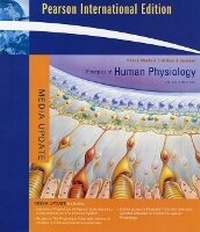
Principles of Human Physiology with Interactive Physiology (R) 10-System Suite, Media Update
International Edition
3rd Edition
Published on 18. February 2009
Book
Paperback/Softback
848 pages
978-0-321-62500-7 (ISBN)
Description
Principles of Human Physiology, Third Edition, Media Update features a newly expanded media package, as well as the hallmark features Stanfield and Germann are becoming known for: clinical coverage, "Apply Your Knowledge" critical thinking questions, and a flowchart style that makes it easier than ever for students to focus on key physiological processes. Features such as Chemistry Review boxes provide additional resources for students who need them, while Toolboxes and Discovery boxes allow instructors the option of delving into more detail about physiology topics.
The Media Update provides access to an expanded media package. Every new copy of the book now comes packaged with the Interactive Physiology (R) 10-System Suite CD-ROM (IP-10), which features a new module on The Immune System. The book also includes access to an expanded Physiology Place companion website, which includes all the great resources from the Third Edition plus:
Interactive Physiology with gradable quizzes
PhysioEx 8.0 with gradable quizzes
The Get Ready for A&P Media Update
The Media Update provides access to an expanded media package. Every new copy of the book now comes packaged with the Interactive Physiology (R) 10-System Suite CD-ROM (IP-10), which features a new module on The Immune System. The book also includes access to an expanded Physiology Place companion website, which includes all the great resources from the Third Edition plus:
Interactive Physiology with gradable quizzes
PhysioEx 8.0 with gradable quizzes
The Get Ready for A&P Media Update
More details
Edition
3rd edition
Language
English
Place of publication
United States
Publishing group
Pearson Education (US)
Target group
College/higher education
Dimensions
Height: 279 mm
Width: 234 mm
Thickness: 31 mm
Weight
1840 gr
ISBN-13
978-0-321-62500-7 (9780321625007)
Copyright in bibliographic data and cover images is held by Nielsen Book Services Limited or by the publishers or by their respective licensors: all rights reserved.
Schweitzer Classification
Other editions
New editions
Cindy L. Stanfield
Principles of Human Physiology with Interactive Physiology 10-System Suite
International Edition
Book
02/2010
4th Edition
Pearson
€154.13
Article exhausted; check for reprint
Persons
Cindy L. Stanfield earned both a B.S. and a Ph.D. in physiology at the University of California at Davis. Her exposure to neurophysiology research as an undergraduate student sparked her interest in pursuing a Ph.D. As a graduate student, Stanfield studied the role of neuropeptides in pain modulation and taught several physiology laboratory courses, which led to her interest in teaching. She currently teaches human physiology lecture and laboratory courses and neuroscience at the University of South Alabama, and she continues with her neurophysiology research on sensory modulation. Stanfield received the College of Allied Health Professions Excellence in Service Award in 2003 and the University of South Alabama Alumni Association Excellence in Teaching Award in 2004. In addition to teaching and research responsibilities, she serves as the advisor for health preprofessionals at the University of South Alabama. Stanfield is a member of the Society for Neuroscience, the International Association for the Study of Pain, the American Pain Society, and the National Association of Advisors for the Health Professions. She lives in Mobile, Alabama, with her husband, Jim, and their many cats and dogs.
William J. Germann earned a Ph.D. in physiology at the University of Michigan. One of Germann's teachers at Michigan was Arthur Vander, whose commitment to education made a lasting impression and ultimately inspired Germann to pursue a career in undergraduate teaching. Germann taught human physiology and a number of other biology courses at the University of Dallas at Irving, Texas. He believes that a teacher's job is not just to communicate information, but also to inspire students to want to learn. Germann is a member of the American Association of University Professors.
William J. Germann earned a Ph.D. in physiology at the University of Michigan. One of Germann's teachers at Michigan was Arthur Vander, whose commitment to education made a lasting impression and ultimately inspired Germann to pursue a career in undergraduate teaching. Germann taught human physiology and a number of other biology courses at the University of Dallas at Irving, Texas. He believes that a teacher's job is not just to communicate information, but also to inspire students to want to learn. Germann is a member of the American Association of University Professors.
Content
1. Introduction to Physiology
2. The Cell: Structure and Function
3. Cell Metabolism
4. Cell Membrane Transport
5. Chemical Messengers
6. The Endocrine System: Endocrine Glands and Hormone Actions
7. Nerve Cells and Electrical Signaling
8. Synaptic Transmission and Neural Integration
9. The Nervous System: Central Nervous System
10. The Nervous System: Sensory Systems
11. The Nervous System: Autonomic and Motor Systems
12. Muscle Physiology
13. The Cardiovascular System: Cardiac Function
14. The Cardiovascular System: Blood Vessels, Blood Flow and Blood Pressure
15. The Cardiovascular System: Blood
16. The Respiratory System: Pulmonary Ventilation
17. The Respiratory System: Gas Exchange and Regulation of Breathing
18. The Urinary System: Renal Function
19. The Urinary System: Fluid and Electrolyte Balance
20. The Gastrointestinal System
21. Regulation of Energy Metabolism and Growth
22. The Reproductive System
23. The Immune System
24. The Whole Body: Integrated Physiological Responses to Exercise
2. The Cell: Structure and Function
3. Cell Metabolism
4. Cell Membrane Transport
5. Chemical Messengers
6. The Endocrine System: Endocrine Glands and Hormone Actions
7. Nerve Cells and Electrical Signaling
8. Synaptic Transmission and Neural Integration
9. The Nervous System: Central Nervous System
10. The Nervous System: Sensory Systems
11. The Nervous System: Autonomic and Motor Systems
12. Muscle Physiology
13. The Cardiovascular System: Cardiac Function
14. The Cardiovascular System: Blood Vessels, Blood Flow and Blood Pressure
15. The Cardiovascular System: Blood
16. The Respiratory System: Pulmonary Ventilation
17. The Respiratory System: Gas Exchange and Regulation of Breathing
18. The Urinary System: Renal Function
19. The Urinary System: Fluid and Electrolyte Balance
20. The Gastrointestinal System
21. Regulation of Energy Metabolism and Growth
22. The Reproductive System
23. The Immune System
24. The Whole Body: Integrated Physiological Responses to Exercise