

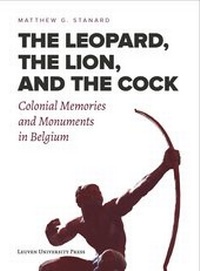
The Leopard, the Lion, and the Cock
Colonial Memories and Monuments in Belgium
Published on 11. April 2019
Book
Paperback/Softback
338 pages
978-94-6270-179-3 (ISBN)
Description
The degree to which the late colonial era affected Europe has been for long underappreciated, and only recently have European countries started to acknowledge not having come to terms with decolonization. In Belgium, the past two decades have witnessed a growing awareness of the controversial episodes in the country's colonial past. This volume examines the long-term effects and legacies of the colonial era on Belgium after 1960, the year the Congo gained its independence, and calls into question memories of the colonial past by focusing on the meaning and place of colonial monuments in public space.
The book foregrounds the enduring presence of "empire" in everyday Belgian life in the form of permanent colonial markers in bronze and stone, lieux de memoires of the country's history of overseas expansion. By means of photographs and explanations of major pro-colonial memorials, as well as several obscure ones, the book reveals the surprising degree to which Belgium became infused with a colonialist spirit during the colonial era. Another key component of the analysis is an account of the varied ways that both Dutch- and French-speaking Belgians approached the colonial past after 1960, treating memorials variously as objects of veneration, with indifference, or as symbols to be attacked or torn down. The book provides a thought-provoking reflection on culture, colonialism, and the remainders of empire in Belgium after 1960.
The book foregrounds the enduring presence of "empire" in everyday Belgian life in the form of permanent colonial markers in bronze and stone, lieux de memoires of the country's history of overseas expansion. By means of photographs and explanations of major pro-colonial memorials, as well as several obscure ones, the book reveals the surprising degree to which Belgium became infused with a colonialist spirit during the colonial era. Another key component of the analysis is an account of the varied ways that both Dutch- and French-speaking Belgians approached the colonial past after 1960, treating memorials variously as objects of veneration, with indifference, or as symbols to be attacked or torn down. The book provides a thought-provoking reflection on culture, colonialism, and the remainders of empire in Belgium after 1960.
Reviews / Votes
"This book is timely and will certainly be a useful contribution to the public debate. It presents, for the first time, an impressive overview of the colonial remnants in the Belgian land and cityscape." -- Guy Vanthemsche, Vrije Universiteit BrusselMore details
Language
English
Place of publication
Leuven
Belgium
Target group
College/higher education
US School Grade: College Graduate Student and over
Illustrations
Illustrated
Dimensions
Height: 233 mm
Width: 156 mm
Thickness: 22 mm
Weight
571 gr
ISBN-13
978-94-6270-179-3 (9789462701793)
Copyright in bibliographic data and cover images is held by Nielsen Book Services Limited or by the publishers or by their respective licensors: all rights reserved.
Schweitzer Classification
Person
Matthew G. Stanard is professor of history at Berry College in Mount Berry, Georgia, USA.
Content
List of Illustrations Acknowledgements Acronyms and Abbreviations Introduction Chapter 1: Belgians and the Colonial Experience before 1960 Chapter 2: Reminders and Remainders of Empire, 1960-1967 Chapter 3: Quiescence, 1967-1985 Chapter 4: Commemoration and Nostalgia, 1985-1994 Chapter 5: A New Generation, 1994-2010 Chapter 6: 2010 and Beyond Epilogue Appendix Notes References Index