

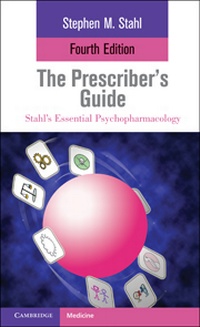
The Prescriber's Guide
4th Edition
Published on 18. April 2011
Book
Paperback/Softback
726 pages
978-0-521-17364-3 (ISBN)
Description
Now established as the indispensable formulary in psychopharmacology, this latest edition of The Prescriber's Guide has been completely revised and updated to reflect the most current practice in the use of psychotropic drugs. Easy to navigate and easy to use, The Prescriber's Guide combines evidence-based information with clinically informed guidance to support clinicians in making the most effective prescribing decisions for the good of their patients. With coverage of twelve brand-new drugs - including antidepressants, antipsychotics, hypnotics, nonstimulants for ADHD and medical foods - and incorporating information on the newest indications, new formulations, new recommendations and new safety data, this edition continues to provide the essential practical support required by anyone prescribing in the field of mental health.
Reviews / Votes
'I think that this manual has all the characteristics of a true bestseller. The format is very attractive, the information is complete, the consultation is easy. In no other recent text will a clinician find so much information in such a concise and user-friendly format.' Acta Psychiatrica Scandinavica 'The book's major strength is its readability and user friendliness. The art of psychopharmacology is finally given the space it deserves ... This guidebook is an excellent source of information for the art of prescribing psychotropic medications and belongs in every clinician's library.' The Annals of Pharmacotherapy 'I recommend the Guide as an excellent and easy-to-read reference for practitioners who may be seeking an improved comfort zone with psychotropic drugs.' Canadian Journal of Psychiatry 'Those who are conversant with the other textbooks on essential psychopharmacology written by the author will find the present textbook particularly useful as a practical application of the principles presented in those texts. However, this Guide will also be of assistance to any prescribing physician who wishes to obtain a short, clearly presented account of the drugs used in psychiatric practice.' Human Psychopharmacology 'An excellent quick reference guide for psychotropic medications ... The Prescriber's Guide is a valuable tool that provides practical support for all clinicians.' Mental Health ClinicianMore details
Edition
4th Revised edition
Language
English
Place of publication
Cambridge
United Kingdom
Target group
Professional and scholarly
Edition type
Revised edition
Product notice
Paperback (trade)
Illustrations
1 Plates, unspecified
Dimensions
Height: 228 mm
Width: 138 mm
Thickness: 33 mm
Weight
1100 gr
ISBN-13
978-0-521-17364-3 (9780521173643)
Copyright in bibliographic data and cover images is held by Nielsen Book Services Limited or by the publishers or by their respective licensors: all rights reserved.
Schweitzer Classification
Other editions
New editions
Book
04/2024
8th Edition
Cambridge University Press
€104.50
Available immediately
Book
05/2014
5th Edition
Cambridge University Press
€104.15
Article exhausted; check for reprint
Previous edition
Stephen Stahl
The Prescriber's Guide
Book
04/2009
3rd Edition
Cambridge University Press
€58.28
Article exhausted; check for reprint
Person
Stephen M. Stahl is Adjunct Professor of Psychiatry at the University of California, San Diego and Honorary Visiting Senior Fellow at the University of Cambridge, UK. He has conducted numerous research projects awarded by the National Institute of Mental Health, the Veteran's Administration and the pharmaceutical industry. He is the author of the market-leading textbook Essential Psychopharmacology, third edition, as well as more than 450 other articles and chapters. Dr Stahl is an internationally recognized clinician, researcher and teacher in psychiatry and psychopharmacology.
Content
1. Acamprosate; 2. Agomelatine; 3. Alprazolam; 4. Amisulpride; 5. Amitriptyline; 6. Amoxapine; 7. Amphetamine (d); 8. Amphetamine (d,l); 9. Aripiprazole; 10. Armadafinil; 11. Asenapine; 12. Atomoxetine; 13. Bupropion; 14. Buspirone; 15. Caprylidene; 16. Carbamazepine; 17. Chlordiazepoxide; 18. Chlorpromazine; 19. Citalopram; 20. Clomipramine; 21. Clonazepam; 22. Clonidine; 23. Clorazepate; 24. Clozapine; 25. Cyamemazine; 26. Desipramine; 27. Desvenlafaxine; 28. Diazepam; 29. Donepezil; 30. Dothiepin; 31. Doxepin; 32. Duloxetine; 33. Escitalopram; 34. Estazolam; 35. Eszopiclone; 36. Flumazenil; 37. Flunitrazepam; 38. Fluoxetine; 39. Fluphenthixol; 40. Fluphenazine; 41. Flurazepam; 42. Fluvoxamine; 43. Gabapentin; 44. Galantamine; 45. Guanfacine; 46. Haloperidol; 47. Hydroxyzine; 48. I-methylfolate; 49. Iloperidone; 50. Imipramine; 51. Isocarboxazid; 52. Lamotrigine; 53. Levetiracetam; 54. Lisdexamfetamine; 55. Lithium; 56. Lofepramine; 57. Loflazeptate; 58. Lorazepam; 59. Loxapine; 60. Lurasidone; 61. Mainserin; 62. Maprotiline; 63. Memantine; 64. Mesoridazine; 65. Methylphenidate (d); 66. Midazolam; 67. Milnacipran; 68. Mirtazapine; 69. Moclobemide; 70. Modafinil; 71. Molindone; 72. Naltrexone; 73. Nefazodone; 74. Nortriptyline; 75. Olanzapine; 76. Oxazepam; 77. Oxcarbazepine; 78. Paliperidone; 79. Paroxetine; 80. Perospirone; 81. Perphenazine; 82. Phenelzine; 83. Pimozide; 84. Pipothiazine; 85. Pregabalin; 86. Protriptyline; 87. Quazepam; 88. Quetiapine; 89. Ramelteon; 90. Reboxetine; 91. Risperidone; 92. Rivastigmine; 93. Selegiline; 94. Sertindole; 95. Sertraline; 96. Sodium Oxybate; 97. Sulpiride; 98. Temazepam; 99. Thioridazine; 100. Thiothixene; 101. Tiagabine; 102. Tianeptine; 103. Topiramate; 104. Tranylcypromide; 105. Trazodone; 106. Triazolam; 107. Trifluoperazine; 108. Trimipramine; 109. Valproate; 110. Varenicline; 111. Venlafaxine; 112. Zalepron; 113. Ziprasidone; 114. Zolpidem; 115. Zonisamide; 116. Zopiclone; 117. Zotepine; 118. Zuclopenthixol.