

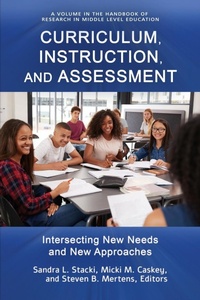
Curriculum, Instruction, and Assessment
Intersecting New Needs and New Approaches
Published on 4. May 2020
Book
Paperback/Softback
386 pages
978-1-64802-028-5 (ISBN)
Description
The lives of middle school students are dynamic, and their needs and desires are always evolving. They experience more complicated lives as influences of the broader society including popular media and technology, immigration and cultural diversity, amplified political divisiveness, and bullying effect their daily lives both in and out of school. These influences have contributed to the need for more socialemotional support and the desire of students and teachers alike to find and express their voices. Since the publication of the 2002 Handbook volume focusing on curriculum, instruction, and assessment, the ideas, approaches, and practices of middle school educators and researchers have also needed to evolve and change in many ways to meet these changing realities and the needs of students, teachers, and schools. This volume includes chapters focusing on varying aspects of curriculum, instruction, and assessment currently being implemented in middle grades classrooms across the country.
More details
Series
Language
English
Place of publication
United States
Publishing group
Emerald Publishing Inc
Target group
Professional and scholarly
Dimensions
Height: 234 mm
Width: 156 mm
Thickness: 21 mm
Weight
585 gr
ISBN-13
978-1-64802-028-5 (9781648020285)
Copyright in bibliographic data and cover images is held by Nielsen Book Services Limited or by the publishers or by their respective licensors: all rights reserved.
Schweitzer Classification
Other editions
Additional editions
E-Book
01/2020
1st Edition
Information Age Publishing
from
€62.33
Available for download
Persons
Sandra L. Stacki, Hofstra University.
Micki M. Caskey, Portland State University.
Steven B. Mertens, Illinois State University.
Micki M. Caskey, Portland State University.
Steven B. Mertens, Illinois State University.
Content
Foreword.
Acknowledgments.
Introduction.
Chapter 1. Student-Centered Learning: Evolving Curriculum, Instruction, and Assessment-Intersecting New Needs; Sandra L. Stacki, Micki M. Caskey, and Steven B. Mertens.
Section I. Seeing The Possibilities With Students.
Chapter 2. Historical Thinking in the Middle School Classroom: Integration of Authentic Curriculum, Instruction, and Assessment; Eric B. Claravall and Robin Irey.
Chapter 3. Science at My Own Pace: The Impact of a Self-Directed Learning Environment on Eighth Grade Life Science Students; Gerald Ardito.
Chapter 4. The Rough Writerz: Young Adolescent Boys Exploring, Constructing, and Recreating Racial Identities in an After School Program; Theresa McGinnis and Andrea Garcia.
Chapter 5. In Students' Voices: How Middle School Students Perceive Their Need for Effective Reading Comprehension Strategies; Nancy Akhavan.
Section II. Exploring Curriculum, Instruction, And Assessment Through Teachers' Dispositions And Perspectives.
Chapter 6. Culturally Relevant Pedagogy and Connectivism: Disciplinary Literacy Challenges in Linguistically Diverse STEM Classrooms in the Middle Grades; Ebony Terrell Shockley, Kelly K. Ivy, and Maria Peters.
Chapter 7. Pedagogical Responses to Technology in the Middle Level Classroom: The Influence of Digital Tools on Instructional Methodologies and Learning Practices; Lorraine Radice.
Chapter 8. Shifting Toward Productive Beliefs for Black Students in the Mathematics Classroom; Christa Jackson and Ashley Delaney.
Chapter 9. Middle Level Teachers' Educational Technology Use: Challenges, Barriers, and Successes; Thomas M. Brinthaupt, Scott B. Haupt, Richard P. Lipka, and Jill A. Robinson.
Section III. Examining Learning Through Broader Lenses.
Chapter 10. Instructional Strategies for Engagement: Cultivating Emotional Awareness and a Challenge-Skill Imbalance; Chris Grodoski, Carrie Dabelow, Crystal Forbes, Margaret Hammer, Michelle Hoffmeyer, Jennifer Jim-Brundidge, and Kurt Makaryk.
Chapter 11. How We Are Us: Using Authentic Assessment in a History Classroom; Colleen Fitzpatrick and Stephanie van Hover.
Chapter 12. Middle Schoolers' Writing out of School: (Fear), Freedom, Fluency, and Fellowship in Place-Based Education; Tom Meyer.
Chapter 13. In the Middle of Next Practices; Barbara J. Mallory and James V. Davis.
About the Contributors.
Acknowledgments.
Introduction.
Chapter 1. Student-Centered Learning: Evolving Curriculum, Instruction, and Assessment-Intersecting New Needs; Sandra L. Stacki, Micki M. Caskey, and Steven B. Mertens.
Section I. Seeing The Possibilities With Students.
Chapter 2. Historical Thinking in the Middle School Classroom: Integration of Authentic Curriculum, Instruction, and Assessment; Eric B. Claravall and Robin Irey.
Chapter 3. Science at My Own Pace: The Impact of a Self-Directed Learning Environment on Eighth Grade Life Science Students; Gerald Ardito.
Chapter 4. The Rough Writerz: Young Adolescent Boys Exploring, Constructing, and Recreating Racial Identities in an After School Program; Theresa McGinnis and Andrea Garcia.
Chapter 5. In Students' Voices: How Middle School Students Perceive Their Need for Effective Reading Comprehension Strategies; Nancy Akhavan.
Section II. Exploring Curriculum, Instruction, And Assessment Through Teachers' Dispositions And Perspectives.
Chapter 6. Culturally Relevant Pedagogy and Connectivism: Disciplinary Literacy Challenges in Linguistically Diverse STEM Classrooms in the Middle Grades; Ebony Terrell Shockley, Kelly K. Ivy, and Maria Peters.
Chapter 7. Pedagogical Responses to Technology in the Middle Level Classroom: The Influence of Digital Tools on Instructional Methodologies and Learning Practices; Lorraine Radice.
Chapter 8. Shifting Toward Productive Beliefs for Black Students in the Mathematics Classroom; Christa Jackson and Ashley Delaney.
Chapter 9. Middle Level Teachers' Educational Technology Use: Challenges, Barriers, and Successes; Thomas M. Brinthaupt, Scott B. Haupt, Richard P. Lipka, and Jill A. Robinson.
Section III. Examining Learning Through Broader Lenses.
Chapter 10. Instructional Strategies for Engagement: Cultivating Emotional Awareness and a Challenge-Skill Imbalance; Chris Grodoski, Carrie Dabelow, Crystal Forbes, Margaret Hammer, Michelle Hoffmeyer, Jennifer Jim-Brundidge, and Kurt Makaryk.
Chapter 11. How We Are Us: Using Authentic Assessment in a History Classroom; Colleen Fitzpatrick and Stephanie van Hover.
Chapter 12. Middle Schoolers' Writing out of School: (Fear), Freedom, Fluency, and Fellowship in Place-Based Education; Tom Meyer.
Chapter 13. In the Middle of Next Practices; Barbara J. Mallory and James V. Davis.
About the Contributors.