

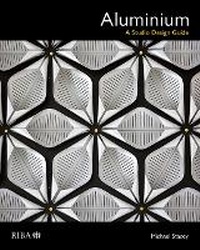
Aluminium
A Studio Design Guide
1st Edition
Published on 1. November 2023
Book
Hardback
248 pages
978-1-85946-706-0 (ISBN)
Description
Are you making the most of aluminium?
Aluminium is one of the most flexible and durable materials to design with. With exceptional strength, durability and affordability, it provides us with more than simply the ability to select products. When understood properly, aluminium becomes something to design with.
In a world where over half humankind now lives in cities there is a need to design zero carbon, attractive and durable architecture. This can only be achieved if we are more resourceful, if we achieve more with less by understanding materials well, using finite element analysis and computer aided design. Aluminium can be part of that route to affordable and durable architecture. Recycling aluminium takes only 5% of the energy required to produce primary aluminium and it can be recycled almost infinitely without any loss of properties.
Combining an inspirational overview of the use of aluminium in architecture and infrastructure with a technical level of detail, this book shows how useful and versatile aluminium is - and how architects can actually design with it.
This book provides access to state of the art research into the best practice in application of aluminium to architecture: from curtain walling and cladding roofing to structural considerations. It demonstrates the material's design flexibility and how it works well with other materials. Each process will be accompanied by exemplar case studies that demonstrate the potential and application. Woven into the structure of the book are the primary benefits of aluminium: its flexiblilty, its durability, its sustainable properties and its cost-effectiveness.
Whether you're a first year student or a seasoned designer or engineer, this book provides an accessible and deep dive into the uses and benefits of aluminium.
Aluminium is one of the most flexible and durable materials to design with. With exceptional strength, durability and affordability, it provides us with more than simply the ability to select products. When understood properly, aluminium becomes something to design with.
In a world where over half humankind now lives in cities there is a need to design zero carbon, attractive and durable architecture. This can only be achieved if we are more resourceful, if we achieve more with less by understanding materials well, using finite element analysis and computer aided design. Aluminium can be part of that route to affordable and durable architecture. Recycling aluminium takes only 5% of the energy required to produce primary aluminium and it can be recycled almost infinitely without any loss of properties.
Combining an inspirational overview of the use of aluminium in architecture and infrastructure with a technical level of detail, this book shows how useful and versatile aluminium is - and how architects can actually design with it.
This book provides access to state of the art research into the best practice in application of aluminium to architecture: from curtain walling and cladding roofing to structural considerations. It demonstrates the material's design flexibility and how it works well with other materials. Each process will be accompanied by exemplar case studies that demonstrate the potential and application. Woven into the structure of the book are the primary benefits of aluminium: its flexiblilty, its durability, its sustainable properties and its cost-effectiveness.
Whether you're a first year student or a seasoned designer or engineer, this book provides an accessible and deep dive into the uses and benefits of aluminium.
More details
Language
English
Place of publication
London
United Kingdom
Target group
Professional and scholarly
Professional Practice & Development
Dimensions
Height: 249 mm
Width: 210 mm
Weight
1040 gr
ISBN-13
978-1-85946-706-0 (9781859467060)
Copyright in bibliographic data and cover images is held by Nielsen Book Services Limited or by the publishers or by their respective licensors: all rights reserved.
Schweitzer Classification
Other editions
Person
Professor Michael Stacey is an award-winning architect, who combines practice, teaching, research and writing, based in London at the Bartlett and Michael Stacey Architects. He is the author of a wide range of publications and books, including Component Design, 2001, Digital Fabrication, 2004, Concrete: a studio design guide, 2011, Prototyping Architecture, 2013, Aluminium and Durability, 2014, second edition 2015, Aluminium Recyclability and Recycling, 2015, Aluminium: Flexible and Light, 2016, and Aluminium: Sympathetic and Powerful, 2020.
Content
About the Author Dedication
Introduction
Chapter 1 Light metal Chapter 2 Aluminium pioneers Chapter 3 Flexible: Fabrication processes Chapter 4 Durability and finishes Chapter 5 Light and strong Chapter 6 Performative facades Chapter 7 Economical, powerful and sympathetic Chapter 8 Sustainability
Index Image credits
Introduction
Chapter 1 Light metal Chapter 2 Aluminium pioneers Chapter 3 Flexible: Fabrication processes Chapter 4 Durability and finishes Chapter 5 Light and strong Chapter 6 Performative facades Chapter 7 Economical, powerful and sympathetic Chapter 8 Sustainability
Index Image credits