


The Memory of Trade
Modernity's Entanglements on an Eastern Indonesian Island
Published on 18. February 2000
Book
Paperback/Softback
384 pages
978-0-8223-2441-6 (ISBN)
Description
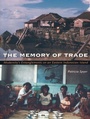
The Memory of Trade is an ethnographic study of the people of Aru, an archipelago in eastern Indonesia. Central to Patricia Spyer's study is the fraught identification of Aruese people with two imaginary elsewheres-the 'Aru' and the 'Malay'-and the fissured construction of community that has ensued from centuries of active international trade and more recent encroachments of modernity.
Drawing on more than two years of archival and ethnographic research, Spyer examines the dynamics of contact with the Dutch and Europeans, Suharto's postcolonial regime, and with the competing religions of Islam, Protestantism, and Catholicism in the context of the recent conversion of pagan Aruese. While arguing that Aru identity and community are defined largely in terms of absence, longing, memory, and desire, she also incorporates present-day realities-such as the ecological destruction wrought by the Aru trade in such luxury goods as pearls and shark fins-without overlooking the mystique and ritual surrounding these activities. Imprinted on the one hand by the archipelago's long engagement with extended networks of commerce and communication and, on the other, by modernity's characteristic repressions and displacements, Aruese make and manage their lives somewhat precariously within what they often seem to construe as a dangerously expanding-if still enticing-world. By documenting not only the particular expectations and strategies Aruese have developed in dealing with this larger world but also the price they pay for participation therein, The Memory of Trade speaks to problems commonly faced elsewhere in the frontier spaces of modern nation-states.
Balancing particularly astute analysis with classic ethnography, The Memory of Trade will appeal not only to anthropologists and historians but also to students and specialists of Southeast Asia, modernity, and globalization.
Drawing on more than two years of archival and ethnographic research, Spyer examines the dynamics of contact with the Dutch and Europeans, Suharto's postcolonial regime, and with the competing religions of Islam, Protestantism, and Catholicism in the context of the recent conversion of pagan Aruese. While arguing that Aru identity and community are defined largely in terms of absence, longing, memory, and desire, she also incorporates present-day realities-such as the ecological destruction wrought by the Aru trade in such luxury goods as pearls and shark fins-without overlooking the mystique and ritual surrounding these activities. Imprinted on the one hand by the archipelago's long engagement with extended networks of commerce and communication and, on the other, by modernity's characteristic repressions and displacements, Aruese make and manage their lives somewhat precariously within what they often seem to construe as a dangerously expanding-if still enticing-world. By documenting not only the particular expectations and strategies Aruese have developed in dealing with this larger world but also the price they pay for participation therein, The Memory of Trade speaks to problems commonly faced elsewhere in the frontier spaces of modern nation-states.
Balancing particularly astute analysis with classic ethnography, The Memory of Trade will appeal not only to anthropologists and historians but also to students and specialists of Southeast Asia, modernity, and globalization.
Reviews / Votes
"The Memory of Trade is one of the most compelling works-ethnographic or otherwise-that I have read in Indonesian studies."-John Pemberton, author ofOn the Subject of "Java" "With profound insight, empathy, and theoretical sophistication, Patricia Spyer traces out the complex intertwinings among identity, global commerce, local ritual, and national politics. This book is a masterful demonstration of how much of modernity's paradoxes, romance, and uncanny displacements best come into sight when viewed from the perspective of the supposed margins."-Webb Keane, author of Signs of Recognition: Powers and Hazards of Representation in an Indonesian SocietyMore details
Language
English
Place of publication
North Carolina
United States
Target group
College/higher education
Professional and scholarly
Product notice
Paperback (trade)
Illustrations
15 b&w photographs, 3 maps
Dimensions
Height: 235 mm
Width: 156 mm
Thickness: 28 mm
Weight
662 gr
ISBN-13
978-0-8223-2441-6 (9780822324416)
Copyright in bibliographic data and cover images is held by Nielsen Book Services Limited or by the publishers or by their respective licensors: all rights reserved.
Schweitzer Classification
Other editions
Additional editions
E-Book
02/2000
1st Edition
Duke University Press Books
€218.99
Available for download
Person
Patricia Spyer is a Lecturer at the Research Centre Religion and Society at the University of Amsterdam, The Netherlands.
Content
List of Illustrations viii
Preface ix
A Note on Language, Translation and Orthography xxiii
1 Introduction: Runaway Topographies 1
2 The Legless Paradise 41
3 The Great Ship 66
4 Mothers of Pearl 107
5 Prow and Stern 161
6 The Cassowary's Play 198
7 The Women's Share 254
8 Epilogue: Sweet Memories from Aru 288
Notes 293
Works Cited 329
Preface ix
A Note on Language, Translation and Orthography xxiii
1 Introduction: Runaway Topographies 1
2 The Legless Paradise 41
3 The Great Ship 66
4 Mothers of Pearl 107
5 Prow and Stern 161
6 The Cassowary's Play 198
7 The Women's Share 254
8 Epilogue: Sweet Memories from Aru 288
Notes 293
Works Cited 329