

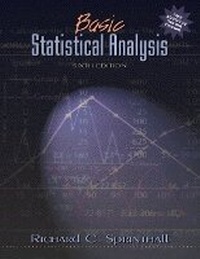
Basic Statistical Analysis
6th Edition
Published on 3. September 1999
Book
Hardback
626 pages
978-0-205-29641-5 (ISBN)
Description
This user-friendly, readable revision is presented as simply as possible to ensure that students will gain a solid understanding of statistical procedures.
The goal of this book is to demystify statistics. The student is presented with rules of evidence and the logic behind those rules. The book is divided into three major units: Descriptive Statistics, Inferential Statistics, and Advanced Topics in Inferential Statistics.
The goal of this book is to demystify statistics. The student is presented with rules of evidence and the logic behind those rules. The book is divided into three major units: Descriptive Statistics, Inferential Statistics, and Advanced Topics in Inferential Statistics.
More details
Edition
6th edition
Language
English
Place of publication
United States
Publishing group
Pearson Education (US)
Target group
Professional and scholarly
Dimensions
Height: 243 mm
Width: 197 mm
Thickness: 28 mm
Weight
1175 gr
ISBN-13
978-0-205-29641-5 (9780205296415)
Copyright in bibliographic data and cover images is held by Nielsen Book Services Limited or by the publishers or by their respective licensors: all rights reserved.
Schweitzer Classification
Other editions
New editions
Richard C. Sprinthall
Basic Statistical Analysis
Book
10/2002
7th Edition
Pearson
€111.60
Article exhausted; check for reprint
Content
Each chapter includes "Summary," "Key Terms and Names," and "Problems."
Preface.
I.DESCRIPTIVE STATISTICS.
1.Introduction to Statistics.
Stumbling Blocks to Statistics.
A Brief Look at the History of Statistics.
Benefits of a Course in Statistics.
General Field of Statistics.
2.Graphs and Measures of Central Tendency.
Graphs.
Measures of Central Tendency.
Appropriate Use of the Mean, the Median, and the Mode.
3.Variability.
Measures of Variability.
Graphs and Variability.
4.The Normal Curve and Z Scores.
The Normal Curve.
Z Scores.
Translating Raw Scores into Z Scores.
Z Score Translations in Practice.
5.Z Scores Revisited: T Scores and Other Normal Curve Transformations.
Other Applications of the Z Score.
The Percentile Table.
T Scores.
Normal Curve Equivalents.
Stanines.
Grade-Equivalent Scores: A Note of Caution.
The Importance of the Z Score.
6.Probability.
The Definition of Probability.
Probability and Percentage Areas of the Normal Curve.
Combining Probabilities for Independent Events.
A Reminder about Logic.
II.INFERENTIAL STATISTICS.
7.Statistics and Parameters.
Generalizing from the Few to the Many.
Key Concepts of Inferential Statistics.
Techniques of Sampling.
Sampling Distributions.
Back to Z.
Some Words of Encouragement.
8.Parameter Estimates and Hypothesis Testing.
The Standard Deviation Revisited.
Estimating the Standard Error of the Mean.
Estimating the Population Mean: Interval Estimates and Hypothesis Testing.
The t Ratio.
The Type 1 Error.
Alpha Levels.
Effect Size.
Interval Estimates: No Hypothesis Test Needed.
9.The Fundamentals of Research Methodology.
Research Strategies.
Independent and Dependent Variables.
The Cause-and-Effect Trap.
Theory of Measurement.
Research: Experimental versus Post-Facto.
The Experimental Method: The Case of Cause and Effect.
Creating Equivalent Groups: The True Experiment.
Designing the True Experiment.
The Hawthorne Effect.
Sequencing Effects.
Counterbalancing.
Repeated Measures Designs with Separate Control Groups.
Requirements for the True Experiment.
Post-Facto Research.
Combination Research.
Research Errors.
Experimental Error: Failure to Use an Adequate Control Group.
Post-Facto Errors.
Meta-Analysis.
Methodology as a Basis for More Sophisticated Techniques.
10.The Hypothesis of Difference.
Sampling Distribution of Differences.
Estimated Standard Error of Difference.
Two-Sample t Test for Independent Samples.
Significance.
Two-Tail t Table.
Alpha and Confidence Levels.
The Minimum Difference.
Outliers.
One-Tail t Test.
Importance of Having at Least Two Samples.
Power.
Effect Size.
11.The Hypothesis of Association: Correlation.
Cause and Effect.
The Pearson r.
Interclass versus Intraclass.
Correlation Matrix.
The Spearmen rS.
An Important Difference between the Correlation Coefficient and the t Test.
12.Analysis of Variance.
Advantages of ANOVA.
Analyzing the Variance.
Applications of ANOVA.
The Factorial ANOVA.
Eta Squared and d.
Graphing the Interaction.
13.Nominal Data and the Chi Square.
Chi Square and Independent Samples.
Locating the Difference.
Chi Square and Percentages.
Chi Square and Z Scores.
Chi Square and Dependent Samples.
Requirements for Using the Chi Square.
III.ADVANCED TOPICS IN INFERENTIAL STATISTICS.
14.Regression Analysis.
Regression of Y on X.
Standard Error of Estimate.
Confidence Interval Equation.
Multiple r (Linear Regression with More Than Two Variables).
Path Analysis, the Multiple R, and Causation.
Partial Correlation.
15.Repeated-Measures and Matched-Subjects Designs with Interval Data.
Problem of Correlated or Dependent Samples.
Repeated Measures.
Paired t Ratio.
Within-Subjects F Ratio.
Within-Subjects Effect Size.
Testing Correlated Experimental Data.
16.Nonparametrics Revisited: The Ordinal Case.
Mann-Whitney U Test for Two Ordinal Distributions with Independent Selection.
Kruskal-Wallis H Test for Three or More Ordinal Distributions with Independent Selection.
Wilcoxon T Test for Two Ordinal Distributions with Correlated Selection. Friedman ANOVA by Ranks for Three or More Ordinal Distributions with Correlated Selection.
Advantages and Disadvantages of Nonparametric Tests.
17.Tests and Measurements.
Norm and Criterion Referencing: Relative versus Absolute Performance Measures.
The Problem of Bias.
Test Reliability, Validity, and Measurement Theory.
Test Validity.
Item Analysis.
18.Computers and Statistical Analysis.
Computer Literacy.
Statistical Programs.
Logic Checkpoints.
Answers.
19.Research Simulations: Choosing the Correct Statistical Test.
Methodology: Research's Bottom Line.
Checklist Questions.
Critical Decision Points.
Research Simulations: From A to Z.
The Research Enterprise.
A Final Thought: The Burden of Proof.
Special Unit: The Binomial Case.
Appendix.
Glossary.
References.
Answers to Odd-Numbered Items (and Within-Chapter Exercises).
Index.
Preface.
I.DESCRIPTIVE STATISTICS.
1.Introduction to Statistics.
Stumbling Blocks to Statistics.
A Brief Look at the History of Statistics.
Benefits of a Course in Statistics.
General Field of Statistics.
2.Graphs and Measures of Central Tendency.
Graphs.
Measures of Central Tendency.
Appropriate Use of the Mean, the Median, and the Mode.
3.Variability.
Measures of Variability.
Graphs and Variability.
4.The Normal Curve and Z Scores.
The Normal Curve.
Z Scores.
Translating Raw Scores into Z Scores.
Z Score Translations in Practice.
5.Z Scores Revisited: T Scores and Other Normal Curve Transformations.
Other Applications of the Z Score.
The Percentile Table.
T Scores.
Normal Curve Equivalents.
Stanines.
Grade-Equivalent Scores: A Note of Caution.
The Importance of the Z Score.
6.Probability.
The Definition of Probability.
Probability and Percentage Areas of the Normal Curve.
Combining Probabilities for Independent Events.
A Reminder about Logic.
II.INFERENTIAL STATISTICS.
7.Statistics and Parameters.
Generalizing from the Few to the Many.
Key Concepts of Inferential Statistics.
Techniques of Sampling.
Sampling Distributions.
Back to Z.
Some Words of Encouragement.
8.Parameter Estimates and Hypothesis Testing.
The Standard Deviation Revisited.
Estimating the Standard Error of the Mean.
Estimating the Population Mean: Interval Estimates and Hypothesis Testing.
The t Ratio.
The Type 1 Error.
Alpha Levels.
Effect Size.
Interval Estimates: No Hypothesis Test Needed.
9.The Fundamentals of Research Methodology.
Research Strategies.
Independent and Dependent Variables.
The Cause-and-Effect Trap.
Theory of Measurement.
Research: Experimental versus Post-Facto.
The Experimental Method: The Case of Cause and Effect.
Creating Equivalent Groups: The True Experiment.
Designing the True Experiment.
The Hawthorne Effect.
Sequencing Effects.
Counterbalancing.
Repeated Measures Designs with Separate Control Groups.
Requirements for the True Experiment.
Post-Facto Research.
Combination Research.
Research Errors.
Experimental Error: Failure to Use an Adequate Control Group.
Post-Facto Errors.
Meta-Analysis.
Methodology as a Basis for More Sophisticated Techniques.
10.The Hypothesis of Difference.
Sampling Distribution of Differences.
Estimated Standard Error of Difference.
Two-Sample t Test for Independent Samples.
Significance.
Two-Tail t Table.
Alpha and Confidence Levels.
The Minimum Difference.
Outliers.
One-Tail t Test.
Importance of Having at Least Two Samples.
Power.
Effect Size.
11.The Hypothesis of Association: Correlation.
Cause and Effect.
The Pearson r.
Interclass versus Intraclass.
Correlation Matrix.
The Spearmen rS.
An Important Difference between the Correlation Coefficient and the t Test.
12.Analysis of Variance.
Advantages of ANOVA.
Analyzing the Variance.
Applications of ANOVA.
The Factorial ANOVA.
Eta Squared and d.
Graphing the Interaction.
13.Nominal Data and the Chi Square.
Chi Square and Independent Samples.
Locating the Difference.
Chi Square and Percentages.
Chi Square and Z Scores.
Chi Square and Dependent Samples.
Requirements for Using the Chi Square.
III.ADVANCED TOPICS IN INFERENTIAL STATISTICS.
14.Regression Analysis.
Regression of Y on X.
Standard Error of Estimate.
Confidence Interval Equation.
Multiple r (Linear Regression with More Than Two Variables).
Path Analysis, the Multiple R, and Causation.
Partial Correlation.
15.Repeated-Measures and Matched-Subjects Designs with Interval Data.
Problem of Correlated or Dependent Samples.
Repeated Measures.
Paired t Ratio.
Within-Subjects F Ratio.
Within-Subjects Effect Size.
Testing Correlated Experimental Data.
16.Nonparametrics Revisited: The Ordinal Case.
Mann-Whitney U Test for Two Ordinal Distributions with Independent Selection.
Kruskal-Wallis H Test for Three or More Ordinal Distributions with Independent Selection.
Wilcoxon T Test for Two Ordinal Distributions with Correlated Selection. Friedman ANOVA by Ranks for Three or More Ordinal Distributions with Correlated Selection.
Advantages and Disadvantages of Nonparametric Tests.
17.Tests and Measurements.
Norm and Criterion Referencing: Relative versus Absolute Performance Measures.
The Problem of Bias.
Test Reliability, Validity, and Measurement Theory.
Test Validity.
Item Analysis.
18.Computers and Statistical Analysis.
Computer Literacy.
Statistical Programs.
Logic Checkpoints.
Answers.
19.Research Simulations: Choosing the Correct Statistical Test.
Methodology: Research's Bottom Line.
Checklist Questions.
Critical Decision Points.
Research Simulations: From A to Z.
The Research Enterprise.
A Final Thought: The Burden of Proof.
Special Unit: The Binomial Case.
Appendix.
Glossary.
References.
Answers to Odd-Numbered Items (and Within-Chapter Exercises).
Index.