


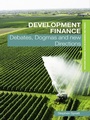
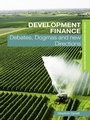
Development Finance
Debates, Dogmas and New Directions
Published on 26. September 2008
Book
Hardback
432 pages
978-0-415-42318-2 (ISBN)
Description
This book examines the subject of Development Finance, or more specifically how financial systems can help or hinder the process of human development. As an expert in this field, Stephen Spratt reviews the components of the domestic and international financial systems, and considers reform options objectively against the central goal of human development. The result is a combination of orthodox and more innovative approaches, which provides a thorough grounding in development finance theory and practice in the 21st century. Topics covered in the book include:
The Millennium Development Goals
Financial crises and international capital flows
The role of the private sector
Microfinance.
Focusing on the roles of the World Bank and the IMF and with a host of case studies and real world examples from Asia, Africa and Latin America as well as the "transition" economies of Eastern Europe, the author examines developing countries' engagement with the international financial system and its influence on the process of human development, both positive and negative.
The Millennium Development Goals
Financial crises and international capital flows
The role of the private sector
Microfinance.
Focusing on the roles of the World Bank and the IMF and with a host of case studies and real world examples from Asia, Africa and Latin America as well as the "transition" economies of Eastern Europe, the author examines developing countries' engagement with the international financial system and its influence on the process of human development, both positive and negative.
Reviews / Votes
"While many authors have previously examined the causes of economic development, few have focused directly and extensively on its relationship with financial systems. Spratt takes his unique angle in his new book, which provides ample coverage of both theory and practice in the field of development finance. ... Overall, a valuable reference for scholars and practitioners in this new, emerging field. Highly recommended." -- CHOICE (July 2009); H. A. Faruq, Xavier University "While many authors have previously examined the causes of economic development, few have focused directly and extensively on its relationship with financial systems. Spratt takes this unique angle in his new book, which provides ample coverage of both theory and practice in the field of development finance. ... a valuable reference for scholars and practitioners in this new emerging field. Highly recommended." - CHOICE (July 2009 Vol. 46) by H.A. Faruq, Xavier UniversityMore details
Series
Language
English
Place of publication
London
United Kingdom
Publishing group
Taylor & Francis Ltd
Target group
College/higher education
Professional and scholarly
Illustrations
54 s/w Tabellen, 77 s/w Zeichnungen, 77 s/w Abbildungen
54 Tables, black and white; 77 Line drawings, black and white; 77 Illustrations, black and white
Dimensions
Height: 234 mm
Width: 156 mm
Weight
960 gr
ISBN-13
978-0-415-42318-2 (9780415423182)
Copyright in bibliographic data and cover images is held by Nielsen Book Services Limited or by the publishers or by their respective licensors: all rights reserved.
Schweitzer Classification
Other editions
Additional editions
E-Book
09/2008
Routledge
€86.99
Available for download
E-Book
09/2008
Routledge
€86.99
Available for download

Book
09/2008
Routledge
€95.00
Shipment within 15-20 days
Person
Stephen Spratt is a director of the new economics foundation, a UK based think tank. Previously he lectured in development finance at the University of Reading, has worked in the City of London's financial markets and was a researcher at the Institute of Development Studies at the University of Sussex.
Content
Chapter 1: An Introduction to the Financial System in Theory and in Practice. Chapter 2: Finance, Poverty, Development and Growth. Chapter 3: Financial Repression, Liberalisation and Growth. Chapter 4: The Domestic Financial System: An Overview. Chapter 5: Reforming the Domestic Financial System: Options and Issues. Chapter 6: The External Financial System: Characteristics and Trends. Chapter 7: The External Financial System (2): Debt and Financial Crises. Chapter 8: The International Financial Architecture: Evolution, Key Features and Proposed Reforms. Chapter 9: Development Finance and the Private Sector: Driving the Real Economy. Chapter 10: Finance for Development: What Do We Know?