

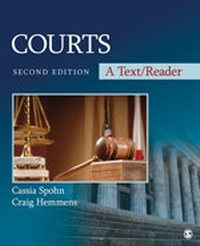
Courts
A Text/Reader
2nd Edition
Published on 10. January 2012
Book
Paperback/Softback
664 pages
978-1-4129-9718-8 (ISBN)
Description
Courts: A Text/Reader provides the best of both worlds- authored text sections with carefully selected accompanying readings that illustrate the questions and controversies legal scholars and court researchers are investigating in the 21st century. The articles, from leading journals in criminology and criminal justice, reflect both classic studies of the criminal court system and state-of-the-art research, and often have a policy perspective that makes them more applied, less theoretical, and more interesting to both undergraduate and graduate students.
More details
Series
Edition
2nd Revised edition
Language
English
Place of publication
Thousand Oaks
United States
Target group
College/higher education
Edition type
Revised edition
Dimensions
Height: 232 mm
Width: 187 mm
Weight
964 gr
ISBN-13
978-1-4129-9718-8 (9781412997188)
Copyright in bibliographic data and cover images is held by Nielsen Book Services Limited or by the publishers or by their respective licensors: all rights reserved.
Schweitzer Classification
Other editions
Previous edition
Book
11/2008
SAGE Publications Ltd
€88.09
Article exhausted; check for reprint
Persons
Cassia Spohn is School Director and Foundation Professor of Criminal Justice at Arizona State University. She is the author of several books, including The Color of Justice: Race, Ethnicity, and Crime in America (with Sam Walker and Miriam DeLone) and How Do Judges Decide? The Search for Fairness and Equity in Sentencing. She has published a number of articles examining prosecutors' charging decisions in sexual assault cases and exploring the effect of race/ethnicity on charging and sentencing decisions. Her current research interests include the effect of race and gender on court processing decisions, victim characteristics and case outcomes in sexual assault cases, judicial decision making, sentencing of drug offenders, and the deterrent effect of imprisonment. In 1999, she was awarded the University of Nebraska Outstanding Research and Creative Activity Award.
Craig Hemmens is a professor in the Department of Criminal Justice and Criminology at Washington State University. He holds a JD from North Carolina Central University School of Law and a PhD in criminal justice from Sam Houston State University. Professor Hemmens has published 20 books and more than 200 articles, many dealing with legal issues in criminal justice. He currently serves as editor of the Criminal Law Bulletin and previously served as the editor of the Journal of Criminal Justice Education and as president of the Academy of Criminal Justice Sciences. His current research interests include criminal law and procedure.
Craig Hemmens is a professor in the Department of Criminal Justice and Criminology at Washington State University. He holds a JD from North Carolina Central University School of Law and a PhD in criminal justice from Sam Houston State University. Professor Hemmens has published 20 books and more than 200 articles, many dealing with legal issues in criminal justice. He currently serves as editor of the Criminal Law Bulletin and previously served as the editor of the Journal of Criminal Justice Education and as president of the Academy of Criminal Justice Sciences. His current research interests include criminal law and procedure.
Content
Foreword
Acknowledgments
Preface
Section I. Introduction: Courts and Case Processing
Section II. Historical and Contemporary Perspectives on Courts
How to Read a Research Article
Readings
1. The Process Is the Punishment: Handling Cases in a Lower Criminal Court, by Malcolm M. Feeley
2. The Honest Politician?s Guide to Juvenile Justice in the Twenty-First Century, by Barry C. Feld
3. The Rehnquist Court and Criminal Justice: An Empirical Assessment, by Christopher E. Smith
4. Wrongful Conviction: Perceptions of Criminal Justice Professionals Regarding the Frequency of Wrongful Conviction and the Extent of System Errors, by Robert J. Ramsey and James Frank
Section III. Prosecutors and Defense Attorneys
Readings
5. Violated Trust: Conceptualizing Prosecutorial Misconduct, by Heather Schoenfeld
6. Prosecutorial Justifications for Sexual Assault Case Rejection: Guarding the ?Gateway to Justice? by Cassia Spohn, Dawn Beichner, and Erika Davis-Frenzel
7. Prosecutorial Discretion in Seeking Death: An Analysis of Racial Disparity in the Pretrial Stages of Case Processing in a Midwestern County, by Jon Sorensen and Donald H. Wallace
8. Representing the Accused: Professional Values and Professional Choices of Small-Town Lawyers, by Alissa Pollitz Worden
9. Indigent Defenders Get the Job Done and Done Well, by Roger A. Hanson and Brian J. Ostrom
Section IV. Judges and Jurors
Readings
10. Judges and the Politics of Death: Deciding Between the Bill of Rights and the Next Election in Capital Cases, by Stephen B. Bright and Patrick J. Keenan
11. Reflections on a Rape Trial: The Role of Rape Myths and Jury Selection in the Outcome of a Trial, by Judy Shepherd
12. Racially Based Jury Nullification: Black Power in the Criminal Justice System, by Paul Butler
Section V. Pretrial Proceedings
Readings
13. The Relationship Between Type of Attorney and Bail Amount Set for Hispanic Defendants, by K.B. Turner and James B. Johnson
14. The Impact of Race, Gender, and Age on the Pretrial Decision, by Tina L. Freiburger and Carly M. Hilinski
15. Criminal Prosecution of Domestic Violence Offenses: An Investigation of Factors Predictive of Court Outcomes, by Kris Henning and Lynette Feder
Section VI. Plea Bargaining and Trial Dynamics
Readings
16. Prosecutorial Discretion and Plea Bargaining in the United States, France, Germany, and Italy: A Comparative Perspective, by Yue Ma
17. Court Caseloads, Plea Bargains, and Criminal Sanctions: The Effects of Section 17 P.C. in California, by James W. Meeker and Henry N. Pontell
18. Variation in Trial Penalties Among Serious Violent Offenses, by Jeffery T. Ulmer and Mindy S. Bradley
19. The Entertainment Value of a Trial: How Media Access to the Courtroom Is Changing the American Judicial Process, by Jeffrey S. Johnson
Section VII. Sentencing
Readings
20. Is Preferential Treatment of Female Offenders a Thing of the Past? A Multisite Study of Gender, Race, and Imprisonment, by Cassia Spohn and Dawn Beichner
21. The Interactive Effects of Victim Race and Gender on Death Sentence Disparity Findings, by Marian R. Williams and Jefferson E. Holcomb
22. The Juvenile Penalty: A Comparison of Juvenile and Young Adult Sentencing Outcomes in Criminal Court, by Megan C. Kurlychek and Brian D. Johnson
Section VIII. Beyond Conviction and Sentencing
Readings
23. The Federal Habeas Corpus Process: Unraveling the Issues, by Robert D. Pursley
24. Criminal Justice System Reform and Wrongful Conviction: A Research Agenda, by Marvin Zalman
Section IX. Specialized Courts and Other Trends in Adjudication
Readings
25. The Baltimore City Drug Treatment Court: One-Year Results From a Randomized Study, by Denise C. Gottfredson and M. Lyn Exum
26. Combating Domestic Violence: Findings From an Evaluation of a Local Domestic Violence Court, by Angela R. Gover, John M. MacDonald, and Geoffrey P. Alpert
27. Teen Court Referral, Sentencing, and Subsequent Recidivism: Two Proportional Hazards Models and a Little Speculation, by Andrew Rasmussen
Glossary
References
Credits and Sources
Index
About the Authors
Acknowledgments
Preface
Section I. Introduction: Courts and Case Processing
Section II. Historical and Contemporary Perspectives on Courts
How to Read a Research Article
Readings
1. The Process Is the Punishment: Handling Cases in a Lower Criminal Court, by Malcolm M. Feeley
2. The Honest Politician?s Guide to Juvenile Justice in the Twenty-First Century, by Barry C. Feld
3. The Rehnquist Court and Criminal Justice: An Empirical Assessment, by Christopher E. Smith
4. Wrongful Conviction: Perceptions of Criminal Justice Professionals Regarding the Frequency of Wrongful Conviction and the Extent of System Errors, by Robert J. Ramsey and James Frank
Section III. Prosecutors and Defense Attorneys
Readings
5. Violated Trust: Conceptualizing Prosecutorial Misconduct, by Heather Schoenfeld
6. Prosecutorial Justifications for Sexual Assault Case Rejection: Guarding the ?Gateway to Justice? by Cassia Spohn, Dawn Beichner, and Erika Davis-Frenzel
7. Prosecutorial Discretion in Seeking Death: An Analysis of Racial Disparity in the Pretrial Stages of Case Processing in a Midwestern County, by Jon Sorensen and Donald H. Wallace
8. Representing the Accused: Professional Values and Professional Choices of Small-Town Lawyers, by Alissa Pollitz Worden
9. Indigent Defenders Get the Job Done and Done Well, by Roger A. Hanson and Brian J. Ostrom
Section IV. Judges and Jurors
Readings
10. Judges and the Politics of Death: Deciding Between the Bill of Rights and the Next Election in Capital Cases, by Stephen B. Bright and Patrick J. Keenan
11. Reflections on a Rape Trial: The Role of Rape Myths and Jury Selection in the Outcome of a Trial, by Judy Shepherd
12. Racially Based Jury Nullification: Black Power in the Criminal Justice System, by Paul Butler
Section V. Pretrial Proceedings
Readings
13. The Relationship Between Type of Attorney and Bail Amount Set for Hispanic Defendants, by K.B. Turner and James B. Johnson
14. The Impact of Race, Gender, and Age on the Pretrial Decision, by Tina L. Freiburger and Carly M. Hilinski
15. Criminal Prosecution of Domestic Violence Offenses: An Investigation of Factors Predictive of Court Outcomes, by Kris Henning and Lynette Feder
Section VI. Plea Bargaining and Trial Dynamics
Readings
16. Prosecutorial Discretion and Plea Bargaining in the United States, France, Germany, and Italy: A Comparative Perspective, by Yue Ma
17. Court Caseloads, Plea Bargains, and Criminal Sanctions: The Effects of Section 17 P.C. in California, by James W. Meeker and Henry N. Pontell
18. Variation in Trial Penalties Among Serious Violent Offenses, by Jeffery T. Ulmer and Mindy S. Bradley
19. The Entertainment Value of a Trial: How Media Access to the Courtroom Is Changing the American Judicial Process, by Jeffrey S. Johnson
Section VII. Sentencing
Readings
20. Is Preferential Treatment of Female Offenders a Thing of the Past? A Multisite Study of Gender, Race, and Imprisonment, by Cassia Spohn and Dawn Beichner
21. The Interactive Effects of Victim Race and Gender on Death Sentence Disparity Findings, by Marian R. Williams and Jefferson E. Holcomb
22. The Juvenile Penalty: A Comparison of Juvenile and Young Adult Sentencing Outcomes in Criminal Court, by Megan C. Kurlychek and Brian D. Johnson
Section VIII. Beyond Conviction and Sentencing
Readings
23. The Federal Habeas Corpus Process: Unraveling the Issues, by Robert D. Pursley
24. Criminal Justice System Reform and Wrongful Conviction: A Research Agenda, by Marvin Zalman
Section IX. Specialized Courts and Other Trends in Adjudication
Readings
25. The Baltimore City Drug Treatment Court: One-Year Results From a Randomized Study, by Denise C. Gottfredson and M. Lyn Exum
26. Combating Domestic Violence: Findings From an Evaluation of a Local Domestic Violence Court, by Angela R. Gover, John M. MacDonald, and Geoffrey P. Alpert
27. Teen Court Referral, Sentencing, and Subsequent Recidivism: Two Proportional Hazards Models and a Little Speculation, by Andrew Rasmussen
Glossary
References
Credits and Sources
Index
About the Authors