

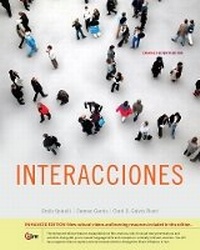
Interacciones, Enhanced
7th Edition
Published on 1. January 2015
Book
Paperback/Softback
496 pages
978-1-305-08195-6 (ISBN)
Description
This newly enhanced seventh edition of INTERACCIONES bridges the gap between first- and second-year Spanish through a broad focus on useful grammar structures, practical vocabulary, and an effective integration of language and culture. INTERACCIONES enforces grammar and vocabulary presentations with authentic readings and listening activities in order to give students a real-life context in which to use the material. INTERACCIONES employs a tried-and-true pedagogical approach, with special attention to the use of language in context and the National Standards for Foreign Language Learning. These features give students the practice and context needed to communicate in Spanish, and fully engage them to continue studying Spanish past the intermediate level.
More details
Edition
7th edition
Language
English
Place of publication
Mason, OH
United States
Publishing group
Cengage Learning, Inc
Target group
College/higher education
Dimensions
Height: 22 mm
Width: 200 mm
Thickness: 251 mm
Weight
885 gr
ISBN-13
978-1-305-08195-6 (9781305081956)
Copyright in bibliographic data and cover images is held by Nielsen Book Services Limited or by the publishers or by their respective licensors: all rights reserved.
Schweitzer Classification
Persons
Emily Spinelli received her Ph.D. in Spanish from Ohio State University, where she studied Spanish language and Hispanic literature and culture, as well as foreign language education and second language acquisition theory. Currently, she is executive director of the American Association of Teachers of Spanish and Portuguese (AATSP) and professor emerita of Spanish at the University of Michigan-Dearborn, where she taught courses in all levels of Spanish language, literature, language of business, and culture and civilization. Professor Spinelli also coordinated the foreign language teaching-certification program and taught courses in foreign language methodology. In addition to several textbooks, Professor Spinelli has also published many articles and reviews in scholarly journals. She is a frequent speaker and presenter at state, national, and international conferences, and she has consulted with school districts and universities throughout the country on issues related to foreign language education and methodology. Through the years, Professor Spinelli has been very active in professional organizations. She has served on the Executive Council of the American Council on the Teaching of Foreign Languages (ACTFL) and is a past president of that organization. She also has served as editor of Foreign Language Annals, the official journal of ACTFL, and as the president of the AATSP. Carmen Garcia, a native of Lima, Peru, received her Ph.D. from Georgetown University in linguistics. She is professor of Spanish Pragmatics and Applied Linguistics, director of the Undergraduate Spanish Language Program, and director of the Spanish Linguistics Program at Arizona State University. Professor Garcia is author or co-author of several college-level Spanish textbooks. She also has published numerous articles in national and international journals on Spanish pragmatics and intracultural and cross-cultural communication. In addition, she is co-editor of Research on Politeness in the Spanish Speaking World and a special issue in Oralia on Small Talk in Spanish. She is a frequent speaker and presenter at national and international meetings and conferences, and a member of many national and international linguistics organizations. Professor Garcia also serves as associate editor of Studies in Hispanics and Lusophone Linguistics. Carol E. Galvin Flood has an M.A. in foreign language education from the University of Michigan as well as an M.A. in Spanish language and literature from Wayne State University (Detroit). She retired from the Bloomfield Hills school district, where she taught Spanish and helped develop and implement a program to prepare high-school students for the Advanced Placement Spanish Language Exam. Throughout her career she has taught Spanish at many levels, ranging from early elementary bilingual-bicultural classes to university advanced composition and conversation. She also has been active in professional organizations such as the AATSP and ACTFL throughout her teaching career. Flood currently is serving as Coordinator for Classroom Resources for the AATSP website.
Content
Unidad I: BIENVENIDOS A ESPANA.
Cultural Themes.
Comprension.
Mas Alla del Aula.
1. La vida de todos los dias.
PRIMERA SITUACION.
Presentacion - Un dia tipico.
Asi se habla - Expressing sequence and frequency of actions.
Estructuras - Discussing daily activities: Present tense of regular and irregular verbs.
Estructuras - Talking about other activities: Present tense of stem-changing verbs.
SEGUNDA SITUACION.
Presentacion - La rutina diaria.
Asi se habla - Expressing lack of comprehension.
Estructuras - Describing daily routine: Reflexive verbs.
Estructuras - Asking questions: Question formation.
TERCERA SITUACION.
Dialogos en video - Para comprender lo que ve: Paying attention to gestures and body language.
Dialogos en video - Para comprender lo que escucha: The gist of a conversation
Perspectivas - El horario espanol.
Asi se escribe - Para escribir bien: Writing personal letters and e-mail messages.
Interacciones.
2. De vacaciones.
PRIMERA SITUACION.
Presentacion - En el complejo turistico.
Asi se habla - Making a personal phone call.
Estructuras - Talking about past activities: Preterite of regular verbs.
Estructuras - Discussing other past activities: Preterite of irregular verbs.
Estructuras - Discussing when things happened: Expressing dates.
SEGUNDA SITUACION.
Presentacion - Diversiones nocturnas.
Asi se habla - Circumlocating.
Estructuras - Discussing past actions: Preterite of stem-changing verbs.
Estructuras - Distinguishing between people and things: Personal a.
Estructuras - Avoiding repetition of nouns: Direct object pronouns.
TERCERA SITUACION.
Dialogos en video -Para comprender lo que ve: Paying attention to context.
Dialogos en video - Para comprender lo que escucha: Using visual aids.
Perspectivas - Celebrando las fiestas de verano.
Asi se escribe - Para escribir bien: Sequencing events.
Interacciones.
HERENCIA CULTURAL.
Cortometraje - La lista.
Arte y Arquitectura - Dos grandes maestros del Prado: Velazquez y Goya.
Lectura Literaria - Para leer bien: Figurative language and symbols (Rimas de Gustavo Adolfo Becquer).
Unidad II: BIENVENIDOS A MEXICO.
Cultural Themes.
Comprension.
Mas Alla del Aula.
3. En familia.
PRIMERA SITUACION.
Presentacion - Los domingos en familia.
Asi se habla - Greetings and leave-takings.
Estructuras - Describing what life used to be like: Imperfect tense.
Estructuras - Describing people: Formation and agreement of adjectives.
Estructuras - Expressing endearment: Diminutives.
SEGUNDA SITUACION.
Presentacion - La boda de Maria Luisa.
Asi se habla - Extending, accepting, and declining an invitation.
Estructuras - Discussing conditions, characteristics, and existence: Uses of ser, estar, and haber.
Estructuras - Indicating ownership: Possessive adjectives and pronouns.
TERCERA SITUACION.
Dialogos en video - Para comprender lo que ve: Paying attention to location.
Dialogos en video - Para comprender lo que escucha: Focusing on specific information.
Perspectivas - Nombres, apodos y apellidos.
Asi se escribe - Para escribir bien: Extending and replying to a written invitation.
Interacciones.
4. En el restaurante.
PRIMERA SITUACION.
Presentacion - Me encantan las enchiladas.
Asi se habla - Ordering in a restaurant.
Estructuras - Indicating to whom and for whom actions are done: Indirect object pronouns.
Estructuras - Expressing likes and dislikes: Verbs like gustar.
Estructuras - Refusing, finding out and meeting: Verbs that change English meaning in the preterite.
SEGUNDA SITUACION.
Presentacion - Fuimos a un buen restaurante.
Asi se habla - Making introductions.
Estructuras - Narrating in the past: Imperfect versus preterite.
Estructuras - Talking about people and events in a series: Ordinal numbers.
TERCERA SITUACION.
Dialogos en video -Para comprender lo que ve: Reactivating background knowledge.
Dialogos en video - Para comprender lo que escucha: Remembering key details and paraphrasing.
Perspectivas - Los menus en el mundo hispano.
Asi se escribe - Para escribir bien: Improving accura
Cultural Themes.
Comprension.
Mas Alla del Aula.
1. La vida de todos los dias.
PRIMERA SITUACION.
Presentacion - Un dia tipico.
Asi se habla - Expressing sequence and frequency of actions.
Estructuras - Discussing daily activities: Present tense of regular and irregular verbs.
Estructuras - Talking about other activities: Present tense of stem-changing verbs.
SEGUNDA SITUACION.
Presentacion - La rutina diaria.
Asi se habla - Expressing lack of comprehension.
Estructuras - Describing daily routine: Reflexive verbs.
Estructuras - Asking questions: Question formation.
TERCERA SITUACION.
Dialogos en video - Para comprender lo que ve: Paying attention to gestures and body language.
Dialogos en video - Para comprender lo que escucha: The gist of a conversation
Perspectivas - El horario espanol.
Asi se escribe - Para escribir bien: Writing personal letters and e-mail messages.
Interacciones.
2. De vacaciones.
PRIMERA SITUACION.
Presentacion - En el complejo turistico.
Asi se habla - Making a personal phone call.
Estructuras - Talking about past activities: Preterite of regular verbs.
Estructuras - Discussing other past activities: Preterite of irregular verbs.
Estructuras - Discussing when things happened: Expressing dates.
SEGUNDA SITUACION.
Presentacion - Diversiones nocturnas.
Asi se habla - Circumlocating.
Estructuras - Discussing past actions: Preterite of stem-changing verbs.
Estructuras - Distinguishing between people and things: Personal a.
Estructuras - Avoiding repetition of nouns: Direct object pronouns.
TERCERA SITUACION.
Dialogos en video -Para comprender lo que ve: Paying attention to context.
Dialogos en video - Para comprender lo que escucha: Using visual aids.
Perspectivas - Celebrando las fiestas de verano.
Asi se escribe - Para escribir bien: Sequencing events.
Interacciones.
HERENCIA CULTURAL.
Cortometraje - La lista.
Arte y Arquitectura - Dos grandes maestros del Prado: Velazquez y Goya.
Lectura Literaria - Para leer bien: Figurative language and symbols (Rimas de Gustavo Adolfo Becquer).
Unidad II: BIENVENIDOS A MEXICO.
Cultural Themes.
Comprension.
Mas Alla del Aula.
3. En familia.
PRIMERA SITUACION.
Presentacion - Los domingos en familia.
Asi se habla - Greetings and leave-takings.
Estructuras - Describing what life used to be like: Imperfect tense.
Estructuras - Describing people: Formation and agreement of adjectives.
Estructuras - Expressing endearment: Diminutives.
SEGUNDA SITUACION.
Presentacion - La boda de Maria Luisa.
Asi se habla - Extending, accepting, and declining an invitation.
Estructuras - Discussing conditions, characteristics, and existence: Uses of ser, estar, and haber.
Estructuras - Indicating ownership: Possessive adjectives and pronouns.
TERCERA SITUACION.
Dialogos en video - Para comprender lo que ve: Paying attention to location.
Dialogos en video - Para comprender lo que escucha: Focusing on specific information.
Perspectivas - Nombres, apodos y apellidos.
Asi se escribe - Para escribir bien: Extending and replying to a written invitation.
Interacciones.
4. En el restaurante.
PRIMERA SITUACION.
Presentacion - Me encantan las enchiladas.
Asi se habla - Ordering in a restaurant.
Estructuras - Indicating to whom and for whom actions are done: Indirect object pronouns.
Estructuras - Expressing likes and dislikes: Verbs like gustar.
Estructuras - Refusing, finding out and meeting: Verbs that change English meaning in the preterite.
SEGUNDA SITUACION.
Presentacion - Fuimos a un buen restaurante.
Asi se habla - Making introductions.
Estructuras - Narrating in the past: Imperfect versus preterite.
Estructuras - Talking about people and events in a series: Ordinal numbers.
TERCERA SITUACION.
Dialogos en video -Para comprender lo que ve: Reactivating background knowledge.
Dialogos en video - Para comprender lo que escucha: Remembering key details and paraphrasing.
Perspectivas - Los menus en el mundo hispano.
Asi se escribe - Para escribir bien: Improving accura