

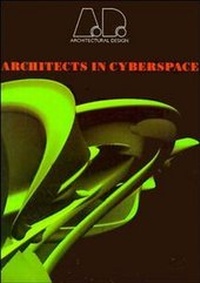
Architecture in Cyberspace
1st Edition
Published on 12. October 1995
Book
Paperback/Softback
120 pages
978-1-85490-252-8 (ISBN)
Description
Dramatic changes in the working methods of architects have already been enforced with the expanse of work now possible through the use of computers. With the dawn of Cyberspace, the opportunities span away from us to infinity. William Mitchell argues that the 'Gibsonion' option (from the author William Gibson) in which people leave the real world and live completely in cyberspace is just science fiction. Digital communications will come to play a more significant role in creating a sense of community. Cyberspace's inherent immateriality and malleability of content provides the most tempting stage for acting and designing. The possible 'unbuildable' structures that could be created in cyberspace are endless, and the freedom of thought, that could be transferred from here to the real world. This issue focuses on this 'new area' which, if used positively, can open a whole new world for investigation and design.
More details
Series
Language
English
Place of publication
London
United Kingdom
Publishing group
John Wiley and Sons Ltd
Target group
College/higher education
Professional and scholarly
Illustrations
150 s/w Abbildungen
150 illustrations
Dimensions
Height: 30.5 cm
Width: 25.2 cm
Thickness: 9 mm
Weight
774 gr
ISBN-13
978-1-85490-252-8 (9781854902528)
Schweitzer Classification
Content
Partial table of contents:; From Urb to Bit (M. Pearce); Soft Cities (W. Mitchell); I am a Videocam (P. Tabor); Hyper-aesthetics: The Audience is the Work (C. Larner & I. Hunter); Architecture: The Virtual Imperative (S. Iconoclast); Cyberspace: Lingering on the Threshold (S. Chaplin); No Plans (S. Plant); The Architecture of Cyberception (R. Ascott); Transmitting Architecture (M. Novak); Zip, Zap, Zoom (M. Titman); A-Symmetry City (M. McGuire); Cyberspace Anarchitechture as Jungle-War (N. Land); Hot Desking in Nanotopia (N. Spiller); The Architectural Relevance of Cyberspace (J. Frazer); The Interactivator (J. Frazer, et al.); Citi de l'Architecture (B. Tschumi).