


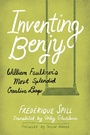
Inventing Benjy
William Faulkner's Most Splendid Creative Leap
Published on 15. February 2024
Book
Hardback
277 pages
978-1-4968-4900-7 (ISBN)
Description
Inventing Benjy: William Faulkner's Most Splendid Creative Leap is a groundbreaking work at the intersection of Faulkner studies and disability studies. Originally published in 2009 by Presses de la Sorbonne Nouvelle as L'Idiotie dans l'oeuvre de Faulkner, this translation brings the book to English-language readers for the first time. Author Frederique Spill begins with a sustained look at the monologue of Benjy Compson, the initial first-person narrator in Faulkner's The Sound and the Fury. Spill questions the reasons for this narrative choice, bringing readers to consider Benjy's monologue, which is told by a narrator who is deaf and cognitively disabled, as an impossible discourse. This paradoxical discourse, which relies mostly on senses and sensory perception, sets the foundation of a sophisticated poetics of idiocy. Using this form of writing, Faulkner shaped perspective from a disabled character, revealing a certain depth to characters that were previously only portrayed on a shallow level. This style encompasses some of the most striking forms and figures of his leap into modern(ist) writing. In that respect, Inventing Benjy thoroughly examines Benjy's discourse as an experimental workshop in which objects and words are exclusively modelled by the senses.
This study regards Faulkner's decision to place a disabled character at the center of perception as the inaugural and emblematic gesture of his writing. Closely examining excerpts from Faulkner's novels and a few short stories, Spill emphasizes how the corporal, temporal, sensorial, and narrative figures of "idiocy" are reflected throughout Faulkner's work. These writing choices underlie some of his most compelling inventions and certainly contribute to his unmistakable writing style. In the process, Faulkner's writing takes on a phenomenological dimension, simultaneously dismantling and reinventing the intertwined dynamics of perception and language.
This study regards Faulkner's decision to place a disabled character at the center of perception as the inaugural and emblematic gesture of his writing. Closely examining excerpts from Faulkner's novels and a few short stories, Spill emphasizes how the corporal, temporal, sensorial, and narrative figures of "idiocy" are reflected throughout Faulkner's work. These writing choices underlie some of his most compelling inventions and certainly contribute to his unmistakable writing style. In the process, Faulkner's writing takes on a phenomenological dimension, simultaneously dismantling and reinventing the intertwined dynamics of perception and language.
Reviews / Votes
With great authority and lucidity, Inventing Benjy shows brilliantly how Faulkner adopted the conceit of 'idiocy' for his innovative, contrarian, and revolutionary modernist project." - John T. Matthews, editor of William Faulkner in ContextMore details
Language
English
Place of publication
Jackson
United States
Target group
Professional and scholarly
Product notice
Paper over boards
Dimensions
Height: 240 mm
Width: 161 mm
Thickness: 22 mm
Weight
672 gr
ISBN-13
978-1-4968-4900-7 (9781496849007)
Copyright in bibliographic data and cover images is held by Nielsen Book Services Limited or by the publishers or by their respective licensors: all rights reserved.
Schweitzer Classification
Other editions
Additional editions
E-Book
01/2024
Princeton University Press
€29.49
Available for download
Persons
Frederique Spill is professor of American literature at University of Picardy-Jules Verne in Amiens, France. She contributed to Critical Insights: "The Sound and the Fury" and Faulkner at Fifty: Tutors and Tyros. She coedited The Wagon Moves: New Essays on "As I Lay Dying" as well as the spring 2018 issue of the Faulkner Journal. She is part of the editorial board of the Faulkner Journal. She is author of The Radiance of Small Things in Ron Rash's Writing. She also coedited, with Randall Wilhelm, a special issue of the Journal of the Short Stories in English devoted to Ron Rash's short fiction. She has also published articles in French and in English on varied contemporary American authors.
Content
Foreword by Taylor Hagood
Introduction to the Translated Edition
Abbreviations
Introduction
Part I: Idiosyncrasies of an Idiocy: Disarticulation of Bodies, Disconnecting of Narratives
Chapter 1. Is the Idiot a Monster?
Chapter 2. The Flabby Flesh and Flaccid Bodies of Idiots
Chapter 3. Inarticulate Voice and Story
Chapter 4. Faulknerian Idiotisms: The Mechanisms of Repetition
Chapter 5. States of a World in Disintegration
Part II: To the Roots of the World: Idiocy and Its Objects
Chapter 6. Idiots Have Blue Eyes
Chapter 7. The Idiot Gaze and Its Representations
Chapter 8. Idiocy's Fetish Objects: Substitutive Fixations and Logic
Chapter 9. The Exacerbation of Sensation
Chapter 10. Idiocy, Alcohol, and Other Illicit Substances: "A Derangement of All the Senses"
Part III: "Trying to Say"
Chapter 11. The Fury of Origins, the Ringing of Sound
Chapter 12. The Aesthetics of Idiocy: Writing and Aphasia
Chapter 13. The Disorders of Predication and the Order of a World: The Idiot Idiom
Chapter 14. Trying to Read Faulkner
Conclusion: Fiction of Origin and the Origin of Fiction
Notes
Bibliography
Index
Introduction to the Translated Edition
Abbreviations
Introduction
Part I: Idiosyncrasies of an Idiocy: Disarticulation of Bodies, Disconnecting of Narratives
Chapter 1. Is the Idiot a Monster?
Chapter 2. The Flabby Flesh and Flaccid Bodies of Idiots
Chapter 3. Inarticulate Voice and Story
Chapter 4. Faulknerian Idiotisms: The Mechanisms of Repetition
Chapter 5. States of a World in Disintegration
Part II: To the Roots of the World: Idiocy and Its Objects
Chapter 6. Idiots Have Blue Eyes
Chapter 7. The Idiot Gaze and Its Representations
Chapter 8. Idiocy's Fetish Objects: Substitutive Fixations and Logic
Chapter 9. The Exacerbation of Sensation
Chapter 10. Idiocy, Alcohol, and Other Illicit Substances: "A Derangement of All the Senses"
Part III: "Trying to Say"
Chapter 11. The Fury of Origins, the Ringing of Sound
Chapter 12. The Aesthetics of Idiocy: Writing and Aphasia
Chapter 13. The Disorders of Predication and the Order of a World: The Idiot Idiom
Chapter 14. Trying to Read Faulkner
Conclusion: Fiction of Origin and the Origin of Fiction
Notes
Bibliography
Index