

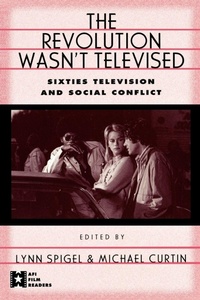
The Revolution Wasn't Televised
Sixties Television and Social Conflict
Published on 4. April 1997
Book
Paperback/Softback
368 pages
978-0-415-91122-1 (ISBN)
Description
Caricatures of sixties television--called a "vast wasteland" by the FCC president in the early sixties--continue to dominate our perceptions of the era and cloud popular understanding of the relationship between pop culture and larger social forces. Opposed to these conceptions, The Revolution Wasn't Televised explores the ways in which prime-time television was centrally involved in the social conflicts of the 1960s. It was then that television became a ubiquitous element in American homes. The contributors in this volume argue that due to TV's constant presence in everyday life, it became the object of intense debates over childraising, education, racism, gender, technology, politics, violence, and Vietnam. These essays explore the minutia of TV in relation to the macro-structure of sixties politics and society, attempting to understand the struggles that took place over representation the nation's most popular communications media during the 1960s.
More details
Series
Language
English
Place of publication
London
United Kingdom
Publishing group
Taylor & Francis Ltd
Target group
College/higher education
Professional and scholarly
Dimensions
Height: 229 mm
Width: 152 mm
Thickness: 20 mm
Weight
533 gr
ISBN-13
978-0-415-91122-1 (9780415911221)
Copyright in bibliographic data and cover images is held by Nielsen Book Services Limited or by the publishers or by their respective licensors: all rights reserved.
Schweitzer Classification
Other editions
Additional editions
E-Book
10/2013
1st Edition
Routledge
€52.49
Available for download
E-Book
10/2013
1st Edition
Routledge
€72.49
Available for download
Book
04/1997
Routledge
€207.30
Shipment within 15-20 days
Persons
Lynn Spigel, Michael Curtin
Content
CONTENTS: Part I: Home Fronts and New Frontiers; 1. At the Outer Limits of Oblivion - Jeffrey Sconce; 2. White Flight - Lynn Spigel; 3. Nobody's Woman? Honey West and the New Sexuality - Julie D Acci; 4. Patty Duke and Girl Culture - Moya Luckett; 5. Bad Boys on TV: Dennis the Menace , the All-American Handfull - Henry Jenkins; Part II: Institutions of Culture; 6.The Independents: Rethinking the Television Studio System - Mark Alvey; 7. Senator Dodd Goes to Hollywood: Investigating Video Violence - William Boddy; 8. James Dean in a Surgical Gown : Making TV's Medical Formula - Joseph Turow; 9. The Smothers Brothers Comedy Hour and the Youth Rebellion - Aniko Bodroghkozy; 11. Blues Skies and Strange Bedfellows: The Discourse of Cable TV - Thomas Streeter; Part III: Nation and Citizenship; 12. Dynasty in Drag: Imagining Global TV - Michel Curtin; 13. Citizen Welk: Bubbles, Blue Hair, and Middle America - Victoria E. Johnson; 14. From Old Frontier to New Frontier - Horace Newcomb; 15. Southern Discomforts: The Struggle over Popular TV - Steven Classen; 16. White Network/Red Power: ABC's Custer - Roberta Pearson; 17. Remembering Civil Rights: Television, Memory, and the 1960's - Herman Gray