

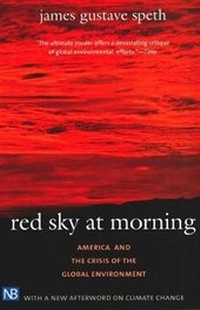
Red Sky at Morning
America and the Crisis of the Global Environment
2nd Edition
Published on 11. March 2005
Book
Paperback/Softback
352 pages
978-0-300-10776-0 (ISBN)
Description
Why we are failing to protect the global environment. What we can-and must-do to succeed.
This book will change the way we understand the future of our planet. It is both alarming and hopeful. James Gustave Speth, renowned as a visionary environmentalist leader, warns that in spite of all the international negotiations and agreements of the past two decades, efforts to protect Earth's environment are not succeeding. Still, he says, the challenges are not insurmountable. He offers comprehensive, viable new strategies for dealing with environmental threats around the world.
The author explains why current approaches to critical global environmental problems-climate change, biodiversity loss, deterioration of marine environments, deforestation, water shortages, and others-don't work. He offers intriguing insights into why we have been able to address domestic environmental threats with some success while largely failing at the international level. Setting forth eight specific steps to a sustainable future, Speth convincingly argues that dramatically different government and citizen action are now urgent. If ever a book could be described as "essential," this is it.
This book will change the way we understand the future of our planet. It is both alarming and hopeful. James Gustave Speth, renowned as a visionary environmentalist leader, warns that in spite of all the international negotiations and agreements of the past two decades, efforts to protect Earth's environment are not succeeding. Still, he says, the challenges are not insurmountable. He offers comprehensive, viable new strategies for dealing with environmental threats around the world.
The author explains why current approaches to critical global environmental problems-climate change, biodiversity loss, deterioration of marine environments, deforestation, water shortages, and others-don't work. He offers intriguing insights into why we have been able to address domestic environmental threats with some success while largely failing at the international level. Setting forth eight specific steps to a sustainable future, Speth convincingly argues that dramatically different government and citizen action are now urgent. If ever a book could be described as "essential," this is it.
Reviews / Votes
"Gus Speth brought global environmental concerns to the world's attention nearly a quarter of a century ago. His extraordinary new book is an impassioned plea to take these issues seriously before it is too late. We owe it to our children and grandchildren to read Red Sky at Morning and take action while we can."-Jimmy Carter, former President of the United States "The ultimate insider offers a devastating critique of global environmental efforts."-Eugene Linden, Time "A profoundly sobering study . . . of the nation's failure to address the probability of global warming."-New York Times Book ReviewMore details
Edition
2nd Revised edition
Language
English
Place of publication
United States
Target group
College/higher education
Professional and scholarly
Edition type
Revised edition
Product notice
Paperback (trade)
Dimensions
Height: 197 mm
Width: 127 mm
Weight
340 gr
ISBN-13
978-0-300-10776-0 (9780300107760)
Copyright in bibliographic data and cover images is held by Nielsen Book Services Limited or by the publishers or by their respective licensors: all rights reserved.
Schweitzer Classification
Other editions
Additional editions

E-Book
12/2005
Yale Nota Bene
€47.19
Available for download
Person
James Gustave Speth is dean and professor in the practice of environmental policy and sustainable development at the School of Forestry and Environmental Studies, Yale University. He founded and was president of the World Resources Institute, co-founded the Natural Resources Defense Council, served as adviser on environmental issues for Presidents Carter and Clinton, and was chief executive officer of the United Nations Development Programme. For his role in bringing the global warming issue to wide public attention, Speth was recently awarded the prestigious Blue Planet Prize.