

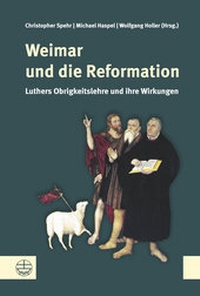
Weimar und die Reformation
Luthers Obrigkeitslehre und ihre Wirkungen
2nd Edition
Published on 6. December 2016
Book
Paperback/Softback
204 pages
978-3-374-04278-4 (ISBN)
Description
1522 hielt Martin Luther in der Schlosskirche zu Weimar zwei Predigten, aus denen seine Schrift "Von weltlicher Obrigkeit" (1523) hervorging. Nachhaltig haben dieser theologische Impuls und die Reformen des Landesherrn in Weimar die Reformation des 16. Jahrhunderts gesellschaftlich, staats- und sozialpolitisch geprägt. Die Wirkungen von Luthers Obrigkeitslehre finden nicht nur Gestalt im dort früh entwickelten Landeskirchentum, sondern auch in der Übernahme von Verantwortung für Bildung, Wohlfahrt und Armenfürsorge. Symbolischen Ausdruck findet diese Gestalt der staatlichen Ordnung, die bis in die Moderne ausstrahlt, zum Beispiel in der Ikonographie der Herderkirche als Grablege der Ernestiner. Das Buch spannt einen Bogen von der Grundlegung der Obrigkeitslehre in Weimar über ihre Wirkungen bis hin in die Moderne mit ihren spezifischen Fragestellungen.
Mit Beiträgen von Svend Andersen, Joachim Bauer, Dagmar Blaha, Klaus Dicke, Wolfgang Holler, Gerhard Müller, Ellen Ueberschär, Georg Schmidt, Luise Schorn-Schütte und Christopher Spehr.
[Weimar and the Reformation. Luther´s Doctrine of the Authority and its Impacts]
In 1522 Martin Luther delivered two sermons in the Weimar castle church from which originated his treatise On Temporal Authority (1523). This theological impulse and the reforms of the territorial sovereign in Weimar had a sustainable social and political impact on the 16th century Reformation. The influence of Luther's doctrine of temporal authority expresses itself not only in the early development of an institutional regional church but also in taking responsibility for education, welfare and poor relief. The book spans an arch from the foundation of the doctrine of temporal authority in Weimar up to its impacts on the modern age with its specific issues.
Mit Beiträgen von Svend Andersen, Joachim Bauer, Dagmar Blaha, Klaus Dicke, Wolfgang Holler, Gerhard Müller, Ellen Ueberschär, Georg Schmidt, Luise Schorn-Schütte und Christopher Spehr.
[Weimar and the Reformation. Luther´s Doctrine of the Authority and its Impacts]
In 1522 Martin Luther delivered two sermons in the Weimar castle church from which originated his treatise On Temporal Authority (1523). This theological impulse and the reforms of the territorial sovereign in Weimar had a sustainable social and political impact on the 16th century Reformation. The influence of Luther's doctrine of temporal authority expresses itself not only in the early development of an institutional regional church but also in taking responsibility for education, welfare and poor relief. The book spans an arch from the foundation of the doctrine of temporal authority in Weimar up to its impacts on the modern age with its specific issues.
More details
Other editions
Additional editions
Christopher Spehr | Michael Haspel | Wolfgang Holler
Weimar und die Reformation
Luthers Obrigkeitslehre und ihre Wirkungen
E-Book
08/2016
2nd Edition
Evangelische Verlagsanstalt
€19.99
Available for download
Persons
Editor
Prof. Dr. Christopher Spehr, Jg. 1971, ist Professor für Kirchengeschichte an der Theologischen Fakultät der Friedrich-Schiller-Universität Jena.
Prof. Dr. Michael Haspel, Jg. 1964, ist Direktor der Evangelischen Akademie Thüringen und Apl. Professor für Systematische Theologie an der Friedrich-Schiller-Universität Jena.
Prof. Dr. Wolfgang Holler, Jg. 1956, ist Generaldirektor Museen der Klassik Stiftung Weimar und Honorarprofessor an der Technischen Universität Dresden.