

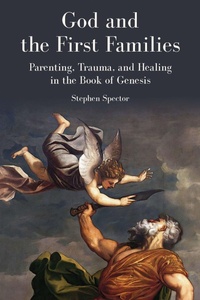
God and the First Families
Parenting, Trauma, and Healing in the Book of Genesis
Published on 1. June 2026
Book
Paperback/Softback
252 pages
978-0-8276-1601-1 (ISBN)
Description
God and the First Families offers a novel exploration of God's role as a parent in the book of Genesis. Compellingly, author Stephen Spector introduces Americans' four main perceptions of God and their four most common styles of parenting as lenses through which we can reckon with God's own methods of parenting in the first biblical book.
God begins as an authoritarian parent who demands obedience and submission to authority, but shifts in striking ways. Next, God's parenting seems entirely benevolent. Stunningly, God reverts to authoritarianism during the near sacrifice of Isaac-but then invents a new parenting style focused on guiding the characters' moral and emotional growth. Many psychologists consider this the most successful childrearing method. Genesis reached that conclusion two and a half millennia ago!
Throughout, Spector engages with familiar stories-sibling rivalries, family ruptures, traumas-from unexpected angles. He dramatizes how parental love in Genesis builds resilience against trauma, another idea validated by modern psychology. Surviving trauma, healing from parental favoritism, repairing broken relationships, earning forgiveness, possibly even reconciling after injury-Genesis offers wisdom on all.
God begins as an authoritarian parent who demands obedience and submission to authority, but shifts in striking ways. Next, God's parenting seems entirely benevolent. Stunningly, God reverts to authoritarianism during the near sacrifice of Isaac-but then invents a new parenting style focused on guiding the characters' moral and emotional growth. Many psychologists consider this the most successful childrearing method. Genesis reached that conclusion two and a half millennia ago!
Throughout, Spector engages with familiar stories-sibling rivalries, family ruptures, traumas-from unexpected angles. He dramatizes how parental love in Genesis builds resilience against trauma, another idea validated by modern psychology. Surviving trauma, healing from parental favoritism, repairing broken relationships, earning forgiveness, possibly even reconciling after injury-Genesis offers wisdom on all.
Reviews / Votes
"This wise, compassionate, learned guide to trauma and love in Genesis enables us to better understand both the biblical book and the dynamics in our own fractured families."-Rabbi David Wolpe, author of Teaching Your Children About God"Keen observer Stephen Spector brings a wealth of learning and original insight to this lively rereading of familiar family stories. Readers will gain greater appreciation of the wounds and blessings that come with being part of a family-and useful tips on how to cope and heal."-Arnold M. Eisen, chancellor emeritus of the Jewish Theological Seminary
"For those wishing to bring their contemporary understandings of God into line with biblical depictions of the divine, the interpretive strategy employed in the book will provide significant food for thought."-Danna Nolan Fewell, editor of The Oxford Handbook of Biblical Narrative
More details
Language
English
Place of publication
Philadelphia
United States
Target group
College/higher education
Product notice
Paperback (trade)
Dimensions
Height: 152 mm
Width: 230 mm
Thickness: 17 mm
Weight
390 gr
ISBN-13
978-0-8276-1601-1 (9780827616011)
Copyright in bibliographic data and cover images is held by Nielsen Book Services Limited or by the publishers or by their respective licensors: all rights reserved.
Schweitzer Classification
Person
Stephen Spector is a professor of English emeritus at Stony Brook University. He is the author of Operation Solomon: The Daring Rescue of the Ethiopian Jews and Evangelicals and Israel: The Story of American Christian Zionism, among other volumes. Spector has taught the Bible to undergraduate and graduate students for fifty years. He has been a visiting scholar at Hebrew University and a senior research fellow at the National Humanities Center and the Wesleyan Center for Humanities.
Content
Acknowledgements
Introduction: Parenting Insights from across Millennia
1. Parenting Styles and Varieties of Belief in God
2. The Authoritarian Language of Creation and Adam's Love Story
3. Crime and Authoritarian Punishment in Eden
4. The Cain and Abel Murder Mystery
5. The Flood and the Limits of Authoritarianism
6. Abraham's Righteousness and Fear
7. Abraham's Doubt and God's Benevolence
8. Sarah's Laughter, Abraham's Chutzpah, and God's Compassion for the Dispossessed
9. God's Reversion to Authoritarianism and Isaac's Trauma
10. Recovery from Loss
11. Rebekah as a Wife and Mother
12. Parental Favoritism and Sibling Rivalry in the Story of Jacob and Esau
13. The Emergence of the Authoritative God
14. Jacob Confronts an Authoritarian Father
15. Wrestling with an Angel as a Turning Point for Jacob and for God
16. Jacob's Favoritism and Parental Negligence
17. Joseph and the Consequences of Favoritism
18. Sense and Sexuality in the Story of Tamar
19. Authoritative Parenting Starts to Work
20. Healing a Dysfunctional Family
21. Jacob's Redemption, the Brothers' Distrust, and Joseph's Lovingkindness
Conclusion: Parenting, Trauma, Healing, Love, and Redemption
Notes
Bibliography
Appendix: Genesis Through the Lens of Trauma Theory
Index
Introduction: Parenting Insights from across Millennia
1. Parenting Styles and Varieties of Belief in God
2. The Authoritarian Language of Creation and Adam's Love Story
3. Crime and Authoritarian Punishment in Eden
4. The Cain and Abel Murder Mystery
5. The Flood and the Limits of Authoritarianism
6. Abraham's Righteousness and Fear
7. Abraham's Doubt and God's Benevolence
8. Sarah's Laughter, Abraham's Chutzpah, and God's Compassion for the Dispossessed
9. God's Reversion to Authoritarianism and Isaac's Trauma
10. Recovery from Loss
11. Rebekah as a Wife and Mother
12. Parental Favoritism and Sibling Rivalry in the Story of Jacob and Esau
13. The Emergence of the Authoritative God
14. Jacob Confronts an Authoritarian Father
15. Wrestling with an Angel as a Turning Point for Jacob and for God
16. Jacob's Favoritism and Parental Negligence
17. Joseph and the Consequences of Favoritism
18. Sense and Sexuality in the Story of Tamar
19. Authoritative Parenting Starts to Work
20. Healing a Dysfunctional Family
21. Jacob's Redemption, the Brothers' Distrust, and Joseph's Lovingkindness
Conclusion: Parenting, Trauma, Healing, Love, and Redemption
Notes
Bibliography
Appendix: Genesis Through the Lens of Trauma Theory
Index