

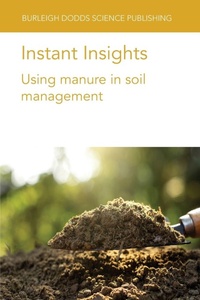
Instant Insights: Using Manure in Soil Management
Using manure in soil management
Published on 26. March 2024
Book
Paperback/Softback
180 pages
978-1-80146-661-5 (ISBN)
Description
This book features five peer-reviewed reviews on the utilisation of manure to improve soil management and health.
The first chapter reviews ways to improve manure management in animal housing during storage and after application in the field. The chapter also considers manure application methods and their effects on nitrogen utilisation and soil carbon storage.
The second chapter discusses the role of manure and compost in maintaining soil health, as well as ways of integrating livestock and crop production to optimise soil health.
The third chapter reviews the impacts associated with the application of livestock and poultry manure on the ability of soil to deliver a range of ecosystem services that sustain plants, animals, people and the environment.
The fourth chapter discusses the responsible storage, treatment and processing of livestock manure, as well as the measures available to mitigate the production of greenhouse gas emissions during these processes, such as slurry mixing.
The final chapter reviews the main technologies for manure valorisation into bioenergy and biofertiliser products. It discusses developments in more established technologies such as solid-liquid (S/L) separation, as well as more innovative techniques, such as ammonia stripping/scrubbing.
The first chapter reviews ways to improve manure management in animal housing during storage and after application in the field. The chapter also considers manure application methods and their effects on nitrogen utilisation and soil carbon storage.
The second chapter discusses the role of manure and compost in maintaining soil health, as well as ways of integrating livestock and crop production to optimise soil health.
The third chapter reviews the impacts associated with the application of livestock and poultry manure on the ability of soil to deliver a range of ecosystem services that sustain plants, animals, people and the environment.
The fourth chapter discusses the responsible storage, treatment and processing of livestock manure, as well as the measures available to mitigate the production of greenhouse gas emissions during these processes, such as slurry mixing.
The final chapter reviews the main technologies for manure valorisation into bioenergy and biofertiliser products. It discusses developments in more established technologies such as solid-liquid (S/L) separation, as well as more innovative techniques, such as ammonia stripping/scrubbing.
More details
Series
Language
English
Place of publication
Cambridge
United Kingdom
Target group
College/higher education
Professional and scholarly
Product notice
Paperback (trade)
Illustrations
Color tables, photos and figures
Dimensions
Height: 229 mm
Width: 152 mm
Thickness: 11 mm
Weight
273 gr
ISBN-13
978-1-80146-661-5 (9781801466615)
DOI
10.19103/9781801466622
Copyright in bibliographic data and cover images is held by Nielsen Book Services Limited or by the publishers or by their respective licensors: all rights reserved.
Schweitzer Classification
Other editions
Additional editions
Peter Sorensen | Luca Bechini | Lars Stoumann Jensen
Instant Insights: Using Manure in Soil Management
E-Book
03/2024
Burleigh Dodds Science Publishing Limited
€48.99
Available for download
Persons
Professor (UZ) Dr Barbara Amon is an Associate Professor for Environmental Engineering and Agricultural Engineering at the University of Zielona Gora, Poland and a Senior Research Scientist and Board Representative for Research at the Leibniz Institute for Agricultural Engineering and Bioeconomy (ATB), Germany. Professor Amon sits on many panels, including the Intergovernmental Panel on Climate Change (IPCC), UNECE, UNEP and the FAO LEAP Partnership.
Dr Victor Riau currently works at the Sustainability in Biosystems program of the Institute of Agri-food Research and Technology (IRTA). Dr Riau's research is focused on chemical and environmental engineering, organic waste (water) treatment and valorisation, biogas production, nutrient removal and recovery and emission characterisation and mitigation
Dr Victor Riau currently works at the Sustainability in Biosystems program of the Institute of Agri-food Research and Technology (IRTA). Dr Riau's research is focused on chemical and environmental engineering, organic waste (water) treatment and valorisation, biogas production, nutrient removal and recovery and emission characterisation and mitigation
Author
Aarhus University
University of Milan, Italy
University of Copenhagen
Agriculture and Agri-Food Canada
California Polytechnic State University (United States)
University of Guelph
Leibniz Institute for Agricultural Engineering and Bioeconomy (ATB) (Germany)
Wageningen Livestock Research (Netherlands)
UK Centre for Ecology & Hydrology (UKCEH) (United Kingdom)
Institute of Agrifood Research and Technology (IRTA) (Spain)
Content
Chapter 1 - Manure management in organic farming: Peter Sorensen, Department of Agroecology, Aarhus University, Denmark; Luca Bechini, University of Milan, Italy; and Lars Stoumann Jensen, University of Copenhagen, Denmark;
1 Introduction
2 Manure composition and properties in different livestock systems
3 Manure storage and treatment
4 Manure field application methods
5 Turnover and availability of manure N in soil
6 Utilization of P, K and S in manures
7 Plant-based manures (green manures)
8 Future trends and conclusion
9 Where to look for further information
10 References
Chapter 2 - Manure and compost management to maintain soil health: Francis J. Larney, Agriculture and Agri-Food Canada, Canada;
1 Introduction
2 Manure versus compost
3 Manure, compost and soil health
4 Manure, compost and inorganic fertilizer
5 Practical implications of manure and compost use for soil health
6 More manure in the future
7 Problems of excess manure
8 Integrated livestock production
9 Case study: the legacy effect of manure
10 Future trends and conclusion
11 Where to look for further information
12 References
Chapter 3 - Assessing the effects of using animal manure on soil health: Ashraf M. Tubeileh, California Polytechnic State University, USA; and Michael J. Goss, University of Guelph, Canada;
1 Introduction
2 Types and forms of manure applied to soils
3 The nutrient value of manures
4 Manure treatments
5 Impact on soil chemical and physical health
6 Impact on soil biological health
7 Impact on plants and crop yields
8 Challenges to the concepts of soil health from manure application
9 Conclusion
10 Where to look for further information
11 References
Chapter 4 - Sustainable nitrogen management for housed livestock, manure storage and manure processing: Barbara Amon, Leibniz Institute for Agricultural Engineering and Bioeconomy (ATB), Germany and University of Zielona Gora, Poland; Lars Stouman Jensen, University of Copenhagen, Denmark; Karin Groenestein, Wageningen Livestock Research, The Netherlands; and Mark Sutton, UK Centre for Ecology & Hydrology (UKCEH), UK;
1 Introduction
2 Livestock feeding and housing
3 Manure storage, treatment and processing
4 Best practices and priority measures
5 Conclusion and future trends in research
6 References
Chapter 5 - Optimising livestock manure as a biofertiliser and bioenergy source: V. Riau, L. Morey, R. Caceres, M. Cerrillo, and A. Bonmati, Institute of Agrifood Research and Technology (IRTA), Spain; and A. Robles, BETA Tech Center (UVIC-UCC), Spain;
1. Introduction
2. Anaerobic digestion
3. Mechanical separation
4. Composting
5. Struvite precipitation
6. Stripping/scrubbing
7. Membrane filtration
8. Bioelectrochemical systems (BESs)
9. Case study: farm for the future
10. Summary and future trends
11. Where to look for further information
12. References
1 Introduction
2 Manure composition and properties in different livestock systems
3 Manure storage and treatment
4 Manure field application methods
5 Turnover and availability of manure N in soil
6 Utilization of P, K and S in manures
7 Plant-based manures (green manures)
8 Future trends and conclusion
9 Where to look for further information
10 References
Chapter 2 - Manure and compost management to maintain soil health: Francis J. Larney, Agriculture and Agri-Food Canada, Canada;
1 Introduction
2 Manure versus compost
3 Manure, compost and soil health
4 Manure, compost and inorganic fertilizer
5 Practical implications of manure and compost use for soil health
6 More manure in the future
7 Problems of excess manure
8 Integrated livestock production
9 Case study: the legacy effect of manure
10 Future trends and conclusion
11 Where to look for further information
12 References
Chapter 3 - Assessing the effects of using animal manure on soil health: Ashraf M. Tubeileh, California Polytechnic State University, USA; and Michael J. Goss, University of Guelph, Canada;
1 Introduction
2 Types and forms of manure applied to soils
3 The nutrient value of manures
4 Manure treatments
5 Impact on soil chemical and physical health
6 Impact on soil biological health
7 Impact on plants and crop yields
8 Challenges to the concepts of soil health from manure application
9 Conclusion
10 Where to look for further information
11 References
Chapter 4 - Sustainable nitrogen management for housed livestock, manure storage and manure processing: Barbara Amon, Leibniz Institute for Agricultural Engineering and Bioeconomy (ATB), Germany and University of Zielona Gora, Poland; Lars Stouman Jensen, University of Copenhagen, Denmark; Karin Groenestein, Wageningen Livestock Research, The Netherlands; and Mark Sutton, UK Centre for Ecology & Hydrology (UKCEH), UK;
1 Introduction
2 Livestock feeding and housing
3 Manure storage, treatment and processing
4 Best practices and priority measures
5 Conclusion and future trends in research
6 References
Chapter 5 - Optimising livestock manure as a biofertiliser and bioenergy source: V. Riau, L. Morey, R. Caceres, M. Cerrillo, and A. Bonmati, Institute of Agrifood Research and Technology (IRTA), Spain; and A. Robles, BETA Tech Center (UVIC-UCC), Spain;
1. Introduction
2. Anaerobic digestion
3. Mechanical separation
4. Composting
5. Struvite precipitation
6. Stripping/scrubbing
7. Membrane filtration
8. Bioelectrochemical systems (BESs)
9. Case study: farm for the future
10. Summary and future trends
11. Where to look for further information
12. References