

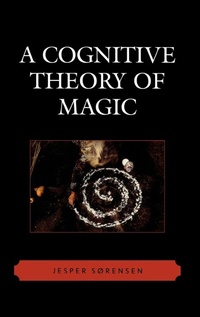
A Cognitive Theory of Magic
Published on 1. December 2006
Book
Hardback
232 pages
978-0-7591-1037-3 (ISBN)
Description
Magic is a universal phenomenon. Everywhere we look people perform ritual actions in which desirable qualities are transferred by means of physical contact and objects or persons are manipulated by things of their likeness. In this book Sorensen embraces a cognitive perspective in order to investigate this long-established but controversial topic. Following a critique of the traditional approaches to magic, and basing his claims on classical ethnographic cases, the author explains magic's universality by examining a number of recurrent cognitive processes underlying its different manifestations. He focuses on how power is infused into the ritual practice; how representations of contagion and similarity can be used to connect otherwise distinct objects in order to manipulate one by the other; and how the performance of ritual prompts representations of magical actions as effective. Bringing these features together, the author proposes a cognitive theory of how people can represent magical rituals as purposeful actions and how ritual actions are integrated into more complex representations of events. This explanation, in turn, yields new insights into the constitutive role of magic in the formation of institutionalised religious ritual.
Reviews / Votes
Sorensen's discussion conveys a mastery of cognitive theory and is meticulously presented....A Cognitive Theory of Magic makes important contributions to our understanding of magic....it contains many potential hooks that could connect it to theories of perception and deception to make a yet broader and richer theory of magic. * The Journal Of Religion * Sorensen perhaps supplies the most ardent attempt to bridge the social science theories of magic, ritual, and belief foundational to the academic study of religion with more recent theories of cognition. ... Sorensen's cognitive approach. . . offers an additional avenue through which one can merge cognitive science with social scientific and humanities theories of religion. * Religious Studies Review * In this fine and erudite work, Jesper Sorensen wrestles with the problem of how cognitive theories can provide novel and fascinating insights about the cross-cultural aspects of magic. It demonstrates how a theoretically informed understanding of the general processes of human cognition leads to some surprising and exciting discoveries not only about the widespread phenomenon of magical thought, but also about how the human mind works in the presence of puzzling behavior that escapes the net of common sense conjectures. Sorensen is an able representative of the next generation of cognitive scientists who have thrown caution to the winds in their search of explanations of religious, ritual and magical acts. -- E Thomas Lawson, Queen's University, Belfast, Editor of the Journal of Cognition and Culture Sorensen not only just provides us with a magisterial survey of issues and theories, from child development to adult psychology to cultural anthropology and the history of religions; he also offers a novel, synthetic view of magical thinking in terms of mental spaces and their transformations. This is the most thorough investigation to date into the workings of magic. -- Pascal Boyer, Henry Luce Professor of Collective and Individual Memory, Washington University, St. Louis, and author of Religion Explained How does magic come to mind? What are its cognitive fundamentals? This inspiring and subtle book, which deals with the psychological architecture of ritual action, applies new methods of cognitive science to age-old and fundamental questions. The result is an original theory of magic and of the representation of ritual purpose and meaning. -- Mark Turner, Institute Professor and Professor of Cognitive Science, Case Western Reserve UniversityMore details
Series
Language
English
Place of publication
California
United States
Target group
College/higher education
Dimensions
Height: 240 mm
Width: 161 mm
Thickness: 17 mm
Weight
511 gr
ISBN-13
978-0-7591-1037-3 (9780759110373)
Copyright in bibliographic data and cover images is held by Nielsen Book Services Limited or by the publishers or by their respective licensors: all rights reserved.
Schweitzer Classification
Other editions
Additional editions
Jesper Sorensen
A Cognitive Theory of Magic
E-Book
12/2006
1st Edition
AltaMira Press
€44.99
Available for download
Jesper Sorensen
A Cognitive Theory of Magic
E-Book
12/2006
1st Edition
AltaMira Press
€44.99
Available for download
Person
Jesper Sorensen, Ph.D. is Associate Professor in Comparative Religion, Institute of Philosophy, Pedagogic, and the Study of Religion, University of Southern Denmark, and International Fellow at the Institute of Cognition and Culture, Queen's University Belfast. He is the author of numerous other works and articles in the fields cognitive and evolutionary underpinning of religious phenomena, method and theory in the study of religion, and Western Esotericism.
Content
Part 1 Figures
Part 2 Tables
Part 3 Introduction
Part 4 Magic in the History of the Social Sciences
Part 5 The Cognitive Foundation of Magical Action
Part 6 Magical Rituals and Conceptual Blending
Part 7 Transformation and Manipulation: A Typology of Magical Actions
Part 8 Frames of Ritual Action: Causation, Diagnosis and Prognosis
Part 9 Ritual Purpose and the Relation Between Magic, Culture and Religion
Part 10 References
Part 2 Tables
Part 3 Introduction
Part 4 Magic in the History of the Social Sciences
Part 5 The Cognitive Foundation of Magical Action
Part 6 Magical Rituals and Conceptual Blending
Part 7 Transformation and Manipulation: A Typology of Magical Actions
Part 8 Frames of Ritual Action: Causation, Diagnosis and Prognosis
Part 9 Ritual Purpose and the Relation Between Magic, Culture and Religion
Part 10 References