

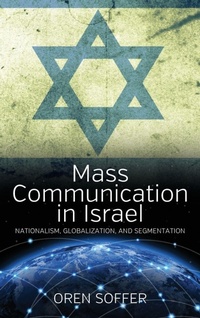
Mass Communication In Israel
Nationalism, Globalization, and Segmentation
1st Edition
Published on 1. November 2014
Book
Hardback
238 pages
978-1-78238-451-9 (ISBN)
Description
Mass communication has long been recognized as an important contributor to national identity and nation building. This book examines the relationship between media and nationalism in Israel, arguing that, in comparison to other countries, the Israeli case is unique. It explores the roots and evolution of newspapers, journalism, radio, television, and the debut of the Internet on both the cultural and the institutional levels, and examines milestones in the socio-political development of Hebrew and Israeli mass communication. In evaluating the technological changes in the media, the book shows how such shifts contribute to segmentation and fragmentation in the age of globalization.
Reviews / Votes
"Soffer's book is the result of extensive and painstaking research, and it bears witness to the author's thorough familiarity with relevant theories of sociology and communication, as well as of the subject matter. The volume contains a comprehensive bibliography, and a detailed index... Soffer's well researched book is a welcome addition to communication studies as well as to the history of Zionism and Israeli society." ? Middle East Media and Book Reviews OnlineMore details
Language
English
Place of publication
Oxford
United Kingdom
Target group
College/higher education
Product notice
Library binding
Illustrations
Bibliography; Index
Dimensions
Height: 235 mm
Width: 157 mm
Thickness: 17 mm
Weight
501 gr
ISBN-13
978-1-78238-451-9 (9781782384519)
DOI
10.3167/9781782384519
Copyright in bibliographic data and cover images is held by Nielsen Book Services Limited or by the publishers or by their respective licensors: all rights reserved.
Schweitzer Classification
Other editions
Additional editions
E-Book
11/2014
1st Edition
Berghahn Books
€88.99
Available for download
Person
Oren Soffer is Head of the Department of Sociology, Political Science and Communication at the Open University of Israel. He has been recently a visiting scholar in MIT's Comparative Media Studies program, and held a lecturer position at the University of Manchester. He has published extensively in the fields of media theory and history.
Content
Acknowledgments
Introduction: Mass Communication-Nationalism, Globalization, and Social Fragmentation
The Structure of the Book
The Nation: A Theoretical Framework
Nationalism as a Communications Phenomenon
Extreme Simultaneity: The Electronic Media
New Technologies: The End of the Media National Role?
Chapter 1. The Evolution of the Hebrew and Israeli Press
The Press and Nationalism
From Political Party Press to Commercial Press
The Beginnings of the Hebrew Press in Palestine during the Ottoman Era
The Press in Mandatory Times
The Political Party Press in the Yishuv Era
Private Press in the Yishuv Era
The Palestinian press in the Yishuv era
The Press in the State of Israel
Regulation of the Press: Official and Other Arrangements
Party Political Press in the State of Israel
The Commercial Press in the State of Israel
The Rise and Fall of Local Newspapers
The Arabic-language Press? Russian-language Press
The Ultra-Orthodox Press
The Press Crisis and the Advent of Free Newspapers
Conclusion
Chapter 2. Radio in the State of Israel
Radio and National Solidarity
Historic Background: Radio in the Yishuv Era
Radio in the State of Israel: Institutional Aspects
Radio and Imagined Israeliness
Special Broadcasts: From the Eichmann Trial to Eshkol's Speech
Forerunners of Broadcasting Pluralism
Galei Zahal (Army Radio)
The Voice of Peace
The Multichannel Radio Age: Diversification and Decentralization?
Conclusion
Chapter 3. Television in Israel
Television in the National Arena
Public Broadcasting in Changing Times
The "No-go" Era: The Television Debate in the State of Israel
Educational Television
The Founding of General Television
Television in Israel: Institutional Aspects
Chronicles of the Channel 1: Socio-cultural Aspects
Educational Television
Arab-Language Broadcasting
Music, Imported Series, and Satire
Hebrew-Language Television
Documentaries and News Programs
Television Broadcasting in the Single Channel Era: Summary
Israel's Battle over Color TV: The Case of the "Eraser" and the "Anti-Eraser"
The Public Debate over Color Broadcasting
The Anti-Eraser
The Multichannel Era in Israel
Commercial and Global Trends
Television Broadcasts to Former Soviet Union (FSU) Immigrants
Television Broadcasts for Arab Citizens in Israel
Digital and Interactive Technology
Conclusion
Chapter 4. The Internet's Debut in Israel
Is the National Media Age Over?
The Evolution of Internet Accessibility in Israel
Israelis Surfing the Internet: Between the Local and the Global
Internet Use among Children and Adolescents
The Internet and Sectorial Communication
Internet Use among Arab Citizens of Israel
The Internet and the Ultra-orthodox Community
Russian-language Internet Sites
The Internet and the Public-Political Sphere in IsraelInternet Discourse in a Security Crisis
Epilogue
List of sources
Index
Introduction: Mass Communication-Nationalism, Globalization, and Social Fragmentation
The Structure of the Book
The Nation: A Theoretical Framework
Nationalism as a Communications Phenomenon
Extreme Simultaneity: The Electronic Media
New Technologies: The End of the Media National Role?
Chapter 1. The Evolution of the Hebrew and Israeli Press
The Press and Nationalism
From Political Party Press to Commercial Press
The Beginnings of the Hebrew Press in Palestine during the Ottoman Era
The Press in Mandatory Times
The Political Party Press in the Yishuv Era
Private Press in the Yishuv Era
The Palestinian press in the Yishuv era
The Press in the State of Israel
Regulation of the Press: Official and Other Arrangements
Party Political Press in the State of Israel
The Commercial Press in the State of Israel
The Rise and Fall of Local Newspapers
The Arabic-language Press? Russian-language Press
The Ultra-Orthodox Press
The Press Crisis and the Advent of Free Newspapers
Conclusion
Chapter 2. Radio in the State of Israel
Radio and National Solidarity
Historic Background: Radio in the Yishuv Era
Radio in the State of Israel: Institutional Aspects
Radio and Imagined Israeliness
Special Broadcasts: From the Eichmann Trial to Eshkol's Speech
Forerunners of Broadcasting Pluralism
Galei Zahal (Army Radio)
The Voice of Peace
The Multichannel Radio Age: Diversification and Decentralization?
Conclusion
Chapter 3. Television in Israel
Television in the National Arena
Public Broadcasting in Changing Times
The "No-go" Era: The Television Debate in the State of Israel
Educational Television
The Founding of General Television
Television in Israel: Institutional Aspects
Chronicles of the Channel 1: Socio-cultural Aspects
Educational Television
Arab-Language Broadcasting
Music, Imported Series, and Satire
Hebrew-Language Television
Documentaries and News Programs
Television Broadcasting in the Single Channel Era: Summary
Israel's Battle over Color TV: The Case of the "Eraser" and the "Anti-Eraser"
The Public Debate over Color Broadcasting
The Anti-Eraser
The Multichannel Era in Israel
Commercial and Global Trends
Television Broadcasts to Former Soviet Union (FSU) Immigrants
Television Broadcasts for Arab Citizens in Israel
Digital and Interactive Technology
Conclusion
Chapter 4. The Internet's Debut in Israel
Is the National Media Age Over?
The Evolution of Internet Accessibility in Israel
Israelis Surfing the Internet: Between the Local and the Global
Internet Use among Children and Adolescents
The Internet and Sectorial Communication
Internet Use among Arab Citizens of Israel
The Internet and the Ultra-orthodox Community
Russian-language Internet Sites
The Internet and the Public-Political Sphere in IsraelInternet Discourse in a Security Crisis
Epilogue
List of sources
Index